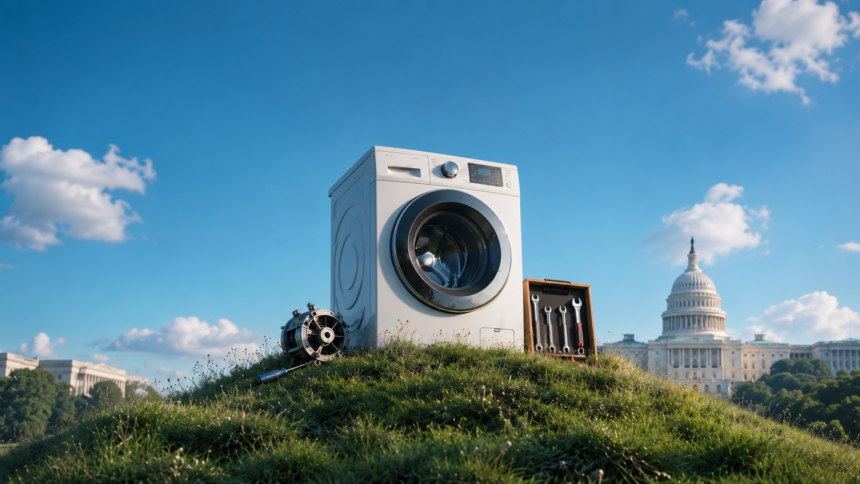
The Hidden Cost of Energy-Efficient Appliances

WASHINGTON — June 6, 2026 — The modern washing machine has become one of the appliance industry’s most ordinary products and one of its most revealing policy failures.

For three decades, federal policy and voluntary labeling programs have sold a simple promise: use less energy, use less water and consumers will save money. ENERGY STAR made that promise familiar on showroom floors. Department of Energy standards made parts of it mandatory.

That message was easy to understand, easy to market and hard to oppose. But in appliance showrooms, service departments and laundry rooms, the story is no longer that simple.

A washer that uses fewer gallons per cycle may still be a worse bargain if it is harder to repair, more expensive to diagnose, less satisfying to use or replaced years earlier than the machine it displaced. The same question now hangs over dishwashers, refrigerators, dryers and other major home appliances: Is the industry saving enough energy and water to justify a product cycle that may send complex machines to landfills more often?

An appliance that saves water but dies early is not automatically green. It may simply move the environmental cost from the utility bill to the landfill.

Appliance News analysis

Why This Matters

The efficiency debate is usually framed around energy use, water use and monthly utility savings. That framing is too narrow for a major appliance, which is also a capital purchase, a service product, a parts ecosystem and eventually a waste-management problem.

A serious accounting of appliance sustainability has to count the whole machine: steel, plastic, electronics, shipping, service calls, replacement parts, discarded units and consumer money spent replacing products that may no longer be economical to fix.

  • For manufacturers: Efficiency targets increasingly collide with reliability, repairability and consumer trust.
  • For retailers: The savings story has to survive the first major service complaint.
  • For servicers: More efficient machines often mean more sensors, boards, diagnostics and customer education.
  • For policymakers: Energy and water metrics are incomplete if appliance life spans shorten.
  • For consumers: Lower utility bills can be outweighed by higher repair costs or earlier replacement.

ENERGY STAR Solved One Problem and Exposed Another

ENERGY STAR, launched by the Environmental Protection Agency in 1992, is a voluntary labeling program. DOE appliance standards are mandatory federal requirements. The two are not the same, but consumers and retailers often experience them as part of the same efficiency movement: a market steadily nudged away from older, simpler machines and toward models optimized for lower energy and water use.

That movement produced real gains. ENERGY STAR says certified clothes washers use about 20% less energy and about 30% less water than regular washers. The program says certified models can save about $530 in energy costs over the life of the product, and that the average American family washes about 300 loads of laundry each year. (ENERGY STAR)

Those savings matter. Energy and water are not free, and the utility system does not have unlimited capacity. But the way those savings are presented can be too narrow. The headline number usually emphasizes operating cost. It rarely forces consumers to ask a more expensive question: What if the efficient appliance does not last as long, costs more to service or becomes uneconomical to repair after a control board, sealed-system component or sensor fails?

That omission is especially important because appliance ownership is not just a monthly utility calculation. It is a durable-goods purchase. A refrigerator, dishwasher, washer or dryer is supposed to last long enough for the savings case to matter.

The Washer Became the Symbol

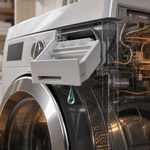
The washing machine became the clearest symbol because the design change was visible. Older conventional top-loaders typically used a deep-fill tub, a central agitator and relatively direct mechanical controls. Many newer high-efficiency models rely on lower water levels, load sensing, lid locks, electronic controls, impellers, tumbling wash action, specialized cycle programming and more complex diagnostics.

To policymakers, that redesign looks like progress: less water, less energy, more efficient wash action. To many consumers, it can feel like an appliance that takes longer, behaves less intuitively and depends more heavily on the right detergent, load size and maintenance habits. That gap between policy success and household frustration is where the washer debate lives.

The old washer problem was mechanical. The new washer problem is behavioral, electronic and regulatory all at once.

In a 2011 Competitive Enterprise Institute column, Sam Kazman argued that federal efficiency mandates had pushed the washer market away from conventional top-load machines and toward products that were more expensive and less satisfying for many consumers. CEI’s repost of the Wall Street Journal column described the older top-loading washer as once “affordable and dependable,” then damaged by regulatory pressure. (Competitive Enterprise Institute)

Efficiency advocates dispute that framing, and it would be too simplistic to say federal rules alone caused every complaint about modern washers. Retail price pressure, offshore sourcing, consumer demand for features, smart-home electronics, brand strategy and manufacturing cost targets all matter. But Kazman’s underlying critique remains relevant because federal policy helped change the design problem manufacturers had to solve.

The old washer problem was mostly mechanical: fill, agitate, drain, rinse and spin. The new washer problem is more complicated: use less water, use less energy, sense the load, protect fabrics, satisfy test metrics, keep the price competitive, finish in an acceptable time and still convince the buyer the clothes are clean.

DOE’s 2028 Standard Keeps the Pressure On

The current compliance clock is clear. DOE confirmed in October 2024 that amended residential clothes washer standards are effective July 15, 2024, with compliance required for covered products manufactured in or imported into the United States beginning March 1, 2028. The standards apply to several classes of residential clothes washers, including standard-size top-loading, standard-size front-loading, compact and semi-automatic models. (Federal Register)

The amended rule uses energy efficiency ratio, known as EER, and water efficiency ratio, known as WER. For standard-size top-loading washers manufactured on or after March 1, 2028, the rule requires a minimum EER of 4.27 pounds per kilowatt-hour per cycle and a minimum WER of 0.57 pounds per gallon per cycle. For standard-size front-loading washers, it requires a minimum EER of 5.52 and a minimum WER of 0.77. (Federal Register)

DOE said the standards were based on a joint agreement submitted by parties that included manufacturers, efficiency and environmental advocates, consumer groups, states and a utility. In October 2024, the agency said comments submitted after the direct final rule did not provide a reasonable basis for withdrawing it. (Federal Register)

That agreement is important, but it does not settle the broader question. A standard can be technically achievable and still push the market toward products that are more complex, harder to explain and more expensive to repair. The test procedure can measure water and energy. It does not fully measure whether the machine will earn consumer trust over 10, 15 or 20 years.

Water Rules Are Now Politically Exposed

The regulatory picture became less settled in 2025, when DOE proposed rescinding amended water-use standards for residential clothes washers. If finalized, the proposal would return the water-use requirement to the statutory water factor of not more than 9.5. The proposal specifically discussed the transition from current water factor standards to the WER framework scheduled for March 1, 2028. (Federal Register)

DOE also proposed rescinding efficiency standards for compact residential clothes washers in their entirety. If adopted, that separate proposal would eliminate federal efficiency requirements for top-loading and front-loading compact-size residential washers. (Federal Register)

Those proposals show that appliance efficiency policy is no longer a quiet technical exercise. It is a political and consumer-confidence fight. Regulators have spent years arguing that lower operating costs justify tighter standards. Critics are now asking whether those savings look as attractive when consumers face higher upfront prices, longer cycles, more repairs and earlier replacement.

  • Manufacturers must engineer around federal metrics while still building products people want to use.
  • Retailers must explain why efficient appliances may behave differently than older models.
  • Servicers must diagnose more electronic and sensor-driven failures.
  • Consumers must decide whether lower operating costs offset repair risk and shorter practical ownership.
  • Policymakers must decide whether appliance standards should measure durability and repairability, not only energy and water use.

The Landfill Question Cuts Across the Whole Kitchen and Laundry Room

The washer debate should not be isolated from the rest of the home. Dishwashers have also been redesigned around lower water and energy use. Refrigerators rely on tighter thermal management, electronic controls, efficient compressors and more sophisticated sealed systems. Dryers increasingly use sensors and, in some segments, heat pump technology. Ranges, ovens and microwaves have added more boards, displays and software-driven features.

Some of these changes are genuine improvements. But they also move major appliances further away from the simple, durable, repairable machines many households remember. When a product contains more electronics, more proprietary parts and more specialized diagnostics, the cost of repair can rise even if the product performs efficiently while it works.

That is the missing moral math in appliance efficiency. Is it better for a household to use a few extra gallons of water in a washer that can last decades, or to replace a more efficient machine after a much shorter service life because a repair no longer makes financial sense? The answer will vary by product, region, water cost, energy mix and failure type. But the question itself deserves to be central, not treated as an afterthought.

EPA waste data underscores the stakes. The agency estimated that in 2018 the U.S. generated about 2.2 million tons of small-appliance waste, with 75.9% landfilled and 5.6% recycled. (U.S. Environmental Protection Agency) Major appliances are often managed through separate metal recovery channels, but the broader point still applies: discarded appliances are material-intensive products, not disposable gadgets.

The Repair Economy Is the Stress Test

The most honest test of an appliance is not whether it earns a label when new. It is what happens when it breaks.

If a five-year-old dishwasher needs a control board that costs too much to justify installation, the efficiency label did not save the consumer from waste. If a refrigerator’s sealed-system repair approaches the cost of replacement, the product’s operating efficiency is only part of the ownership story. If a washer requires a service call that ends with advice about detergent dosing, cleaning cycles and load size, the machine may be technically efficient but practically frustrating.

The Federal Trade Commission’s 2021 “Nixing the Fix” report found that many consumer products have become harder to repair and maintain, citing issues such as specialized tools, limited parts access and proprietary diagnostic software. (Federal Trade Commission) That repair problem is not created by ENERGY STAR alone, but efficiency-driven complexity can make it worse when products become harder to service economically.

For independent servicers, the trend is already visible. More electronic controls mean more diagnostic training. More sealed and integrated systems mean more expensive parts. More software-controlled behavior means more time separating a true component failure from a use-pattern problem. That raises the cost of service and makes replacement more attractive even when repair would be better for waste reduction.

Efficiency Without Durability Is an Incomplete Standard

The appliance industry should not pretend the old days were perfect. Older machines used more water and energy. They could be loud, rough on fabrics and less precise. Some inefficient appliances imposed real costs on households and utilities. But the modern efficiency framework has its own blind spot: it often treats the appliance as if its life begins and ends with annual energy use.

That is too narrow. A major appliance is not a light bulb. It is a large manufactured product with embodied materials, transportation costs, repair needs and disposal consequences. A standard that rewards lower operating use but does not strongly reward long life can push the market toward products that look efficient on paper while disappointing consumers in practice.

For ENERGY STAR and DOE, the next credibility test should be durability. Labels and standards should do more to reflect expected service life, parts availability, repair access, diagnostic openness and total cost of ownership. Consumers should not have to choose between an appliance that saves resources and one that is built to last.

  • Durability: Standards should give greater weight to useful life, not only annual energy and water consumption.
  • Repairability: Products should be easier to diagnose and fix with available parts at rational prices.
  • Consumer choice: Buyers should not be pushed out of simpler designs when those designs better match their needs.
  • Total environmental cost: Policy should account for manufacturing, shipping, repair and disposal, not only utility savings.
  • Transparency: Labels should help consumers understand trade-offs among efficiency, cycle time, repair cost and expected life.

A Better Question Than “Efficient or Not?”

The washer standard debate is often framed as a fight between environmental responsibility and consumer freedom. That framing is too small. The better question is whether appliance policy is measuring the right things.

A washer that saves water is better than one that wastes it, all else equal. A refrigerator that uses less electricity is better than one that uses more, all else equal. But all else is not equal if the efficient product has a shorter practical life, a higher repair burden or a greater chance of being discarded early.

For manufacturers, the risk is designing for compliance rather than trust. For retailers, it is selling a savings story that does not survive the first major repair. For servicers, it is being left to explain why a relatively young machine is not worth fixing. For policymakers, it is assuming that energy and water savings alone are enough to define public benefit.

The next generation of appliance policy should be more demanding, not less. It should demand efficiency, but also durability. It should demand lower operating costs, but also repairable design. It should demand environmental savings that do not disappear when a machine is hauled away years earlier than consumers expected.

That is the real challenge ENERGY STAR helped expose. Saving a few gallons of water is not a victory if the system encourages households to replace major appliances more often. The appliance industry’s next standard of progress should be simple: efficient enough to save resources, durable enough to stay out of the landfill and repairable enough to earn the consumer’s trust.

Share This Article
Leave a Comment