The Divya manual washing machine is a reminder that appliance innovation does not always start with connectivity, premium finishes or automation. For families without reliable electricity, running water or access to conventional washers, the more urgent question is whether a machine can reduce the time and physical strain of washing clothes by hand.
The U.K.-based Washing Machine Project describes Divya as the world’s first flat-packable manual washing machine, designed for remote and displaced communities. A June 16 Fast Company report said the flat-pack washer now serves more than 100,000 people in developing nations and refugee camps worldwide.
For the appliance industry, Divya is a different kind of product story. It is less about selling a new laundry feature and more about solving an access problem: how to make washing clothes faster, less exhausting and more practical in places where a powered washer is not realistic.
The hidden cost of hand-washing
More than half of the global population washes clothing by hand, a burden that falls disproportionately on women and girls, according to Fast Company. In some households, the work can take up to 20 hours per week.
That time has consequences. Hours spent scrubbing garments can mean less time for school, paid work, caregiving, rest or community life. The physical toll can also be significant when washing requires bending over buckets, carrying water or repeatedly scrubbing heavy clothing by hand.
The project traces its origin to founder Navjot Sawhney’s 2017 volunteer work with Engineers Without Borders in South India, where he met a woman named Divya who washed clothes by hand for her family without reliable access to power, running water or a generator, according to Fast Company.
More Read

What the machine does differently
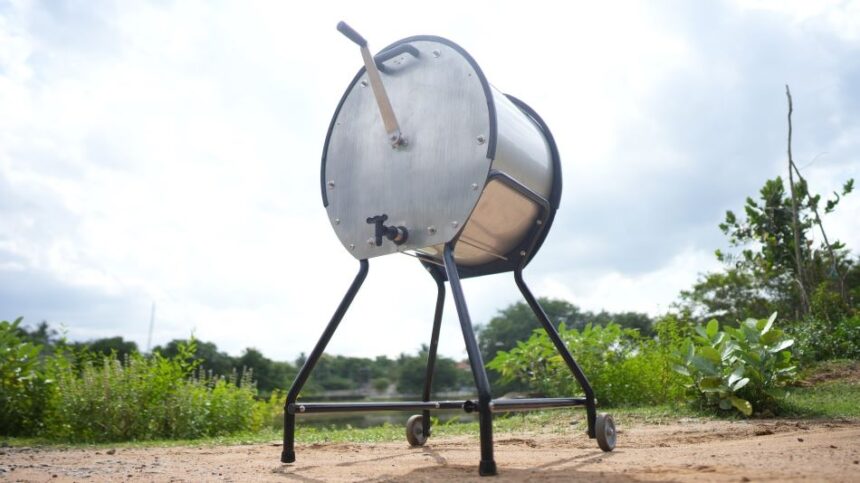
Divya is built around practical constraints. The machine is flat-packable, manually powered and intended for communities where shipping, assembly, water use and repairability matter as much as wash performance.
Fast Company reported that the Divya 1.65 uses a stainless-steel drum and tub, weighs about 40 pounds and can hold about 25 articles of clothing, or roughly 11 pounds of laundry. The washer uses about eight gallons of water and requires only five to six minutes of active turning during a 30-minute cycle.
For some users, the machine can reduce hand-washing time from about 20 hours per week to five hours, according to the report. In human terms, that means roughly 15 hours returned each week to families that previously spent that time on one repetitive household task.
The latest model was shaped by interviews with 4,000 families in 15 countries, according to Fast Company. That feedback led to changes including a built-in scrubber for stubborn stains, a faster drainage tap and more durable wheels.
Why the appliance channel should watch
Divya’s market does not look like a typical appliance showroom. The machines are deployed through humanitarian networks, community institutions and local programs serving refugee camps, orphanages, schools, hospitals and remote households.
That makes the product relevant to manufacturers and suppliers beyond the humanitarian sector. Divya puts familiar appliance questions into a harsher operating environment: Can the product be shipped efficiently? Can users assemble it quickly? Can it work without power? Can it reduce water use? Can it be maintained locally?
Those are not niche design questions. They connect directly to durability, serviceability, parts access and total cost of ownership — issues that matter across the appliance business, from premium connected laundry to basic products built for emerging markets.
- Families can reduce the time and physical labor required to wash clothes by hand.
- Women and girls may gain more time for school, work, caregiving or rest.
- Community institutions can manage laundry where dependable electricity and water infrastructure are limited.
- Product teams can study Divya as a case in designing around real-world constraints rather than showroom assumptions.
Innovation without the grid
The Washing Machine Project says its Divya manual washer is designed to save water and time compared with hand-washing clothes. The broader lesson for appliance makers is that meaningful product development can come from stripping a machine down to its most useful function.
For some households, a washer is a convenience. For others, it is a tool that can change how much of a week is consumed by unpaid labor. Divya’s value is not that it competes with a modern automatic washer. It is that it makes laundry more manageable where the modern appliance system has not reached.