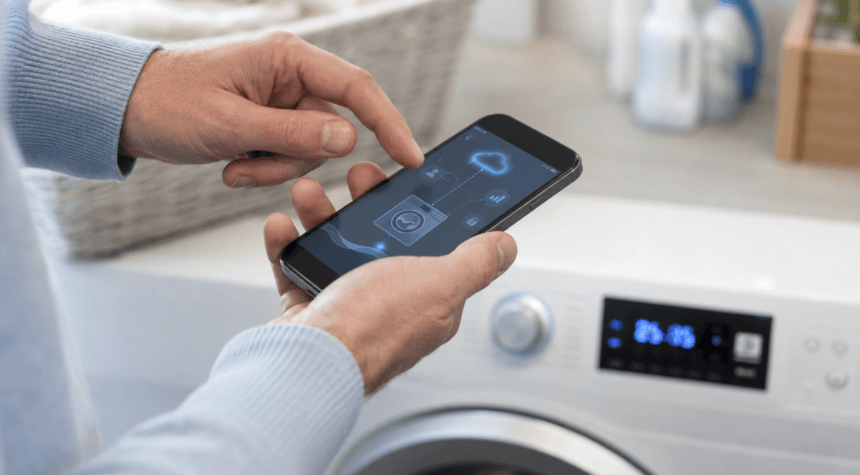
Smart appliances can do more than send a push alert when a load is finished or a refrigerator door is left open. When connected to Wi-Fi, they may also send usage, performance and account data back to manufacturers, a trade-off getting renewed attention after Consumer Reports testing and recent consumer-technology coverage highlighted how much information can move from the kitchen or laundry room to the cloud.
The practical question for the appliance channel is not whether connected appliances are good or bad. It is whether retailers, installers, servicers and consumers understand what connectivity adds, what data it may generate, and what happens when a product’s app, cloud service or software support becomes part of the ownership experience.
What appliances may send
Consumer Reports tested 12 smart appliances across five major brands — GE, LG, Maytag, Samsung and Whirlpool — and found that all of the tested appliances sent data back to the manufacturer. CR said the appliances transmitted between 3.4MB and 19MB of data per week, even though the test appliances were used only once per day.
CR reported that it did not find security vulnerabilities in those tested products and that personal data was encrypted. But the group also found that the appliances were consistently collecting and transmitting data, and that most manufacturers described the information only in broad terms, such as usage and performance data.
The details can be more specific than many buyers expect. Kenmore told CR its appliances collect information such as power status, door open and close activity, filter status, cycle details, temperature information and energy use. CR also reported that some appliance apps can collect personal or device-linked information such as ZIP code, phone number, date of birth and geolocation.
A July 17 Engadget report put the issue back in front of consumers, summarizing the Consumer Reports findings for connected refrigerators, dishwashers, washers, dryers and other appliances. For the trade, the renewed attention is a reminder that Wi-Fi setup is no longer just a convenience feature. It is also a data and service decision.
More Read
Why manufacturers want the data
Manufacturers have straightforward business reasons to want appliance data. Usage patterns can help engineering teams see which cycles customers actually use, how often filters are replaced, where error codes appear, and whether new software features are being adopted. That information can support product development, warranty analysis, energy management tools, app design and future merchandising.
The same data can also support personalization and marketing. If an app knows a household’s most-used laundry cycles, preferred oven modes or refrigerator behavior, it can promote supplies, service plans, replacement filters, recipes, upgrades or future appliances. That does not mean every connected appliance is misusing data, but it does mean the business value of the data extends beyond making a machine run.
That distinction matters on the sales floor. A customer may welcome remote diagnostics and energy alerts but object to broader marketing use or third-party sharing. Retailers do not need to turn a product demonstration into a privacy seminar, but they should be prepared to explain that app terms, account settings and manufacturer privacy policies control more of the experience once the appliance is connected.
Diagnostics can change the service call
Connectivity can be useful when an appliance fails. Consumer Reports noted that some connected appliances can support remote diagnostics before a service visit, helping a manufacturer or service provider identify a likely failed component and bring the right part on the first trip. That can reduce repeat visits, speed warranty work and give technicians a better starting point than a vague customer complaint.
Smart appliances also may store diagnostic history that can be accessed during a visit, even when the customer does not keep the appliance connected to the internet. CR reported, for example, that GE Appliances said some of its products include a port that allows technicians to download data from recent cycles.
For servicers, the risk is that diagnostics can become unevenly distributed. If the most useful data is available only through a manufacturer app, a brand-controlled portal or an authorized-service process, independent shops may have less visibility than factory networks. That could affect estimates, first-call completion rates and customer expectations.
The best practice is simple: ask the customer before connecting to an appliance account, explain what data is being accessed, and document whether the visit included remote diagnostics, local diagnostic data or a conventional physical inspection. Technicians should not use personal logins, shared store credentials or improvised account workarounds to make a connected feature function.
Retailers and installers need a script
Retailers and installers are often the people who turn a smart appliance from a Wi-Fi-capable product into a connected product. That makes the handoff important. A customer who says yes to setup should know whether the installer is helping connect the appliance to the household’s Wi-Fi, creating a manufacturer account, enabling remote control or accepting app permissions.
- Make Wi-Fi setup a choice, not an assumption. Some customers want app alerts and remote diagnostics. Others want the appliance to operate without a cloud account whenever possible.
- Explain which features depend on connection. Remote start, cycle notifications, software updates, energy reports, guided cooking, filter reminders and diagnostic tools may require an app or manufacturer account.
- Separate installation from consent. Installers should not click through privacy choices, tracking prompts or account permissions without the customer’s participation.
- Protect credentials. No dealer, builder, property manager or installer should leave an appliance tied to an employee email address, temporary password or account the customer cannot control.
- Tell customers where to look later. Privacy settings, app permissions, location access and marketing choices often can be reviewed after setup, but customers need to know where those controls are.
Software support is part of ownership
Connected appliances also raise a longer-term question: How long will the software, app and cloud service be supported? A 2024 Consumer Reports review of 21 major appliance brands found that only three brands clearly told consumers how long they guaranteed software and app updates for their appliances. CR also cited survey data showing consumers expect large appliances to last an average of 12 years.
The Federal Trade Commission raised a similar concern for smart products more broadly. In November 2024, FTC staff said nearly 89% of surveyed smart products did not disclose on product webpages how long they would receive software updates.
That issue is not limited to cybersecurity. If a product’s best features depend on an app or cloud service, support policies can affect consumer satisfaction, repairability and resale value. A dishwasher, range or refrigerator may still perform its core job without Wi-Fi, but the features that helped justify a premium price may not last as long as the appliance’s compressor, motor or control board.
The federal U.S. Cyber Trust Mark, a voluntary cybersecurity labeling program for connected devices, is intended to give consumers clearer information about whether a product meets baseline cybersecurity standards and how long software updates are planned. For appliance retailers, it may eventually become another label to explain alongside Energy Star, warranty terms and service-plan options.
What consumers should ask before connecting
Consumers do not need to reject smart appliances to take privacy seriously. They should, however, treat Wi-Fi setup as a decision. Before connecting, buyers should ask what features they gain, what data the app collects, whether the appliance can work normally offline, how long software updates are expected, and whether diagnostic data can be shared with the service provider they actually plan to use.
Households that connect appliances can also reduce risk by reviewing app permissions, limiting location access when it is not needed, using strong unique passwords and placing smart-home products on a guest or separate network when their router supports it. Those steps will not answer every data-use question, but they give consumers more control than a default setup.
For dealers and servicers, the useful message is not that connected appliances are dangerous. It is that connected appliances are now part product, part software and part service relationship. The companies that explain that clearly will be better positioned when customers ask why the appliance wants Wi-Fi — and what it plans to do once it gets it.