NEW YORK, April 26, 2026 — A class action lawsuit filed in federal court alleges that a popular all-in-one laundry appliance sold by GE Appliances fails to properly dry clothes due to a design defect involving its lint filtration system.
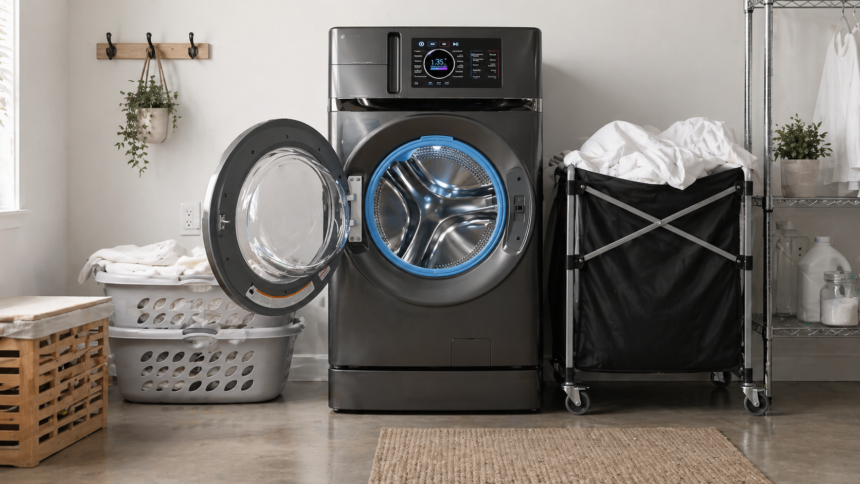
The complaint, brought by plaintiff Avroham Sherman against Haier US Appliance Solutions Inc., which operates GE Appliances, centers on the GE Ultrafast 2-in-1 washer-dryer combo. The lawsuit claims the unit’s lint trap and internal duct system allow excessive lint buildup, ultimately impairing drying performance.
Filed in the U.S. District Court for the Eastern District of New York, the case seeks to represent a class of New York consumers who purchased or leased the appliance. Sherman alleges the defect prevents the product from fulfilling its core function.
Alleged design flaw impacts drying performance
According to the complaint, the appliance’s lint filtration system fails to adequately capture lint, allowing it to accumulate within critical internal components such as the evaporator and condenser coils. This buildup allegedly reduces airflow and heat exchange efficiency, leading to incomplete drying cycles.
The lawsuit further claims that consumers have reported unsuccessful repair attempts, with service interventions addressing symptoms rather than the root cause of the issue.
“As a result, the dryer’s lint filtration system fails to prevent lint from reaching the dryer’s evaporator and condenser coils,” the complaint states.
The plaintiff argues that GE Appliances was aware of the defect but failed to disclose it to consumers or implement a recall or effective remedy.
More Read
Legal claims and regulatory implications
The lawsuit alleges multiple violations, including breach of warranty, breach of contract and unjust enrichment. It also cites alleged violations of the Magnuson-Moss Warranty Act and New York General Business Law related to deceptive business practices.
The plaintiff is seeking compensatory damages, statutory damages and injunctive relief, along with a jury trial. The case could have broader implications for manufacturers of combination laundry units, a segment that has seen increased adoption in space-constrained housing markets.
Industry analysts note that washer-dryer combo units rely heavily on efficient airflow and heat exchange systems, making them particularly sensitive to lint management design. Any systemic failure in these areas can significantly impact performance and consumer satisfaction.
Broader trend of appliance litigation
The case adds to a growing number of legal challenges facing appliance manufacturers over alleged product defects. Recent lawsuits have targeted issues ranging from overheating components to structural failures in ovens and refrigerators.
- Lint management and airflow design flaws in laundry appliances
- Thermal performance failures in cooking appliances
- Durability concerns in refrigeration systems
- Transparency and disclosure practices in product defects
As regulatory scrutiny and consumer awareness increase, manufacturers may face heightened pressure to improve product validation processes and post-sale support mechanisms.
The case, titled Sherman v. Haier US Appliance Solutions Inc., remains pending, and the court has not yet ruled on the claims.