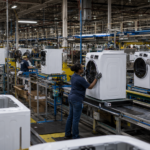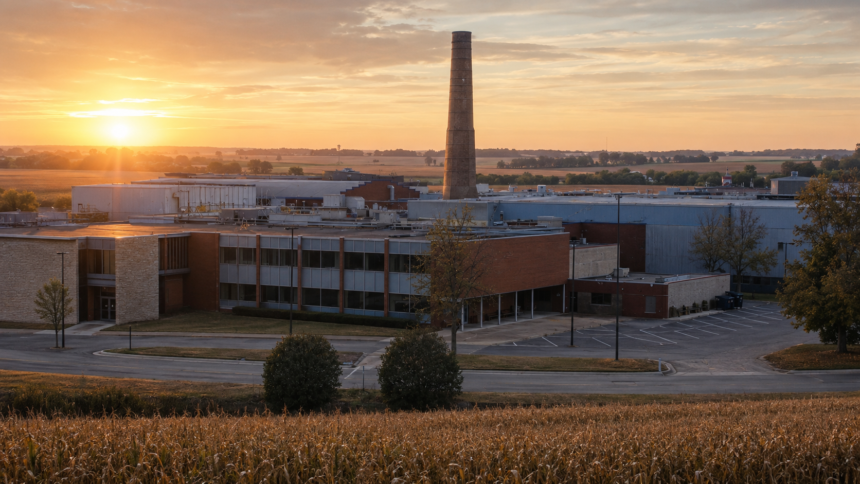
Whirlpool Corp. is cutting another 288 jobs at its refrigerator plant in Middle Amana, Iowa, deepening a yearlong contraction at one of the most closely watched U.S. appliance manufacturing sites. The latest round, reported by the Des Moines Register and local station KCRG, brings recent layoffs at the plant to 879 workers since July 2025 and raises a larger question for the industry: how much domestic appliance capacity manufacturers can preserve while demand weakens and global cost pressure intensifies.
The latest cuts are scheduled to take effect July 5, according to the Register’s report, which cited a June 4 notice filed with Iowa’s Worker Adjustment and Retraining Notification system. Iowa Workforce Development maintains WARN data for layoffs and plant closings through its public WARN notice portal.
The Amana operation manufactures refrigerators under Whirlpool-owned brands including Whirlpool, Amana, Maytag and KitchenAid. The plant, once a major rural Iowa manufacturing anchor with a workforce of about 3,000, has now seen three large rounds of cuts: 250 workers in July 2025, 341 workers in March 2026 and 288 more scheduled for July.
The Amana layoffs are not just a local workforce story. They are a test case for how U.S. appliance makers balance domestic manufacturing, weak demand, modernization costs and global production networks.
Appliance News analysis
Why this matters
For the appliance industry, the Amana cuts land at the intersection of three pressures: falling replacement demand, higher operating costs and renewed scrutiny of where refrigerators and other major appliances are made.
Refrigeration is among the most capital-intensive categories in the home appliance business. Plants must manage large product platforms, energy-efficiency requirements, steel and component costs, logistics constraints and shifting consumer demand for different formats, especially French door and bottom-mount refrigerators.
That makes workforce reductions at a major U.S. refrigerator plant consequential beyond Iowa. Retailers may see changes in product flow, servicers may eventually see a different installed base of models and parts, and distributors may need to adjust expectations around lead times, product mix and domestic sourcing claims.
More Read
What changed
KCRG reported that Whirlpool is ending second-shift production at the Amana plant effective July 5 and that 288 employees will be affected. Whirlpool told the station the cuts are part of a multiyear modernization plan intended to transform the plant into a more competitive long-term operation.
In a statement reported by KCRG, Whirlpool said the “difficult actions” are necessary to position the plant for “stability and growth.” The company also said it does not expect further Amana layoffs as part of the modernization plan and that affected employees could be recalled under its labor agreement with IAM Local 1526.
The company’s explanation is consistent with a March 5 letter from Whirlpool Chairman and CEO Marc Bitzer to U.S. Reps. Mariannette Miller-Meeks and Ashley Hinson. In that letter, Bitzer said Whirlpool had invested more than $150 million in Amana in recent years but that the existing operations were “not sustainable in today’s marketplace without further changes.”
Bitzer also said the company’s U.S. manufacturing footprint remains central to its strategy, writing that 80% of major appliances Whirlpool sells in the U.S. are produced in U.S. plants. He rejected the argument that the Amana changes are being driven by Whirlpool’s Mexico footprint, saying the company’s global supply chain was not the cause of the modernization plan.
The union and political pressure
The International Association of Machinists and Aerospace Workers, which represents hourly employees at the plant, has sharply criticized the layoffs. KCRG reported that the union accused Whirlpool of choosing to make work in Mexico instead of Iowa, and cited Whirlpool’s recent Mexico refrigerator investments and production decisions in its statement.
That allegation has also drawn political attention. In a March 2 letter included in the source material, Miller-Meeks and Hinson pressed Whirlpool to explain whether Amana job losses coincided with expanded manufacturing capacity in Mexico, what product lines or sub-assembly work were being reduced in Iowa, and what support displaced workers would receive.
The lawmakers wrote that the layoffs could “hollow out a community” and weaken the domestic manufacturing base. Whirlpool, in Bitzer’s response, said it is working with Iowa Workforce Development to provide assistance, training and resources to affected employees.
The industry impact
The Amana layoffs are happening as the broader appliance market remains under stress. Whirlpool’s first-quarter 2026 results showed lower sales and margin pressure, and the company said it expected 2026 net sales of about $15 billion while targeting more than $150 million in structural cost reductions and more than $900 million in debt reduction.
Reuters reported in May that Whirlpool cut its full-year profit forecast, suspended its dividend and cited high interest rates, sluggish housing turnover and cautious consumer spending as pressures on replacement demand. The company expected North American appliance industry sales to decline 5% for the year, according to Reuters.
For retailers, that can mean a more difficult selling environment, especially for discretionary upgrades. For servicers, it may extend the repair-over-replace cycle as homeowners keep aging refrigerators, dishwashers and laundry products running longer. For manufacturers, it increases pressure to simplify platforms, control labor and logistics costs, and align factory output with a softer demand curve.
- Manufacturers face more pressure to justify domestic production costs while still meeting price-sensitive demand.
- Retailers and distributors should watch whether modernization changes the model mix, availability or promotional cadence for Whirlpool-built refrigeration.
- Servicers and warranty providers may see continued consumer interest in repair as replacement purchases are deferred.
- Workers and local communities face the immediate impact of lost wages, benefit transitions and reduced manufacturing density in rural Iowa.
What comes next
The next test will be whether Whirlpool can show that Amana’s smaller workforce is part of a credible modernization path rather than a slow retreat from domestic refrigerator production. The company has said the plant will continue producing two-door bottom-mount and French door refrigerators and that it plans future investments to expand operations and upgrade the types of products made there, according to the Register’s report supplied for this article.
The union, meanwhile, is likely to keep pressing for transparency on product transfers, recall rights, severance, health coverage and the company’s long-term employment targets. Those details matter because layoffs tied to modernization can look very different depending on whether new work, new platforms or parts operations actually arrive after the cuts.
For the appliance sector, Amana is becoming a bellwether. If a flagship U.S. refrigerator plant backed by a major domestic manufacturer still needs repeated workforce reductions to stay competitive, other companies, suppliers and service networks will be watching closely for the next signal: whether modernization stabilizes production, or whether weak demand and global cost pressure keep shrinking the U.S. appliance manufacturing map.