Right to repair has spent years as a fight over phones, tractors and cars. For the appliance business, the next front is closer to home: refrigerators that depend on sensors and control boards, washers that display fault codes, ranges with electronic modules and connected appliances that can fail in software as much as hardware.
The debate is no longer abstract for manufacturers, retailers, servicers, distributors and warranty companies. A broken dishwasher or refrigerator can trigger a same-week purchase, an emergency service call or a warranty claim. The question now moving through statehouses and enforcement agencies is who gets practical access to the parts, tools, service literature and diagnostic software needed to keep those products running.
The latest signal came from outside the appliance aisle. Deere & Co. agreed in April to pay $99 million into a proposed settlement fund tied to repair access for large agricultural equipment and to make certain digital repair tools available for 10 years, while denying wrongdoing. Reuters reported that the proposed settlement still required court approval, and the Federal Trade Commission has a separate case against Deere over repair restrictions.
Parts access is the pressure point
Appliance repair sits at the intersection of consumer cost, brand trust and service capacity. When a washer, refrigerator or range fails, the consumer’s decision is usually fast: repair it, replace it or call whoever can get there first.
Consumer Reports found in a 2024 nationally representative survey that 60% of respondents had a large appliance stop working in the previous five years. Among those consumers, 58% replaced the product, and 26% of those who replaced it had tried to repair it but could not.
That is the appliance industry’s repairability problem. If parts are unavailable, service manuals are restricted, diagnostic tools are limited or repairs take too long, replacement becomes the path of least resistance. That can lift short-term sales but weaken long-term trust when consumers believe a product failed too early or was not reasonably serviceable.
More Read
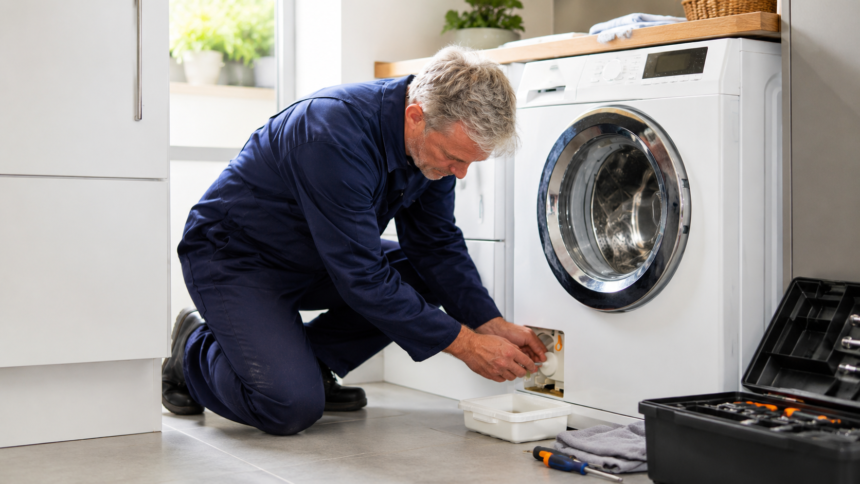
The same survey found that, among consumers who successfully repaired large appliances, 27% used an independent repair shop, while 48% repaired the appliance themselves or had a family member or trusted friend do it. Independent servicers and informal repair networks already play a meaningful role in keeping major appliances in service.
State laws are turning access into compliance
Right-to-repair policy is shifting from advocacy slogan to compliance obligation. California’s Right to Repair Act explicitly covers “electronic or appliance” products and requires manufacturers to make sufficient documentation, functional parts and tools available on fair and reasonable terms. For products with a wholesale price of $100 or more, that obligation lasts at least seven years after the last date a model or type was manufactured.
Minnesota’s Digital Fair Repair Act took effect July 1, 2024, requiring manufacturers of certain electronic products to make documentation, parts and tools for diagnosis, maintenance or repair available to independent repair providers and product owners on fair and reasonable terms.
Colorado’s law expands right-to-repair coverage to digital electronic equipment beginning Jan. 1, 2026, and restricts certain uses of parts pairing that prevent installation of replacement parts, reduce product functionality or trigger misleading warnings about unidentified parts.
Warranty language is the retail risk
For appliance owners, right to repair does not erase warranty terms. For appliance companies, warranty terms cannot be used casually to scare consumers away from lawful repair options.
In July 2024, the FTC warned eight companies about warranty practices that could harm consumers’ right to repair, including statements suggesting consumers must use specified parts or service providers to keep warranties intact and stickers using “warranty void if removed” or similar language.
That distinction matters in appliances because many repairs are not simple consumer tinkering. Refrigerators, laundry equipment, dishwashers and cooking appliances involve electrical systems, water lines, gas connections, sealed refrigeration systems or software-controlled components. A manufacturer can still deny a claim when an improper repair causes damage, but broad language implying that any independent repair automatically voids coverage is increasingly risky.
For retailers and warranty administrators, the sales floor and call center need cleaner explanations. Consumers should understand the difference between a manufacturer warranty, an extended service contract, an authorized repair, an independent repair and a failed claim caused by improper work.
Repairability becomes a product feature
Right-to-repair rules could make appliance service more competitive, but not necessarily simpler. Manufacturers may need to maintain broader parts catalogs, publish more usable service information, manage software access and create secure ways for independent technicians to run diagnostics without exposing trade secrets, source code or customer data.
- Manufacturers may face higher compliance costs but could benefit from longer product life, stronger brand trust and fewer complaints about “unrepairable” appliances.
- Independent servicers could gain access to better documentation, diagnostic pathways and parts, especially for electronically controlled products.
- Retailers may need to update warranty disclosures, service-plan scripts and replacement-versus-repair guidance.
- Warranty companies could see more repair options, but also more disputes over workmanship, parts quality and authorization rules.
- Consumers may get more choice, but they will still need to understand safety limits, warranty exclusions and when a certified technician is necessary.
The environmental stakes are also real. The EPA says refrigerated household appliances can contain refrigerants, insulation foam blowing agents, mercury, contaminated oils and PCBs, and that hazardous components such as PCBs, mercury and compressor oil must be removed before disposal.
For smart appliances, the challenge is sharper. A connected refrigerator or laundry pair may require both a physical repair and a software action: calibration, pairing, provisioning, firmware updates or diagnostic resets. If only the manufacturer’s authorized network can complete those steps, the product may be repairable in theory but restricted in practice.
Implementation is the next fight
The next phase of right to repair in appliances will likely be fought in implementation, not slogans. The key questions will be how “fair and reasonable” terms are interpreted, how quickly parts must be supplied, what diagnostic software must be shared, which products are covered and how manufacturers can protect security without locking out legitimate repair.
The best outcome for the appliance sector is not a free-for-all repair market. It is a clearer one: safer repairs, more transparent warranties, better parts access, fewer unnecessary replacements and service networks that can keep up when essential household machines fail.
Right to repair is often framed as a consumer rights movement. For home appliances, it is also a reliability test. The brands that treat repairability as part of ownership — not a threat to it — may be the ones that earn the next purchase.