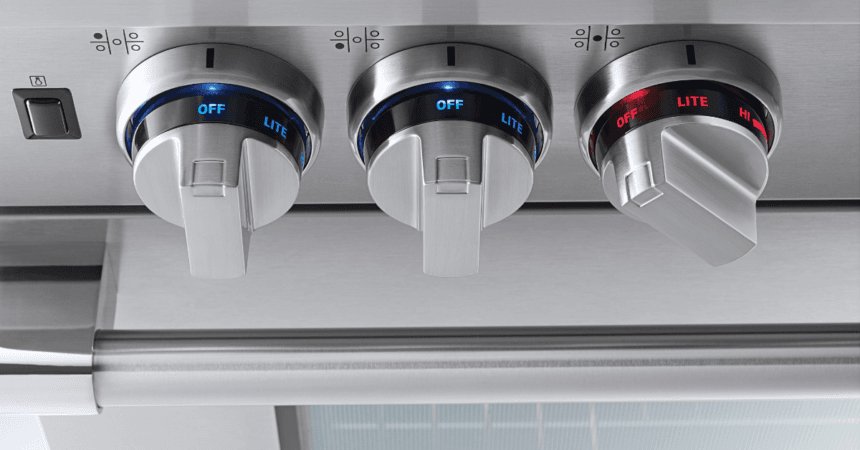
A stove knob can look like one of the simplest controls in a home. But a series of fires, two major range recalls and years of federal standards work have exposed a harder safety problem: how easily should a front-mounted control move, and how should a range distinguish an intentional cooking command from a bump, a leaning body or contact by a pet?
The U.S. Consumer Product Safety Commission has spent years examining accidental activation of range controls, including work with voluntary-standards organizations and manufacturers. Samsung recalled about 1.12 million electric ranges in 2024 after reports that front-mounted knobs could be activated by accidental contact. LG followed in February 2025 with a recall of about 500,000 electric ranges for the same basic hazard.
Those actions established that accidental activation is not merely hypothetical. But they did not settle the design question. CPSC-related working groups were still meeting in 2026 to discuss range-knob requirements, even as litigation raised a related but legally distinct question: whether a pet can activate a range that was not subject to one of those recalls.
LG Recall Documented Fires, Injuries and Pet Activation
LG’s 2025 recall covered about 500,000 slide-in and freestanding electric ranges with front-mounted knobs. The CPSC said the knobs could be activated accidentally by humans or pets, creating a fire hazard.
At the time of the recall, the agency said LG had received at least 86 reports of unintentional activation. Those incidents included more than 28 fires. At least five fires caused extensive property damage totaling more than $340,000, and at least eight minor injuries were reported. The CPSC also cited three fires involving pets that were killed.
The remedy was not a mechanical replacement of every affected knob. LG instructed owners to use the ranges’ Lock Out or Control Lock function when the appliance was not in use and offered warning labels reminding consumers to engage the feature. The company also directed owners to keep children and pets away from the controls and to check the knobs before leaving home or going to bed.
More Read
The LG action followed Samsung’s 2024 recall of roughly 1.12 million electric ranges. In that case, CPSC said Samsung had received more than 300 reports of accidental activation since 2013. The reports included about 250 fires, at least 18 involving extensive property damage. Forty injuries were reported, eight requiring medical attention, and seven fires involved pet deaths. Samsung offered free knob locks or covers for affected models.
Together, the two recalls covered more than 1.6 million ranges. They also showed that similar accidental-activation hazards can lead to different remedies, from physical knob locks and covers to reliance on an electronic control-lock function and warnings.
CPSC Work Moved the Question Into Voluntary Standards
The recalls arrived while regulators, manufacturers and standards organizations were already trying to define a more durable engineering response. CPSC’s accidental-activation work has focused on front-mounted controls and the amount and sequence of movement needed to turn a burner on.
Meeting records from the independent joint range-knob working group show participants examining control forces, knob geometry, activation sequences and test methods. The central challenge is not simply making every knob harder to turn. A control must resist unintended contact while remaining usable for people with different strength and dexterity.
The standards discussion has included a two-step concept familiar on many gas ranges: a user pushes a knob inward and then rotates it. But the safety value depends on measurable details — how much inward force, how much torque and what movement sequence is required — rather than the mere existence of a push-and-turn label.
CPSC’s public calendar shows that the Independent/Joint Task Group on Range Knobs was still meeting on March 18, 2026. That continued work is important. The industry has moved beyond treating accidental activation as an isolated complaint, but the voluntary-standard process had not produced a single universal control design that eliminates the problem across new ranges.
The Maytag Case Is an Allegation, Not a Recall Finding
A lawsuit covered by Appliance News illustrates why the distinction between documented recall findings and allegations matters.
The complaint alleges that a dog activated a front-mounted knob on a Maytag gas range and started a residential fire. The plaintiffs contend that the control could be moved too easily and that the range was defectively designed. Those are allegations in civil litigation; they are not CPSC findings, and the lawsuit itself does not establish that the Maytag range has the same defect documented in the Samsung or LG recalls.
That difference is especially important because the recalled Samsung and LG products were electric ranges, while the Maytag litigation involves a gas range. Control architecture, ignition behavior and applicable standards can differ. A pet-activation allegation therefore adds to the design debate without proving a common defect across fuel types or brands.
What Has Changed — and What Has Not
The safety landscape has changed in several concrete ways. Accidental knob activation is now documented in major CPSC recalls rather than existing only as scattered consumer complaints. Manufacturers have deployed remedies including knob locks, covers, electronic lockout features and warning labels. Standards groups have also been working toward testable requirements intended to make unintended activation more difficult on future products.
What remains unresolved is whether those measures produce a consistent level of protection across the range market. Retrofitted knob covers and lockout reminders depend on consumer behavior. Electronic locks can be effective only when owners engage them. Increased push force or rotational resistance may reduce accidental activation but can create accessibility tradeoffs. And a requirement for new products does not automatically change the millions of ranges already installed in homes.
There is also no basis to conclude from the recalls that every front-mounted knob is unsafe. The CPSC actions identify specific models and hazards, and consumers should use model numbers — not appearance alone — to determine whether a range is recalled.
What Range Owners Can Do Now
Owners of Samsung or LG ranges should check the specific CPSC recall notices to determine whether their model is affected and obtain the manufacturer’s remedy. For any range with front-mounted controls, keeping combustible objects away from the cooking surface reduces the consequences if a burner is activated unexpectedly.
Consumers should also use an available control-lock function when recommended by the manufacturer, keep children and pets away from controls, and verify that burners are off before leaving the home or going to bed. Those precautions do not substitute for a recall remedy on an affected model.
The longer-term question belongs to designers and standards bodies: whether accidental activation can be engineered out of new ranges without making everyday controls difficult to use. The continued task-group work in 2026 shows that, despite two large recalls and years of attention, that question is not yet closed.