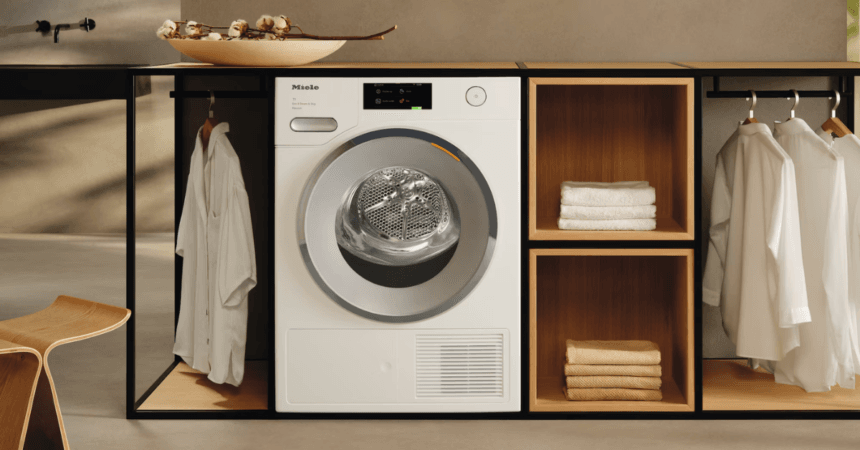
Two neighbors can buy the same $1,000 heat-pump dryer, earn similar incomes and live under the same state rebate program. Under revised federal rules, one may qualify for as much as $840 back while the other gets nothing — depending on whether the old dryer in the basement runs on electricity or gas.
That is the practical consequence of a Department of Energy change to the High-Efficiency Electric Home Rebate program. DOE Program Notice 26-2 removes federal support for what the agency calls “fuel-switching” and limits appliance and HVAC rebates to qualifying replacements of existing electric equipment with more efficient electric equipment. Eligible new construction can still qualify under program rules.
The change does not abolish the rebate program, and it does not make heat-pump dryers ineligible. It changes which households can receive help buying them. That nuance is likely to become a source of confusion as states revise or launch programs carrying the same federal dollars but operating under new federal boundaries.
The Old Appliance Now Matters as Much as the New One
For appliance shoppers, rebates are usually explained through the product being purchased: buy an eligible efficient model and receive an incentive. The revised HEEHR rules add a second piece of information that can determine eligibility — what the new appliance is replacing.
An income-qualified household replacing an electric resistance dryer with an eligible electric heat-pump dryer can still receive a rebate under an approved state program. A household replacing a gas dryer with the same heat-pump model cannot receive the HEEHR appliance rebate for that fuel-switching transaction under the revised DOE guidance.
The same logic can affect other appliance and home-equipment categories covered by the program, including electric cooking products and heat-pump water heaters when the proposed purchase replaces nonelectric equipment.
More Read
Utility Dive reported in June that the revised guidance removes rebates for fossil-fuel-to-electric replacements. DOE’s own program notice says state programs may provide rebates for replacing existing electric equipment with more efficient electric equipment, but not for fuel-switching.
For a Dryer, Hundreds of Dollars Are at Stake
The amounts are large enough to change a purchase decision. Minnesota’s current program materials list a maximum rebate of $840 for an ENERGY STAR-certified electric heat-pump clothes dryer or combination washer-dryer for households earning below 80% of area median income. Households between 80% and 150% of area median income are listed for a maximum $420 rebate.
For a shopper looking at a roughly $1,000 to $1,500 heat-pump dryer, an $840 rebate can erase a substantial share of the price premium over a basic machine. Losing it because the appliance being removed happens to burn gas changes the economics immediately.
Those figures are maximum program amounts, not a promise that every qualifying buyer will receive them. Income, product eligibility, state implementation, available funding and other requirements still apply.
States Are Having to Rework Programs Midstream
The rebate money flows through states, territories and tribes rather than from a national coupon consumers can use anywhere. That means the federal change lands differently depending on where a household lives and whether its local program has launched.
Minnesota offers a clear example. The state Department of Commerce says its Save Energy Minnesota program has not yet launched and is awaiting formal DOE approval. The agency says new federal rules and requirements change how its HEAR and HOMES rebates will work and that it is evaluating those changes.
The state also warns consumers that purchases made before launch will not receive retroactive federal rebates. That creates an awkward timing problem for a household with a failing appliance: waiting may preserve the possibility of a rebate, but a broken dryer or range does not always wait for a government program to open.
DOE’s Energy Savings Hub continues to direct consumers to Home Energy Rebates and state program information. Buyers should verify their state’s actual launch status and rules before purchasing an appliance on the assumption that a rebate will follow.
The Sales-Floor Question Changes
The revised policy turns a simple retail question — “Does this model qualify?” — into a household-specific one. A salesperson or contractor may need to know the customer’s income bracket, state program, exact product and the fuel used by the equipment being removed.
That is especially important because the appliance itself does not change. The same heat-pump dryer can be federally rebate-eligible in one replacement and ineligible in another. Retailers that advertise a maximum rebate without explaining that distinction risk creating expectations that cannot be met at checkout or installation.
DOE also revised other parts of the program. Program Notice 26-2 removes or changes certain administrative and consumer-protection requirements and restricts the use of self-attestation for income qualification. For the separate HOMES program, states receive flexibility in areas including ENERGY STAR requirements and, in specified jurisdictions, certain shipping and contractor travel costs.
The Policy Shift Changes the Purpose of the Incentive
The original electrification framing encouraged households to replace fossil-fuel equipment with efficient electric alternatives. The revised rule narrows that objective: federal appliance rebates now reward efficiency improvements within electric equipment rather than helping pay for the switch from another fuel.
That is a policy choice with a very ordinary household consequence. The question is no longer only whether a heat-pump dryer saves energy. It is whether Washington will help a particular household pay for one.
The rollout also remains under oversight. A July DOE inspector general review of California’s Home Energy Rebates found weaknesses in documented internal controls, following a separate inspector general review involving New Mexico. Those findings concern program administration rather than whether efficient appliances work as advertised, but they underscore how much implementation remains in the hands of state agencies.
Appliance News has separately covered efforts in Congress to change DOE’s appliance-efficiency rulemaking. The rebate revision works through a different mechanism, but both debates eventually arrive in the same place: the appliance aisle, where federal policy can alter which models cost less to own — and which buyers get help paying the upfront price.