The appliance that investigators say started a Maryland house fire this week has not been publicly identified. The device that helped the people inside survive has: a working smoke alarm.
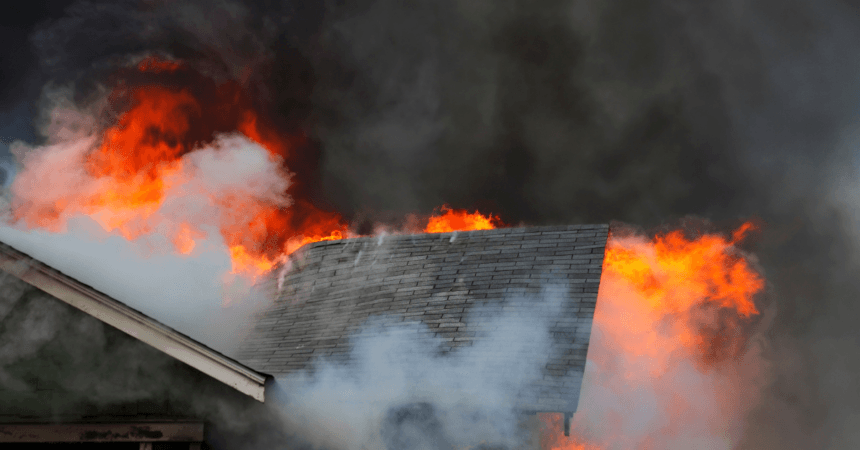
A fire in Chaptico, Maryland, on Aug. 24 caused an estimated $150,000 in damage after beginning on the first floor of a home on Manor Road. State fire investigators attributed the blaze to a malfunctioning electrical appliance, according to accounts citing the Maryland Office of the State Fire Marshal. Two occupants escaped without injury after smoke alarms sounded.
The lack of an identified appliance limits what can responsibly be concluded. There is no verified brand, model number or product category to check against recalls, service bulletins or incident databases. It would therefore be wrong to turn the Chaptico fire into a warning about any particular type of appliance.
What the incident does illustrate is how quickly an electrical failure can become a structure fire — and how a mundane safety device can matter before anyone knows what has gone wrong.
What Happened in Chaptico
The fire was reported at roughly 9:45 a.m. in the 38000 block of Manor Road. Bay District Volunteer Fire Department’s incident account says dispatchers first received a fire-alarm activation, followed by confirmation of a fire in a sitting room. Call takers instructed the occupants to leave.
Firefighters arrived to find smoke and visible fire at the two-story split-foyer house. Crews attacked fire on the first floor and dealt with extension into the second floor and attic. Bay District said the layered roof — a metal roof over existing shingles — complicated access to the attic and contributed to difficult heat conditions.
More Read
The fire was reported under control at about 10:50 a.m. Firefighters drew water from a nearby pond and remained for overhaul after the main fire was extinguished. No injuries were reported.
A separate account based on the State Fire Marshal’s findings put the loss at approximately $100,000 to the structure and $50,000 to its contents. The preliminary cause was described as a malfunctioning electrical appliance.
The Most Important Missing Detail Is the Appliance
“Electrical appliance” is an investigative category, not a useful product identification for consumers. It can encompass very different devices with different failure modes, electrical loads and safety standards.
Without a product type, brand and model, Appliance News cannot determine whether the appliance had been recalled, whether similar incidents have been reported or whether the failure involved the appliance itself, its cord, a connection or another electrical condition. No public information reviewed for this story establishes those details.
That uncertainty is worth preserving. Early fire reports often compress a complicated origin-and-cause investigation into a few words. A finding that an appliance malfunctioned does not by itself establish a broader defect in a product line.
Electrical Malfunctions Are a Significant Home-Fire Cause
The Chaptico fire sits inside a much larger national problem. The U.S. Fire Administration estimates that electrical malfunctions accounted for 7.7% of residential building fires in 2024. Cooking remained the largest category by far, at 46.7%.
Electrical failures can also be deadly. USFA’s most recent cause-of-death series estimates 305 residential building fire deaths attributed to electrical malfunction in 2023. The agency cautions that national estimates are based on fire-department reporting and statistical methodology, and they should not be read as a count of appliance-caused deaths specifically.
That distinction matters. A home’s electrical system, wiring, cords and connected equipment all can be involved in electrical fires. The Chaptico investigation points to an appliance; the national category is broader.
The Smoke Alarms Made the Actionable Difference
For the two people inside the Manor Road home, the most actionable fact is that the alarms sounded while escape was still possible.
The U.S. Fire Administration recommends smoke alarms inside every bedroom, outside each separate sleeping area and on every level of a home, including the basement. USFA also says smoke alarms should be replaced 10 years from their manufacture date.
Those instructions can feel remote from the appliance business, but they are part of the same safety chain. Product design can reduce the chance that a failure starts a fire. Circuit protection can interrupt some electrical faults. Smoke alarms address the next problem: warning people when prevention has failed.
What Owners and Servicers Can Take From the Fire
Because the appliance has not been identified, this incident does not support telling consumers to unplug a particular product or avoid a particular brand. Owners should instead pay attention to ordinary warning signs that warrant inspection or service: damaged cords or plugs, repeated breaker trips, burning odors, visible overheating, arcing, melted connectors or an appliance behaving abnormally.
Servicers encountering heat-damaged wiring or connectors also have a role beyond restoring operation. A repair that returns an appliance to function without resolving the cause of overheating can leave the underlying hazard in place.
Appliance News has recently covered several cases where fire risk was tied to a known product or design, including LG’s recalled electric ranges and a lawsuit involving a Maytag gas range. The Chaptico case is different because the public record does not yet identify the appliance.
If investigators release that information later, the story may become a product-safety story. For now, its clearest lesson is simpler. A malfunctioning appliance was blamed for a fire that spread from the first floor into the attic and caused six figures in damage. The people inside heard the alarms and got out.