New U.S. tariffs tied to forced-labor import enforcement are pushing appliance makers back into a familiar calculation: how much cost can be absorbed, how much can be passed through, and whether production footprints built for one trade regime still make sense under another.
The Office of the U.S. Trade Representative said July 23 that it was taking final action under Section 301 of the Trade Act of 1974 by imposing tariffs on 60 economies that USTR said failed to impose and effectively enforce prohibitions on imports made with forced labor. The action follows investigations launched in March and a comment process that included public hearings and more than 1,600 written comments.
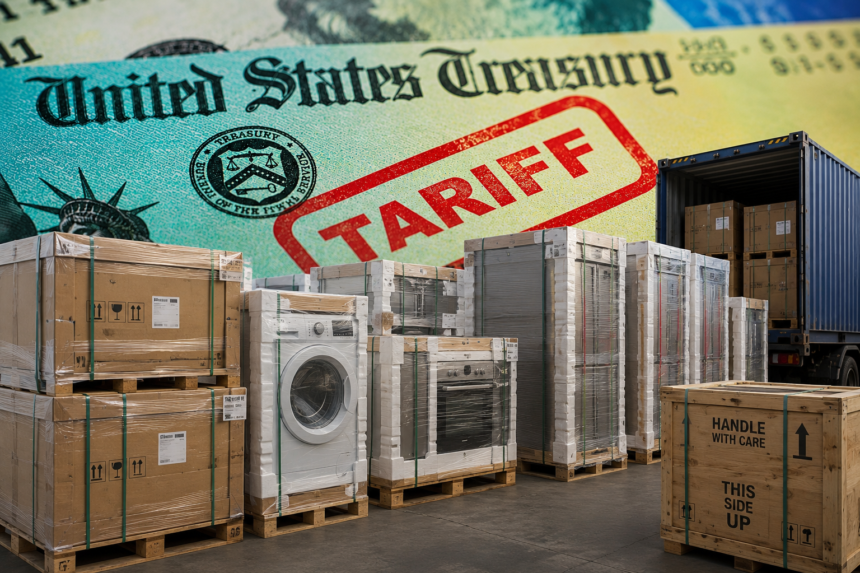
The tariff action is not written as an appliance-specific rule. But for appliance manufacturers, retailers and distributors, it lands in a sector already shaped by steel, aluminum, logistics and component-cost pressures. That makes the policy another variable in pricing, sourcing and factory-allocation decisions for products sold into the U.S. market.
What the New Tariffs Do
USTR said the new Section 301 duties apply across three main rate structures. Goods from some economies that have imposed, partially imposed or committed to forced-labor import restrictions are subject to 10 percent duties. Certain products from the European Union, Taiwan, Japan, Korea and Switzerland are subject to duties calculated net of Most-Favored-Nation tariff rates. Goods from other investigated economies are subject to 12.5 percent duties, unless exemptions apply.
The White House memorandum also directed USTR to exempt certain products, including some raw materials, goods that could create economy-wide disruptions if tariffed and products that cannot be produced in sufficient quantities or at reasonable prices in the United States or obtained from other sources. Those exemptions matter for appliance companies because even a finished appliance may depend on a chain of metals, electronics, motors, compressors, controls and subassemblies crossing multiple borders before final sale.
Samsung and LG Face a Factory-Map Problem
The pressure is especially visible for Samsung Electronics and LG Electronics, whose appliance businesses serve the U.S. market through manufacturing networks that include Korea, Vietnam and Mexico. Seoul Economic Daily reported that Samsung produces major appliances such as refrigerators and washing machines at plants in Korea and at subsidiaries in Vietnam and Mexico, while LG supplies U.S.-bound products through its Changwon plant in Korea and production bases in Vietnam and Mexico.
More Read

That geography matters because country of origin, applicable duty rates, product classifications and existing tariff programs can change the economics of the same appliance. Mexico has often been valuable as a North American production base, but appliance companies also face overlapping trade rules, including tariffs on steel, aluminum and copper derivative products that can affect appliances and televisions.
For appliance makers, the decision is not simply whether to move a refrigerator or washer line from one country to another. Production shifts can require supplier changes, tooling, labor planning, quality controls, logistics contracts and certification work. That makes sudden changes expensive, especially for companies balancing U.S. demand with global production capacity.
The Price Question Returns
The new tariffs put the appliance price question back in front of manufacturers and retailers. If duties raise landed costs, companies can absorb the hit, negotiate with suppliers, adjust product mix, alter promotions, raise prices or redesign sourcing plans. Each option carries a tradeoff.
Premium brands may have more room to protect margins through higher-end configurations and feature bundles. Mass-market models have less room because shoppers compare prices closely across brands, retailers and seasonal promotions. That is where even modest cost increases can affect assortment decisions, rebate planning and private-label competition.
What the Appliance Trade Should Watch
The immediate question for the appliance trade is how the final tariff schedules, exemptions and product classifications apply to specific categories and sourcing paths. Importers will need to review origin data, HTS classifications and landed-cost assumptions before translating the policy into price sheets or retail strategy.
Retailers should also watch for changes in promotion calendars and inventory positioning. If manufacturers adjust wholesale pricing or move production to reduce tariff exposure, the effects could show up unevenly by brand, category and price tier rather than as a single industrywide price increase.
The broader lesson is that appliance pricing is again being shaped by policy as much as by engineering or consumer demand. Tariffs may not determine every price tag, but they can change the math behind where appliances are built, how they are sourced and which products manufacturers choose to emphasize in the U.S. market.