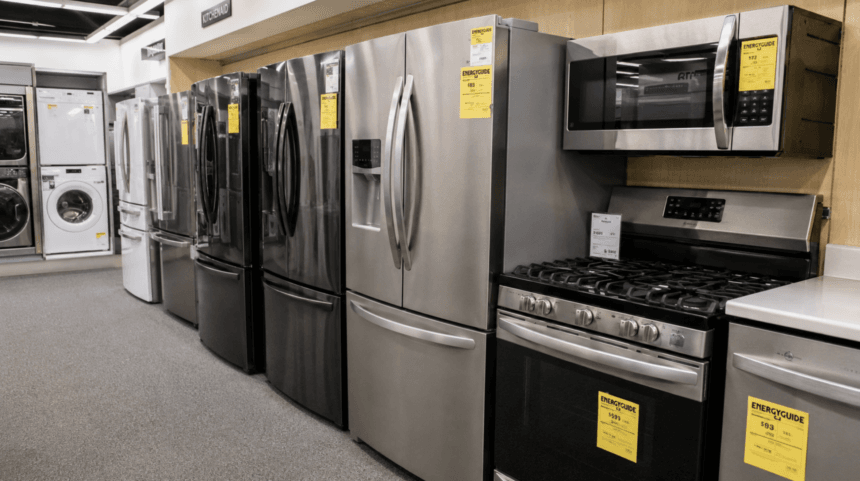
A Senate bill introduced by Energy and Natural Resources Committee Chairman Mike Lee would write new limits on federal appliance efficiency standards into law, reinforcing a Department of Energy proposal that could make future requirements harder to adopt and changing the rules manufacturers use to plan product compliance.
The Energy Efficiency Reform Act of 2026, introduced Aug. 6, would direct DOE to finalize changes to its appliance standards process and establish new statutory limits on when the agency can impose efficiency requirements. The legislation arrives as a separate group of 18 senators is urging DOE to withdraw its proposed Process Rule, setting up a sharper congressional fight over how aggressively the federal government should regulate the energy use of refrigerators, washers, air conditioners, water heaters and other residential and commercial equipment.
Lee Bill Would Lock In New Thresholds
DOE’s proposed Process Rule would make several procedural and analytical changes to the way the department develops energy conservation standards under the Energy Policy and Conservation Act. Among them is a definition of “significant energy savings” that generally requires projected savings of at least 2 quadrillion British thermal units, or an alternative showing of at least a 10% reduction in energy use over a 30-year period.
Lee’s bill would move key parts of that approach from agency policy into federal law. According to Facilities Dive, the measure would give DOE nine months to finalize the proposed changes, eliminate the current six-year product review cycle and impose the 2 quadrillion Btu threshold on future standards.
The bill also reaches beyond DOE’s rulemaking procedure. It would address federal standards affecting non-condensing gas furnaces and water heaters and preempt state restrictions on appliances based on fuel source. Those provisions broaden the legislation from a technical standards-process bill into a wider fight over federal and state authority over appliance choices.
Manufacturers Support More Stable Rulemaking
The Association of Home Appliance Manufacturers has backed the direction of DOE’s Process Rule proposal. In a July 2 statement, AHAM President and CEO Kelly Mariotti said manufacturers have faced uncertainty because the process has changed between presidential administrations and argued that the reforms should become permanent.
More Read

That predictability matters to appliance makers because federal efficiency rules can require engineering changes, testing, certification, factory investment and long product-development timelines. A statutory framework would be more difficult for a future administration to change than an agency process rule.
The American Gas Association also supports Lee’s legislation, arguing that federal efficiency policy has threatened consumer access to non-condensing natural-gas furnaces and water heaters and that future standards should be tied more closely to demonstrated energy and economic savings.
Eighteen Senators Want DOE to Withdraw Proposal
Opposition is developing at the same time. Sen. Martin Heinrich of New Mexico, the ranking Democrat on the Senate Energy and Natural Resources Committee, led 18 senators in an Aug. 6 letter asking Energy Secretary Chris Wright to withdraw the proposed Process Rule.
The senators argued that existing federal appliance standards have lowered household energy use and utility bills and said the new process could make future efficiency gains more difficult. Their letter cited Lawrence Berkeley National Laboratory estimates that existing standards have reduced total U.S. energy consumption by 6.5% and save the average household $576 a year, according to Contracting Business.
The senators also cited an estimate that halting future efficiency improvements could add about $150 a year to household utility bills, increase peak electricity demand by 32 gigawatts in 2040 and add nearly 1 billion metric tons of cumulative carbon dioxide emissions through 2050. Those figures represent the opponents’ case against the proposal rather than DOE’s assessment of its expected effects.
Efficiency advocates have raised similar objections. The Alliance to Save Energy said DOE’s proposal adds analytical thresholds and procedural steps that could affect future standards, while the Appliance Standards Awareness Project argues that the combined changes could make updates exceptionally difficult even when newer technology can reduce lifetime energy costs.
DOE Comment Period Remains Open
The underlying DOE proposal is not final. The department published the notice of proposed rulemaking July 7 and later extended the public comment deadline to Aug. 21 after trade organizations requested additional time.
For manufacturers and compliance teams, the immediate task is tracking both proceedings. DOE can still revise its proposal after reviewing comments, while Lee’s bill would need to advance through Congress before its requirements become law. Retailers and consumers are unlikely to see an immediate change on showroom floors, but the outcome could determine how frequently future generations of appliances face new federal efficiency requirements and how manufacturers calculate the cost of meeting them.