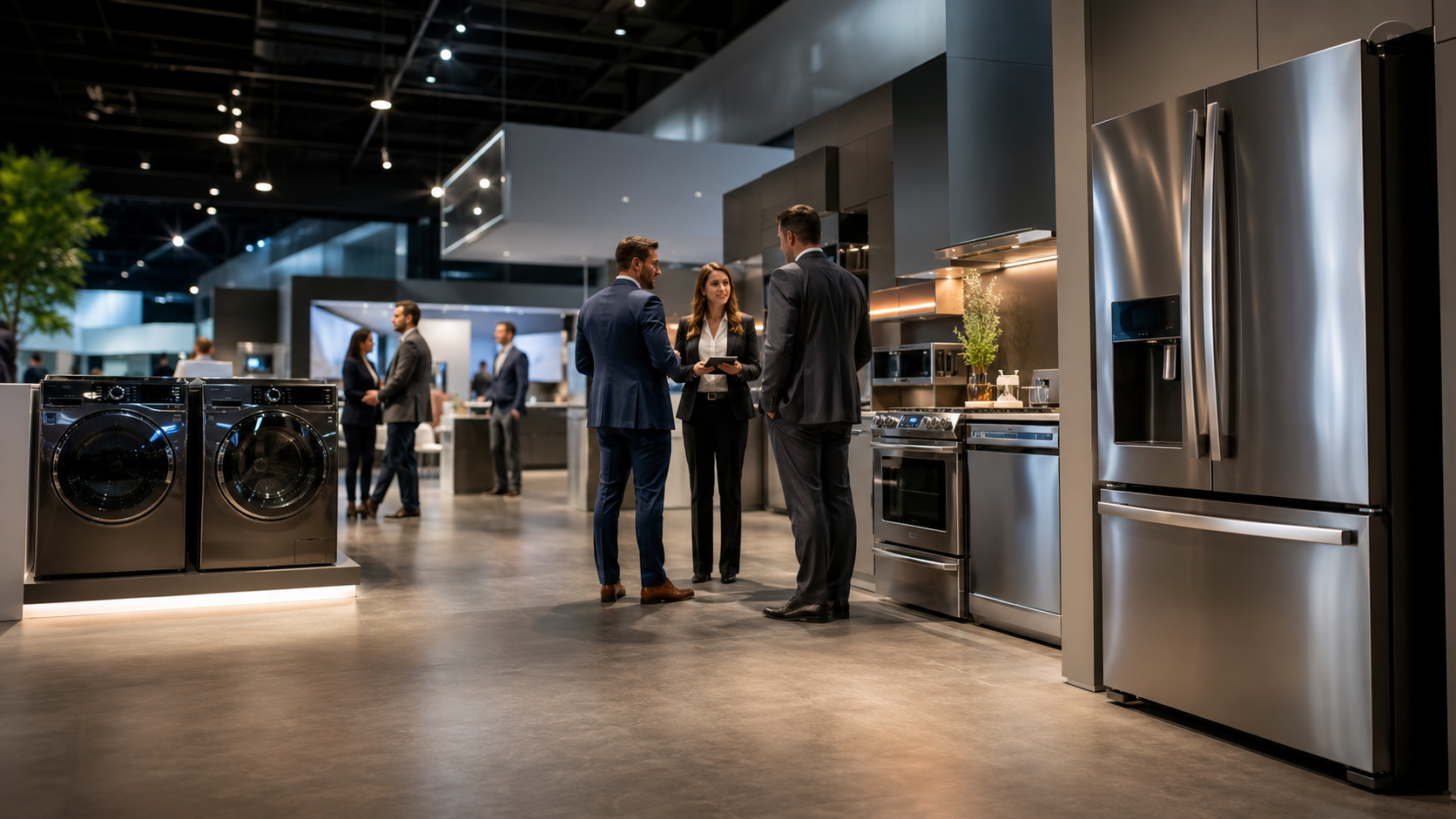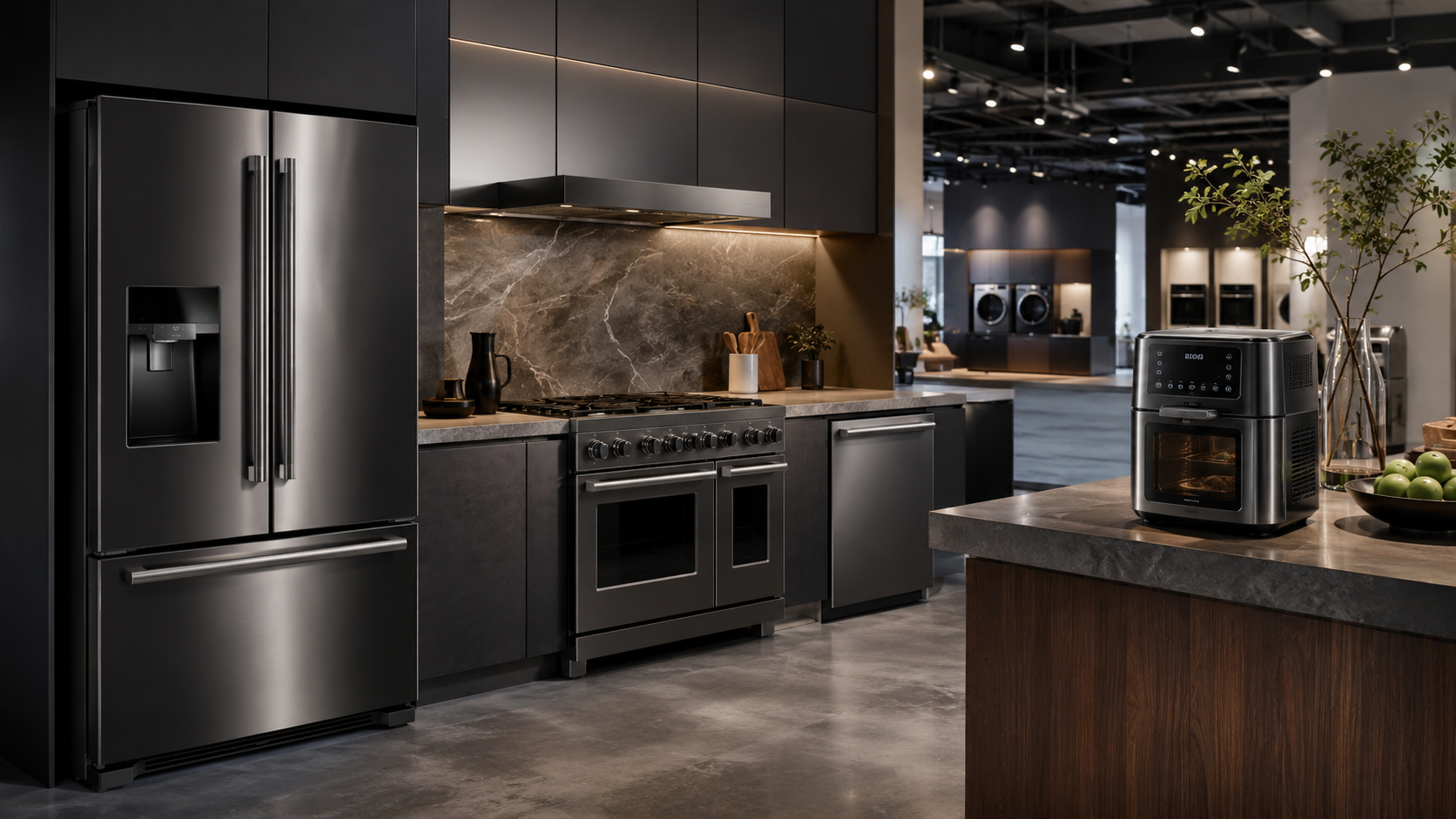
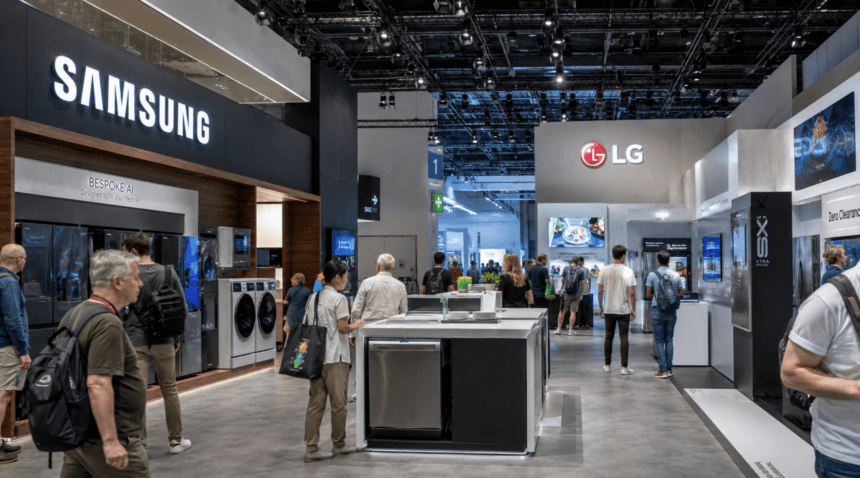
LG Electronics and Samsung Electronics are heading into IFA 2026 with competing visions for how artificial intelligence should move from a product feature to a broader home experience. LG is organizing its Berlin presentation around an “AI Appliance Orchestra” of connected products, while Samsung is extending its AI message beyond the exhibition halls with a citywide campaign built around everyday use.
The contrast gives this year’s IFA a competitive-strategy story beyond the individual refrigerators, laundry machines and other products on display. Both Korean manufacturers are trying to make AI central to the appliance relationship, but they are packaging that ambition differently: LG around coordinated appliances and personalized operation, Samsung around an ecosystem that follows consumers through the home and into public spaces.
LG Builds Its IFA Story Around an ‘AI Appliance Orchestra’
LG’s theme for IFA 2026 is “Innovation in Tune With You.” The company says its booth will demonstrate how AI-enabled products can work together around individual routines rather than operate as isolated smart devices.
The centerpiece is what LG calls an “AI Appliance Orchestra,” a presentation designed to show appliances coordinating functions across the home. The framing builds on LG’s broader push toward what it calls Affectionate Intelligence, its term for AI that learns from users and adapts products and services to their needs.
For appliance buyers, the practical test will be whether that coordination reduces routine work or energy use rather than simply adding another layer of connected features. For dealers and servicers, deeper coordination also raises familiar questions about setup, connectivity, software support and how faults are diagnosed when an appliance increasingly depends on an ecosystem around it.
Samsung Takes Its AI Message Into Berlin
Samsung is approaching IFA from a different direction. Its campaign extends beyond the trade-show floor into central Berlin, using public installations and demonstrations to present AI as something consumers encounter throughout daily life rather than as a technology confined to individual products.
More Read
That approach fits Samsung’s existing Bespoke AI and SmartThings strategy, which links appliances with a larger connected-home platform. The company has increasingly positioned appliance AI around sensing, automation and coordination among products, while SmartThings provides the software layer connecting those devices.
The downtown push also gives Samsung a way to reach people who may never enter the Messe Berlin exhibition halls. In marketing terms, that expands IFA from an industry and technology showcase into a consumer-facing demonstration of the company’s AI ecosystem.
The Competition Is Moving From Smart Products to AI Ecosystems
LG and Samsung have competed for years on appliance capacity, design, efficiency and connected features. At IFA 2026, the rivalry is increasingly about which company can make a collection of connected products feel like one coherent system.
LG’s orchestra metaphor makes synchronization the selling point. Samsung’s broader Berlin campaign makes ubiquity the message. In both cases, the companies are asking consumers to evaluate more than a washer, refrigerator or oven on its own; they are asking buyers to consider the intelligence and services connecting those products.
That shift has consequences for appliance retail. Demonstrating a connected ecosystem requires more explanation than comparing capacity, cycles or energy ratings, and the value can be harder to communicate when shoppers mix brands. It also makes software support, account management and interoperability more important parts of the ownership experience.
IFA Will Test Whether the AI Pitch Translates Into Useful Appliances
The two strategies will become easier to judge once IFA opens and the companies demonstrate the products behind their campaigns. The important distinction for appliance owners will not be which manufacturer uses AI most prominently, but which functions deliver benefits that remain useful after the showroom demonstration ends.
That includes whether automation reliably saves time, whether energy-management features produce understandable savings, whether connected functions remain supported over the life of an appliance and whether consumers can choose products without becoming unnecessarily locked into a single brand ecosystem.
IFA 2026 therefore gives LG and Samsung a high-profile test of two different presentations of the same strategic bet: that the next stage of appliance competition will be won not only by better individual machines, but by making those machines work together in ways consumers can see and use.