Samsung’s July appliance launches are not just another washer, dryer, range and microwave update. Taken together, they show where premium appliances are heading: more sensors, more automation, more app-linked controls and more attempts to turn everyday laundry and cooking into managed routines inside a brand ecosystem.
The two launches came days apart. On July 14, Samsung announced a new Bespoke AI Washer and Dryer lineup with AI Wash+, AI Dry+, a 7-inch Smart Screen, Bixby voice control and SmartThings energy features. On July 16, the company followed with new slide-in ranges and an over-the-range microwave with Air Fry Max, Auto Connectivity and SmartThings Food integration.
Samsung is presenting both launches as convenience and lifestyle upgrades. For the appliance trade, the more important signal is strategic: Samsung is trying to make premium appliances feel less like standalone machines and more like coordinated platforms, with AI-labeled features, connected screens, energy tracking and appliance-to-appliance handoffs doing more of the selling work.
Laundry AI Moves From Cycle List to Load Decisions
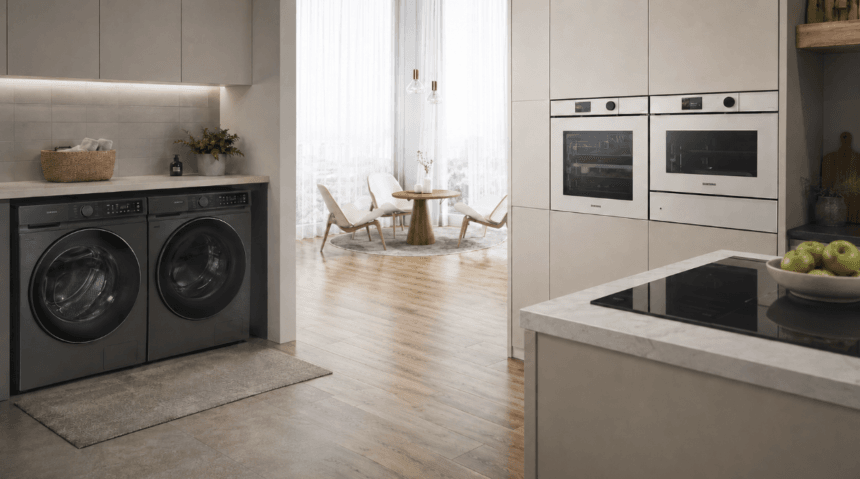
The new Bespoke AI laundry lineup builds around automatic load decisions. Samsung says AI Wash+ uses multiple sensors to detect weight, recognize five fabric types for small loads, dispense water and detergent, monitor soil levels during the wash and adjust detergent use and wash time when needed. The expanded fabric recognition now includes Outdoor and Denim fabrics, in addition to previously supported types.
On the dryer side, Samsung says AI Dry+ analyzes moisture level and drying temperature while detecting four fabric types. It then adjusts the inverter compressor and heat exchanger to optimize drying conditions, with Samsung claiming up to 20% reduction in energy consumption and drying time under specified test conditions.
The controls are just as important as the sensors. The new laundry units use a 7-inch Smart Screen that acts as the control center, remembers usage habits, offers cycle suggestions and connects to the SmartThings app for laundry reports that include energy and water consumption. Samsung also says upgraded Bixby voice control can start preferred cycles, add extra rinsing, check remaining time and explain information shown on the screen.
More Read
The energy pitch is explicit. Samsung says AI Energy Mode in SmartThings Energy can help users monitor daily, weekly and monthly energy consumption and estimated electricity costs. When compatible cycles are selected, Samsung says the washer can reduce energy use by up to 70% by washing at lower temperatures with AI Ecobubble and extending cycle time as needed, while the dryer can reduce energy use by up to 20% through optimized drying.
Those claims need retail context. The fine print matters: feature availability varies by model and region, Wi-Fi and a Samsung account are required for SmartThings, AI Energy Mode works only on selected cycles, mixed fabrics may reduce sensing accuracy and the Smart Screen uses network-based services. Retailers should be ready to explain what works out of the box, what requires the app, and what conditions affect the advertised savings.
Cooking Gets the Same Platform Treatment
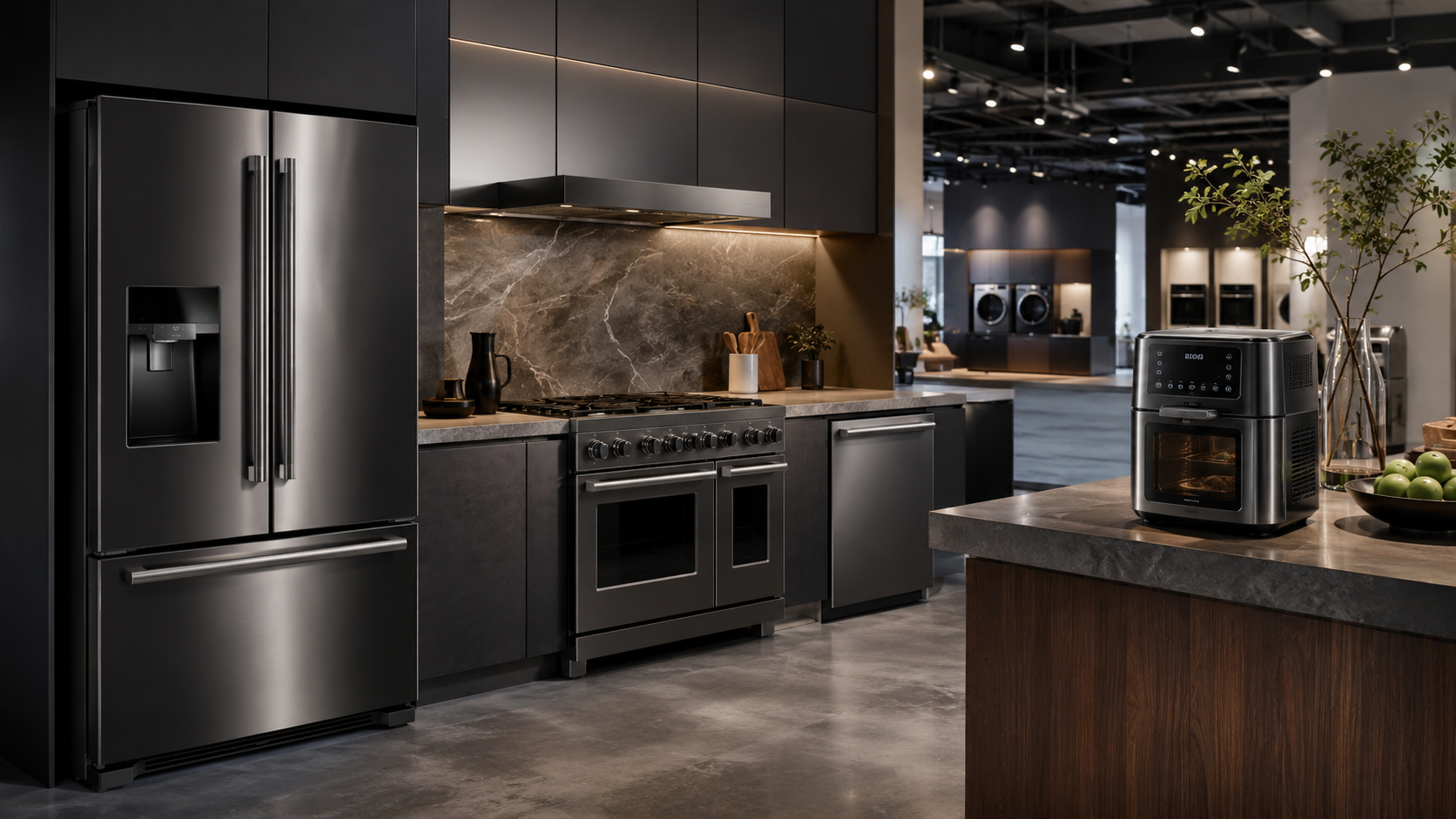
The cooking launch uses a different vocabulary, but the same strategy. Samsung’s new electric and gas slide-in ranges add Air Fry Max, True Convection and Air Sous Vide, while the matching over-the-range microwave also adds Air Fry Max and convection cooking.
Air Fry Max is the headline feature. Samsung says it delivers crispy results without preheating and cooks up to 15% faster than the previous air-fry mode under internal testing. The electric range adds a 3.6 kW Express Boil cooktop with dual-ring elements, while the gas version uses a 23,000 BTU Dual Power Burner for high-heat cooking.
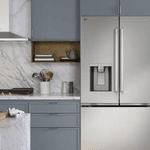
The premium pitch is also physical. Samsung calls out a shared handle design with its 2026 refrigerators, Illuminated Precision Knobs that light when the cooktop is in use, an intuitive built-in display and a Soft Close Door on the ranges. Those are not AI features. They are design and usability details meant to make the cooking lineup feel more upscale and more unified with the rest of the kitchen.
The connected feature is Auto Connectivity between the range and microwave. When the cooktop turns on, Samsung says the microwave can automatically activate its light and ventilation hood. Both appliances can also connect through SmartThings for remote monitoring and control, voice assistant use, recipe discovery and meal planning through SmartThings Food.
That is where the range and microwave story stops being only about air frying. Samsung is trying to make the cooking pair behave like a system: matching design, shared cooking language, automatic ventilation behavior and a phone-based recipe layer that ties the appliance to planning and control.
The Premium Fight Is Now About Reducing Friction
Samsung’s launches point to a larger competitive shift. Premium appliances are no longer competing only on capacity, finish, noise, speed or efficiency labels. They are competing on whether the machine can reduce decisions: how much detergent, which wash cycle, how dry, when to use lower-temperature washing, whether the vent hood should turn on, what recipe to make and how to coordinate multiple appliances.
That is a meaningful promise, but it is also harder to prove on a showroom floor than a stainless finish or a bigger drum. Retailers will need demo scripts that separate practical automation from marketing language. Consumers should understand that “AI” in these products generally means sensor-driven optimization, learned preferences, app-connected suggestions and voice/control features — not a guarantee that every mixed load or recipe will be handled perfectly.
The best sales conversation will be specific. In laundry, the useful questions are whether the household wants automatic dispensing, energy reporting, touchscreen controls and AI cycle selection enough to justify the premium. In cooking, the useful questions are whether Air Fry Max, Auto Connectivity, illuminated knobs, sous vide support and SmartThings Food will be used often enough to matter.
- For retailers: Train teams to explain app requirements, account setup, cycle limitations, energy-claim conditions and how the range and microwave work together.
- For merchandising: Treat laundry and cooking as connected product stories, not isolated SKUs, when the features depend on paired appliances or SmartThings.
- For consumers: Ask which features work without Wi-Fi, which require SmartThings, and whether advanced cycles are available on the exact model being sold.
- For warranty teams: Expect more questions about screens, sensors, connectivity, voice commands, app setup and feature behavior that may not look like traditional mechanical failures.
Servicers Should Watch the Electronics Stack
For servicers, the direction is clear: more diagnostics will involve electronics, sensors, networked controls, user accounts and software behavior. A washer complaint may involve detergent dispensing, soil sensing, fabric recognition, a touchscreen setting or an app report. A cooking complaint may involve microwave/range pairing, ventilation activation, air-fry performance, SmartThings control or voice-assistant behavior.
That does not mean these products are destined to be unreliable. It means the service model has to keep up with the feature model. Technicians need access to error codes, service documentation, board and sensor diagnostics, firmware guidance, app-reset procedures and clear rules for when a problem is a product failure versus setup, connectivity or user-expectation issue.
Samsung’s own footnotes also show why servicers need precision. AI fabric sensing is load-size and fabric-mix dependent. AI Energy Mode is cycle-dependent. Voice and SmartThings features depend on Wi-Fi, accounts, supported languages and model compatibility. Those details can decide whether a customer needs repair, instruction, software support or a different expectation.
What This Says About Where Appliances Are Going
The July launches show Samsung pushing AI deeper into two high-frequency household tasks: laundry and cooking. The laundry machines aim to reduce sorting, dosing and cycle decisions. The cooking products aim to make air frying, ventilation, recipe planning and paired appliance behavior feel more seamless.
The strategy makes sense in a premium market where manufacturers need reasons for consumers to trade up. Energy tracking, fabric care, time savings, touchscreen control, coordinated design and connected cooking all give retailers more to sell than another stainless-steel box.
The risk is that more features can also create more complexity. If AI cycles save energy but lengthen wash times, if app setup is difficult, if a paired microwave does not behave as expected, or if a touchscreen becomes the main control failure point, the ownership experience can shift from premium to frustrating.
That is the real product-strategy lesson. Samsung is betting that appliances can justify premium prices by becoming smarter, more coordinated and more adaptive. Retailers and servicers should watch whether those features reduce everyday friction — or merely move it from the chore to the control panel.