Electrolux Group delivered a better-than-expected second-quarter operating profit as cost reductions and stronger business in Europe and Latin America lifted results, but its North American appliance operation remained under pressure from weaker demand and higher tariff costs.
Operating income excluding non-recurring items rose to SEK 1.20 billion from SEK 797 million a year earlier, well above the SEK 617 million expected by analysts surveyed by LSEG, according to Reuters. Net sales were SEK 31.57 billion, with organic sales up 2%.
The improvement was uneven across regions. Electrolux reported organic growth above 4% in both EMEA-APAC and Latin America, while North American organic sales declined 2.9% as the company estimated the regional appliance market contracted by roughly 3%.
North American Demand Remains the Weak Point
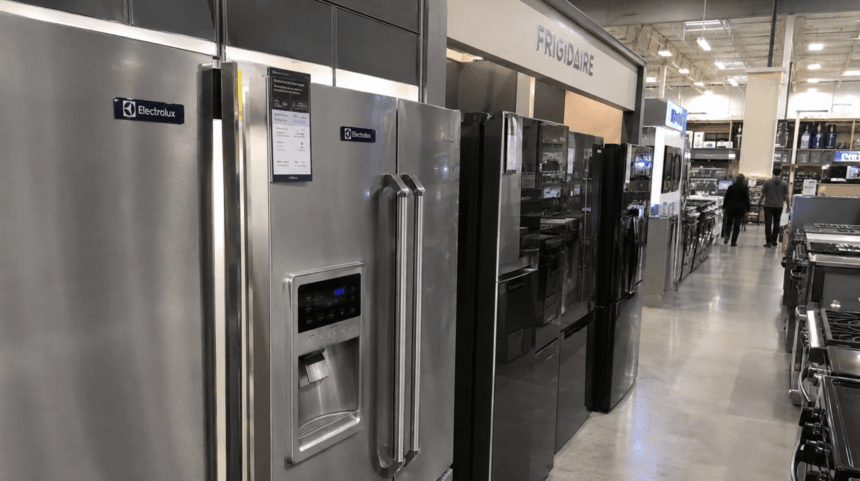
North America remains one of Electrolux’s most important markets, accounting for about a third of group sales. The company sells primarily under the Frigidaire and Electrolux brands in the United States and Canada.
The second-quarter decline was considerably smaller than the first quarter, when Electrolux reported an 11.6% organic sales drop in North America as regional market demand fell about 10%. Even so, the company kept its full-year North American market outlook at “Negative,” citing economic uncertainty and inflation concerns that continue to weigh on consumer confidence.
For U.S. appliance dealers, that leaves the industry facing a difficult combination: softer unit demand at the same time manufacturers are trying to recover higher import and material costs through pricing.
More Read

Tariffs Are Still Pressuring Appliance Margins
Electrolux said expanded U.S. Section 232 tariffs, including duties affecting products from Mexico, increased cost pressure during the second half of the quarter. The company implemented North American price increases ranging from 5% to 20% depending on product category in an effort to offset part of those costs.
The quarter also contained benefits that make the underlying North American performance important to separate from the headline profit figure. Electrolux recognized USD 34 million, or about SEK 310 million, tied to refund claims for IEEPA tariffs paid in the first quarter. A change to the company’s U.S. retiree group health plan contributed another SEK 174 million to cost efficiency.
Electrolux had separately disclosed claims for about USD 88 million in IEEPA tariff refunds, after a U.S. court-ordered refund process was established following a Supreme Court ruling on the tariff program. The company said tariff costs from other measures will continue to affect earnings in coming quarters.
Cost Cuts Lift Global Results
Cost-efficiency measures contributed SEK 1.4 billion to group operating income during the second quarter. Electrolux said procurement savings and the first benefits from a broader efficiency plan helped improve profitability.
The company’s global results also benefited from stronger operations outside North America. Europe, the Middle East, Africa and Asia-Pacific posted higher sales volumes, while Latin America continued to grow despite elevated interest rates and inflation in Brazil.
Investors responded strongly to the earnings beat, with Electrolux shares rising about 20% in early trading after the report, Reuters reported.
The U.S. Turnaround Is Still in Progress
The earnings report arrives as Electrolux undertakes a broader restructuring of its North American appliance business. The company completed an approximately SEK 9 billion rights issue and is moving ahead with a long-term manufacturing partnership with Midea that includes refrigeration operations in Juarez, Mexico, and a transition of its Anderson, South Carolina, plant toward laundry production.
Electrolux said its near-term priorities include transforming North America, accelerating efficiency improvements and optimizing its global manufacturing footprint. Those efforts now have to contend with a U.S. appliance market where demand remains below last year’s level.
For retailers and suppliers, the second-quarter results point to a market in which manufacturers may improve profitability without a broad recovery in appliance demand. Electrolux’s next challenge is showing that cost savings, pricing and its North American restructuring can produce sustainable earnings once tariff refunds and other quarter-specific benefits are removed from the comparison.