More than a year after LG recalled about 500,000 electric ranges over accidental knob activation, owners can still request the official remedy. What they cannot find in the public recall record is a completion rate showing how many of those ranges have actually received it.
That gap is important because the LG recall was never a conventional technician repair. The remedy remains a free warning label plus instructions to use the range’s Lock Out or Control Lock function. CPSC’s public notice still lists the same incident totals announced in February 2025: at least 86 reports of unintentional activation, more than 28 fires, at least eight minor injuries, more than $340,000 in property damage from five fires and three fires involving pet deaths.
Appliance News reviewed the current CPSC and manufacturer pages for LG and for Samsung’s larger, closely related electric-range recall. Neither public page provides a remedy participation or completion percentage. The useful update, therefore, is not an invented effectiveness number: both remedies remain available, their designs are materially different, and the publicly posted CPSC incident counts have not been updated even as the broader range-knob hazard has continued to draw regulatory attention.
LG’s Remedy Is Still a Label and Control Lock
The LG recall, announced Feb. 6, 2025, covers about 500,000 slide-in and freestanding electric ranges with front-mounted knobs. Depending on the model, the ranges were sold from 2015 through January 2025 for $1,400 to $2,650 at Best Buy, Costco, The Home Depot, Lowe’s, LG.com and other appliance retailers.
Owners still need to check both model and serial number because the recall does not necessarily cover every range carrying a listed model number. The affected products include models in the LDE4411, LDE4413, LSE4611, LSE4613, LSEL6331, LSEL6333, LSEL6335, LSEL6337, LTE4815, LRE4215 and LTEL7337 families, with specific model and serial combinations listed by CPSC.
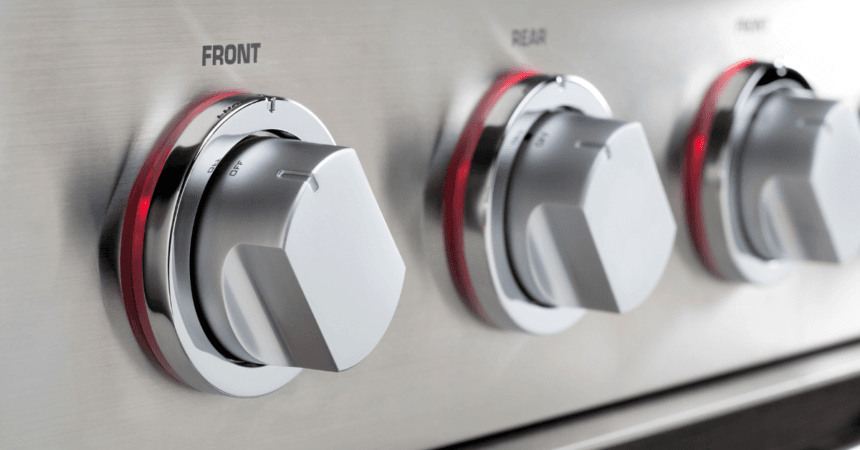
The remedy has not changed on the public recall pages. LG tells consumers to request a free warning label and placement instructions. The label reminds owners to use Lock Out or Control Lock to disable activation of the heating elements when the range is not being used. CPSC also tells owners to keep children and pets away from the knobs, verify that the knobs are off before leaving home or going to bed and avoid leaving objects on the cooking surface.
More Read
LG’s current public notice and recall material remain online, so owners who never acted on the original announcement are not shut out simply because the range is now older or out of its original warranty period. The recall is tied to the affected product, not a short promotional claim window.
The Public Record Still Does Not Show How Many LG Owners Acted
CPSC says it monitors recall effectiveness through progress reports submitted by recalling firms and can take follow-up action when appropriate. Those monitoring records, however, are not translated into a live completion-rate field on the LG recall page.
As of this review, CPSC’s LG page still carries the incident figures from the original recall announcement rather than a running post-recall total. LG’s public recall materials likewise do not disclose how many warning labels have been requested, delivered or placed on recalled ranges. Without those figures, it would be misleading to calculate or imply a participation rate.
That does not mean nothing happened after the recall. Appliance News reported in July on a Connecticut fire involving a recalled LG range after the recall was announced, based on local reporting and a fire investigation. The case renewed questions about a remedy that depends on owners learning about the recall and repeatedly using an electronic lock function rather than receiving a physical control modification.
The distinction is critical: a post-recall incident reported in the news does not establish a new national incident count, and Appliance News found no updated CPSC aggregate that can be responsibly substituted for the agency’s published totals.
Samsung Offers a Physical Knob Remedy
Samsung’s August 2024 recall provides the closest comparison because it involves essentially the same consumer scenario — accidental activation of front-mounted electric-range knobs — but a different remedy.
CPSC recalled about 1.12 million Samsung slide-in electric ranges after more than 300 reports of unintentional knob activation and approximately 250 fires. At least 18 fires caused extensive property damage, about 40 injuries were reported, eight required medical attention and seven fires involved pet deaths.
Samsung’s current recall page still lets owners enter a serial number and request a free set of knob locks or covers matched to the affected model. Samsung says the parts should arrive within five business days after a completed request and can be installed by the owner using supplied instructions and video guides.
The company also explicitly says the remedy is free regardless of warranty status. Owners can continue using affected ranges while awaiting the locks or covers if they follow the stated safety precautions, including keeping the cooktop clear and children and pets away from the knobs. Wi-Fi-equipped models can also use SmartThings notifications to alert an owner when a burner is activated.
Samsung’s public page does not state how many of the roughly 1.12 million affected ranges have received knob locks or covers. CPSC’s public recall notice likewise continues to display the incident totals announced with the recall rather than a current completion figure.
New Range Designs Are Moving Beyond the Recall Remedies
The recalled products remain in homes, but manufacturers have also changed newer designs. Samsung says slide-in ranges introduced beginning in April 2024 use its three-step Precision Knobs, which require a pinching action before the conventional push-and-turn motion. That design change does not retrofit the recalled ranges; owners of affected older models still need the recall locks or covers.
LG continues to emphasize Control Lock or Lock Out on the recalled ranges. Its current support materials describe control-lock functions as a way to prevent unintended operation, while the recall itself continues to direct affected owners to the warning-label program.
The broader issue has also moved beyond individual recalls. Appliance News reported in July that CPSC’s Range Knob Working Group was examining accidental activation and possible safety approaches across ranges, reflecting concern that the hazard is not limited to a single manufacturer.
What Owners and Servicers Can Verify Today
- LG owners: Check the model and serial number against CPSC’s recall list and request the free label and Control Lock/Lock Out instructions if the range is covered.
- Samsung owners: Use Samsung’s serial-number checker to confirm eligibility and request the free knob locks or covers. The company says the remedy remains free even after the warranty expires.
- Do not assume an old recall has expired: The manufacturer remedy pages reviewed for this story remain active, and CPSC continues to direct affected consumers to them.
- Report new incidents: Consumers who experience accidental activation, fire, burns or difficulty obtaining a remedy can report the problem to CPSC. The agency’s recall pages also provide a complaint route for problems with recall remedies.
- Servicers should distinguish recall work from ordinary repair: LG’s official remedy does not authorize a technician-installed knob redesign, while Samsung’s remedy is a consumer-installable lock or cover. A service company should verify manufacturer instructions before improvising a modification.
The follow-up lesson is less satisfying than a neat completion percentage, but more useful. CPSC monitors recall performance, yet the public-facing record for these major range recalls does not tell consumers how many affected households have completed the remedy. What owners can establish is whether their range remains eligible and what action the manufacturer currently offers.
For LG’s roughly half-million recalled ranges, that action is still a warning label and repeated use of Control Lock. For Samsung’s roughly 1.12 million recalled ranges, it is still a physical knob lock or cover. Until public effectiveness data catches up, those open remedies — and whether owners actually know to use them — remain the most concrete measure of what happened after the recall announcement faded from the headlines.