The appeal of an all-in-one washer-dryer is easy to understand: put dirty clothes in once, take clean, dry clothes out later, and skip the dryer vent and the second machine. A federal lawsuit involving GE Profile’s UltraFast Combo now turns on a less visible question — where the lint goes along the way.
U.S. District Judge Jacqueline Scott Corley in April allowed an express-warranty claim to proceed in Duvall v. Haier US Appliance Solutions, Inc., a proposed class action alleging that lint can bypass or accumulate beyond the user-cleanable filter in GE Profile UltraFast 2-in-1 washer-dryer combos and eventually interfere with drying.
The ruling is not a finding that GE Appliances sold defective machines. Corley dismissed several other claims, and the surviving allegations still have to be proven. But the case has moved beyond the complaint stage on a warranty theory, putting the design and serviceability of one of the most prominent ventless laundry products under closer scrutiny.
One Machine Is Doing Two Jobs
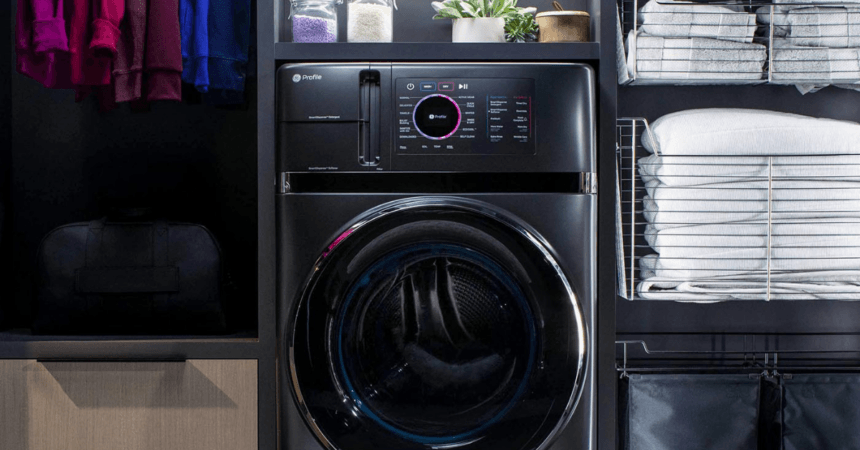
The UltraFast is a 4.8-cubic-foot front-loading washer and heat-pump dryer in one cabinet. GE’s specifications for model PFQ97HSPVDS describe a 120-volt, ventless machine that can complete a normal wash-and-dry load in about two hours under specified test conditions.
That architecture solves several ordinary household problems at once. A buyer does not need a 240-volt dryer circuit, a wall vent or room for two full-size appliances. Clothes do not have to be transferred from a washer to a dryer. The same cabinet washes, extracts moisture and then recirculates air through a heat-pump drying system.
It also means the machine has to manage the lint created during drying internally. GE makes that task visible to owners through what it calls the EZ Access Lint Filter System, which the company says allows users to remove lint and microparticles so the combo can operate efficiently. GE lists a five-year limited warranty on the sealed drying system and a 10-year limited warranty on the motor.
More Read

The Lawsuit Alleges Two Paths for Lint Buildup
According to the court’s description of the third amended complaint, plaintiff Mark Duvall alleges two distinct problems. The first concerns the lint-filter system: the complaint says a gap can allow lint and debris to bypass the filter and collect around internal components. The second concerns the duct system, where the plaintiff alleges turns in the air path can slow airflow and allow wet lint to accumulate before it reaches the filter.
Duvall bought his combo in October 2023. He alleges that drying performance deteriorated by June 2024. According to the complaint as summarized by the court, a technician later disassembled the machine and removed lint from the duct system, lint-trap area and condenser and evaporator coils. Duvall alleges the drying problem returned roughly two months later.
That distinction is central to the case. Cleaning a removable lint filter is ordinary dryer maintenance. The plaintiff’s theory is that lint is also accumulating in places an owner cannot reach through the normal maintenance GE designed for the product. GE disputes liability, and the court has not determined that the alleged condition exists across the product line.
What the Judge Allowed to Continue
Corley found the complaint plausibly alleged a manufacturing defect covered by GE’s express warranty and denied the company’s request to dismiss that claim. The judge also allowed a federal Magnuson-Moss Warranty Act claim to continue to the extent it rests on the surviving express-warranty theory.
The plaintiff did not win across the board. The court dismissed a California Commercial Code implied-warranty claim with prejudice for lack of contractual privity and dismissed equitable claims from the federal case, while noting that those equitable theories could be pursued in state court.
A May 6 scheduling order set fact discovery to close Feb. 26, 2027, and dispositive motions for June 2027. The court scheduled a further case-management conference for Sept. 9, 2026. Class certification would come later. Until a class is certified, this remains one plaintiff’s proposed class action rather than a case adjudicating the experience of every UltraFast owner.
The Important Line Is Between Maintenance and Service
For consumers, the case is easier to understand as a maintenance-versus-service dispute than as a technical argument about duct geometry. A lint filter is supposed to be cleaned by the owner. A condenser, evaporator or internal duct that requires cabinet disassembly generally moves the problem into service territory.
GE’s support site for PFQ97HSPVDS, which it says has been manufactured since June 2023, provides owner maintenance, troubleshooting, repair parts and service scheduling. The company continues to sell and support the platform.
If the plaintiff ultimately proves that inaccessible lint accumulation repeatedly impairs drying, the practical consequence would extend beyond whether a machine technically completes a cycle. A product sold partly on eliminating the complications of a conventional dryer could instead create a different kind of maintenance burden — one requiring a technician to reach areas the owner cannot.
That outcome has not been established. It is precisely what discovery is meant to test: whether Duvall’s experience was isolated, whether the alleged lint paths exist as described, what GE knew about them and what repairs, if any, reliably resolve the condition.
The Case Lands During a Bigger Bet on Ventless Laundry
The litigation arrives as appliance makers are asking Americans to reconsider a laundry-room layout that has been standard for generations. Heat-pump combos promise lower installation barriers and a smaller footprint, while manufacturers are putting more electronics, sensors and software into the same cabinet.
GE Appliances has simultaneously been deepening its U.S. laundry investment. Appliance News reported in August on GE Appliances’ use of U.S.-made Texas Instruments chips in laundry products, part of a broader manufacturing push in Louisville.
That makes the UltraFast case more than a dispute over one owner’s disappointing drying cycle. The product embodies a larger appliance-industry wager: that consumers will trade the simplicity of two mature machines for the convenience of one more sophisticated one. The lawsuit will help test an important part of that wager — whether the maintenance burden shrinks with the footprint, or merely moves inside the cabinet.