LG Electronics says it has already pushed its direct and purchased-energy emissions below its 2030 target. That is a real manufacturing milestone. But for the appliance business, the bigger climate test is not only what happens inside LG’s factories. It is what happens for years afterward in kitchens, laundry rooms, living rooms and mechanical spaces.
In its 2025–2026 Sustainability Report announcement, released July 17, LG said its Scope 1 and Scope 2 emissions across domestic and overseas business sites totaled 842,000 tons of CO₂ equivalent in 2025. That is below the company’s 2030 target of 878,000 tons and reflects its goal to cut those emissions by 54.6 percent from 2017 levels.
LG also said it exceeded a product-use emissions-intensity target. The company reported a 22.5 percent reduction in greenhouse gas emissions per unit during the use stage of seven major product categories compared with a 2020 baseline. LG’s 2030 target, validated by the Science Based Targets initiative, was a 20 percent reduction across TVs, monitors, refrigerators, washing machines, dryers and residential and system air conditioners.
What LG Is Claiming
LG’s Scope 1 and Scope 2 claim is about company operations. Scope 1 generally covers direct emissions from sources a company owns or controls. Scope 2 covers indirect emissions from purchased energy, such as electricity used at factories and offices. For an appliance manufacturer, that can include factory fuel use, process emissions, electricity procurement, efficiency upgrades and renewable-power purchasing.
LG says the 2025 result was driven by organization-wide efforts such as energy-efficient equipment and renewable electricity. On its carbon-neutrality page, LG says it is using production-process improvements, energy-saving technologies and renewable energy while pursuing carbon neutrality by 2030. The company also says it is working toward 100 percent renewable electricity by 2050 under RE100.
The report announcement adds other environmental metrics. LG said its waste recycling rate across all domestic and overseas business sites reached 97.3 percent in 2025, above its 2030 goal of 95 percent. It also said it collected 640,000 tons of used electronics from 91 locations in 56 countries during 2025, bringing cumulative e-waste recovery since 2006 to more than 5.65 million tons.
More Read

Those figures should not be dismissed as marketing copy. Lower factory emissions, higher waste diversion and more takeback infrastructure matter. They affect manufacturing costs, procurement, disclosure risk, compliance planning and the way global appliance brands compete for retailer, investor and government confidence.
Why Direct Emissions Still Matter
Factory emissions are the part of the footprint manufacturers can control most directly. A company can install more efficient process equipment, recover waste heat, switch fuels, buy renewable electricity, add solar where practical, improve building controls and reduce scrap. Those actions can also lower operating costs or reduce exposure to future carbon rules.
Scope 1 and Scope 2 progress also matters because it is easier to measure and audit than many value-chain claims. Regulators, investors and large retail partners increasingly ask companies to explain how climate targets are calculated, what is inside the boundary and whether progress came from operational changes, renewable-energy instruments, offsets or changes in production volume.
For appliance manufacturers, direct emissions are especially important in global production networks. A brand may assemble appliances in several countries, buy components from many suppliers and sell into regions with different energy grids. A credible manufacturing-emissions plan gives the trade a clearer view of where carbon risk is being handled by the company and where it is being pushed into suppliers or customers.
The Harder Question Is Product Use
The appliance industry’s harder climate problem begins after the sale. Refrigerators run all day. Dryers can be among the heaviest household energy users. Air conditioners and heat pumps follow weather, insulation, thermostat behavior and grid conditions. Washers and dishwashers use electricity, water and heat in patterns that depend heavily on household habits.
LG’s own target acknowledges that reality by focusing on emissions during the product use stage. The company says it reduced use-stage emissions intensity by 22.5 percent compared with 2020 across seven product categories. That is useful progress, but it is not the same as saying total lifetime emissions from all products sold are falling at the same pace. Per-unit improvements can be offset by higher sales, larger-capacity models, longer run times, hotter summers or electricity grids that remain carbon-intensive.
That is where sustainability claims get complicated for appliances. A more efficient refrigerator or washer can reduce energy use relative to an older or less efficient model. But the climate result depends on how the appliance is sized, installed, maintained and used, and on the power grid serving the home. A dryer used daily in a coal-heavy grid has a different footprint than the same model used weekly in a region with cleaner electricity.
The Department of Energy’s Energy Saver guidance says appliances account for about 15 percent of household energy consumption, with refrigerators, clothes washers and clothes dryers among the leading appliance loads. Energy Star also points to product-level differences, including heat-pump dryers that use around 70 percent less energy than conventional dryers and front-load washers that use about 50 percent less energy and water than top-load agitator washers.
Efficiency Is Not Only a Label Claim
For consumers, energy efficiency is often reduced to a label, a rebate or a green claim on a product page. For manufacturers and retailers, it is a design and ownership-cost issue. Compressors, inverter drives, motors, insulation, heat-pump drying systems, controls, sensors and software can all affect energy use, reliability, repair cost and the user experience.
LG points to AI and energy-saving technologies as part of its product-use strategy. That is plausible in categories where smarter controls can reduce unnecessary operation. But the trade should avoid treating software as a universal climate answer. A feature that saves energy only when enabled, properly configured or used under specific conditions may not deliver the same result for every household.
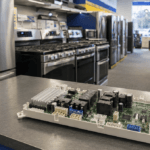
The reliability and repair question also belongs in the sustainability conversation. An efficient appliance that fails early, requires an expensive electronic module or is replaced instead of repaired can lose part of its environmental advantage. Sustainability claims are stronger when they connect efficiency with durability, parts availability, service documentation and a realistic product life.
- Manufacturers: Back climate claims with product-level energy data, repairability planning, supplier engagement and clear accounting boundaries.
- Retailers: Explain annual energy use, operating cost, rebates, size tradeoffs and service considerations instead of relying only on sustainability badges.
- Consumers: Compare EnergyGuide labels, appliance size, expected usage, local utility rates and repair costs before paying a premium for efficiency.
- Servicers: Watch whether advanced controls and inverter systems are improving efficiency without creating unnecessary parts or diagnostic barriers.
What Sustainability Claims Mean on the Sales Floor
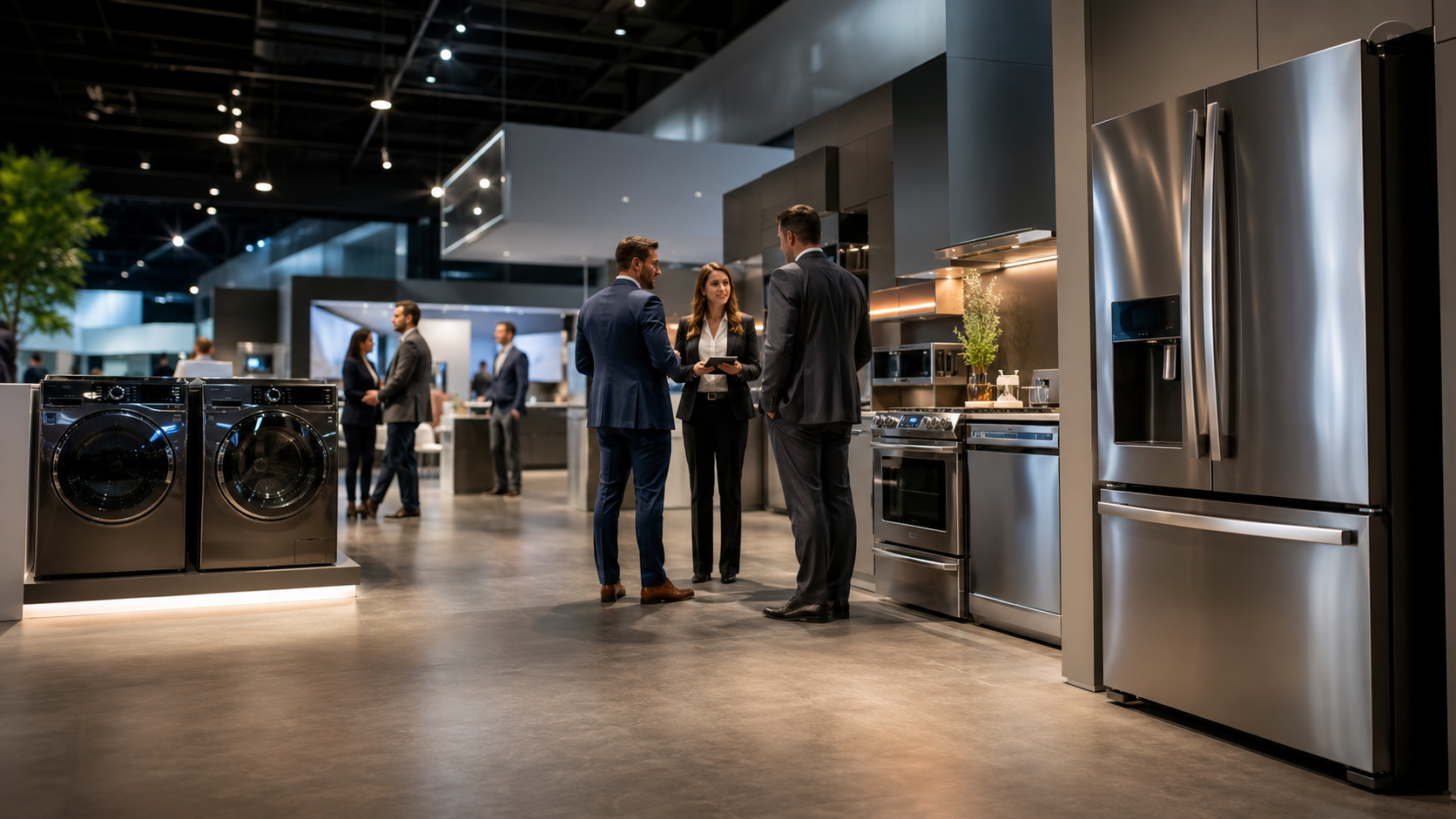
Retailers should treat corporate sustainability claims as context, not as a substitute for product comparison. A brand can make progress on factory emissions while individual models still vary widely in operating cost, repair cost, water use, refrigerant type, noise, cycle time and useful life.
For sales teams, the stronger conversation is practical: how many kilowatt-hours does the appliance use in a typical year, what does that mean at local utility rates, how does capacity affect energy use, what maintenance keeps efficiency from degrading and what happens if a high-efficiency component fails after warranty?
For consumers, the right question is not whether a brand has a climate target. It is whether the appliance being purchased will lower total ownership cost, fit the household’s use pattern and remain repairable long enough for the efficiency benefit to matter.
The Takeaway for the Appliance Industry
LG’s reported Scope 1 and Scope 2 progress is meaningful because it shows a major appliance company pushing its own operations toward a lower-emissions footprint ahead of schedule. It is also incomplete by nature. The biggest appliance climate question is distributed across millions of homes, not concentrated in a single factory ledger.
That makes the next phase harder. Manufacturers have to cut operational emissions while designing products that use less energy in real homes. Retailers have to translate sustainability into total ownership cost rather than slogans. Consumers have to sort useful efficiency from green noise.
LG can fairly say it beat an important target. The appliance industry still has to prove that lower-emissions manufacturing and lower-energy ownership can move together.