May’s housing starts report gives the appliance industry a concrete way to measure the next demand hit. The headline drop was not just a housing story. It was an early warning for refrigerators, ranges, dishwashers, laundry pairs and builder-channel appliance packages that normally follow new construction into kitchens and laundry rooms months later.
- The math behind the demand hit
- What 215,000 fewer starts would mean
- Why single-family matters most
- The sales data confirm the starts signal
- Whirlpool’s recession-level warning fits the model
- Which categories are most exposed
- What a recovery timeline would look like
- What manufacturers and retailers should watch
Privately owned housing starts fell 15.4% in May to a seasonally adjusted annual rate of 1.177 million units, down from a revised April rate of 1.392 million. Single-family starts fell 1.9% to an 882,000 annual rate, while the rate for buildings with five or more units was 284,000. U.S. Census Bureau
The new-home sales signal was also weak. The Census Bureau and Department of Housing and Urban Development said new single-family home sales fell 7.3% in May to a 580,000 annual rate, while the number of new homes for sale rose to 496,000, equal to 10.3 months of supply at the current sales pace. U.S. Census Bureau
The builder side is not signaling a quick rebound. NAHB said builder confidence in the market for newly built single-family homes fell two points to 35 in June, with traffic of prospective buyers at 24 and the six-month sales expectations index at 40. NAHB
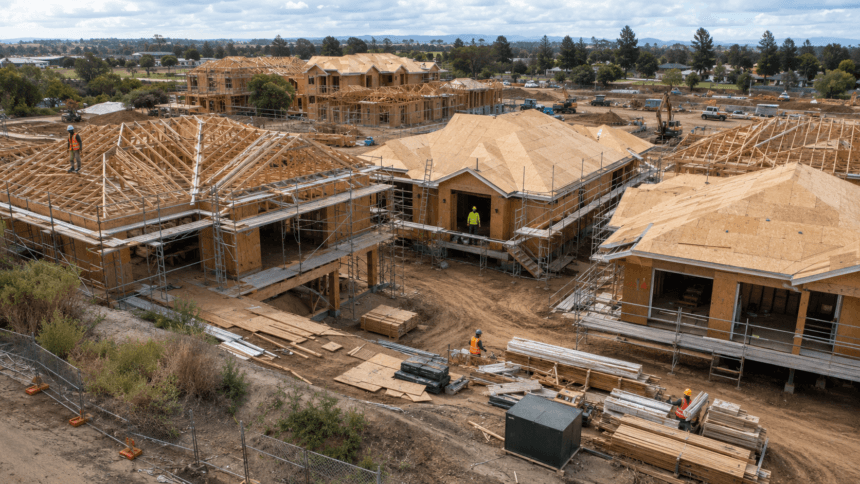
That matters because new construction is the cleanest appliance-demand channel in the market. A new home usually needs a full kitchen package and often drives laundry purchases, builder appliance contracts, installation labor, delivery volume and follow-on warranty exposure. When starts fall, the lost demand does not show up instantly at the register. It moves through the pipeline with a lag.
The math behind the demand hit
The May decline from April’s revised 1.392 million starts rate to 1.177 million is a 215,000-unit annualized drop. That does not mean 215,000 fewer homes were physically started in May. It means that, if May’s slower pace continued for a full year instead of April’s pace, the market would produce about 215,000 fewer housing units.
More Read
The one-month equivalent is smaller but still meaningful. Divide the annualized gap by 12, and May’s slower pace implies roughly 17,900 fewer housing starts for that month compared with the April pace. Those homes would normally represent a future wave of appliance installations as construction progresses toward completion.
Appliance News modeled the impact using conservative attach assumptions for new construction: one refrigerator and one cooking appliance per completed unit, a dishwasher attach rate of 85% to 90%, a microwave or ventilation attach rate of 75% to 85%, and a laundry-pair attach rate of 60% to 75%. Actual attachment varies by builder, region, apartment type, appliance package and whether laundry equipment is included at closing.
- Annualized starts gap: 215,000 fewer housing units at the May pace versus the April pace.
- One-month starts gap: About 17,900 fewer units for May on a monthly equivalent basis.
- Expected timing: Appliance demand impact typically arrives later, closer to completion, closing and delivery.
- Most direct categories: Refrigerators, cooking appliances, dishwashers, built-in microwaves or ventilation, and laundry pairs.
What 215,000 fewer starts would mean
If the 215,000-unit annualized starts gap persisted, the appliance opportunity delayed or lost from that construction channel would be large. At one refrigerator per unit, that equals about 215,000 future refrigerator placements. At one range, cooktop or wall-oven package per unit, it is another roughly 215,000 cooking placements.
Dishwashers would take a slightly smaller but still direct hit. Using an 85% to 90% attach range, 215,000 fewer starts would translate to roughly 183,000 to 194,000 fewer future dishwasher placements tied to those homes. Built-in microwaves, hoods or over-the-range microwave units would be exposed as well, especially in builder packages where kitchen ventilation is specified early.
Laundry is more complicated. Some new homes include washer and dryer packages at sale; others leave laundry equipment to the buyer after closing. Using a 60% to 75% laundry-pair attach rate, the annualized starts gap would represent about 129,000 to 161,000 fewer laundry pairs, or about 258,000 to 322,000 individual washer and dryer units.
On a one-month equivalent basis, the May starts slowdown represents roughly 17,900 fewer future refrigerator and cooking placements, 15,200 to 16,100 fewer dishwashers and 10,700 to 13,400 fewer laundry pairs. Those monthly figures are the more realistic near-term read. The annualized figures show the risk if the lower starts pace becomes the new baseline.
Why single-family matters most
The total starts drop was severe, but single-family starts fell only 1.9% in May. That distinction matters for appliance forecasting because single-family homes typically carry richer appliance packages than multifamily units. They are more likely to include larger refrigerators, full-size ranges, dishwashers, laundry pairs and higher-ticket finishes.
Multifamily units still matter. Apartments can drive large-volume orders of refrigerators, ranges, dishwashers and laundry equipment, especially through property-management and distributor channels. But unit mix is different. Multifamily packages may use smaller refrigerators, basic electric ranges, compact laundry or shared laundry arrangements, and lower average selling prices.
That means May’s headline 15.4% decline overstates the immediate hit to premium appliance demand if the weakness was concentrated in multifamily. At the same time, the weak builder confidence number suggests single-family risk is not over. If the HMI remains in the 30s, builders may continue pulling back on starts, incentives and spec-home construction.
The appliance demand model should therefore be split by channel. Single-family starts are the better leading indicator for full-suite, builder-grade and premium upgrade packages. Multifamily starts are the better indicator for bulk orders, replacement-like specifications and lower average selling prices.
The sales data confirm the starts signal
Starts are only one part of the model. New-home sales fell 7.3% in May, and inventory rose to 10.3 months of supply. That combination matters because builders are less likely to start new projects aggressively when completed or near-completed homes are sitting longer.
For appliance manufacturers, that creates a double delay. First, fewer starts reduce future installation opportunities. Second, slower new-home sales can delay appliance pull-through on existing inventory if builders wait longer to finish, stage, deliver or close homes.
The categories most exposed are the ones tied to builder specifications and closing schedules: dishwashers, cooking appliances, refrigerators and built-in microwaves. Laundry pairs may lag closer to move-in, depending on whether the builder includes them or the buyer purchases separately.
Retailers should not assume all of that demand disappears. Some delayed new-home buyers may eventually buy appliances through retail when closings occur. Others may shift into existing homes and trigger replacement or remodeling purchases. But a weaker new-construction channel removes one of the most efficient sources of multi-unit appliance demand: the full-suite order.
Whirlpool’s recession-level warning fits the model
Whirlpool had already warned that the appliance market was behaving like a recession before the May starts report arrived. In its first-quarter presentation, the company said U.S. and Canada industry demand reached recession-level lows, with greater impact on discretionary demand and weakness in the builder channel. Whirlpool
Appliance News previously reported on Whirlpool’s recession-level appliance-demand warning, and also covered the company’s warning that consumers are delaying replacements. The housing data now adds a construction-channel explanation to the consumer story.
Replacement demand is more stable because a failed refrigerator, washer or range usually has to be addressed. Builder demand is more cyclical because it depends on mortgage rates, buyer traffic, home inventory, credit conditions, builder incentives and construction financing. When builders stop starting homes, appliance demand is not canceled immediately. It is removed from a future delivery window.
That is why the May housing data is especially important for the second half of 2026 and early 2027. Starts lead completions. Completions lead appliance installation and closing-related purchases. A weak May starts rate is not only a current economic signal; it is a future unit-demand signal.
Which categories are most exposed
Refrigeration is the most universal new-home category. Nearly every completed housing unit needs a refrigerator, and new construction can support both builder-supplied models and buyer-selected upgrades. Weak starts reduce future base-unit demand and reduce the chance of premium upgrade packages tied to new-home purchases.
Dishwashers are also highly exposed because they are commonly built into kitchens during construction. A delayed home start can delay the dishwasher order, installation labor, trim-out coordination and any related service revenue. If builders trade down to lower-cost packages to protect affordability, dishwasher average selling prices can be pressured even where unit placements continue.
Cooking appliances are exposed through ranges, cooktops, wall ovens and microwave or ventilation packages. The product mix depends heavily on home price point. Entry-level single-family and multifamily projects may rely on standard ranges, while higher-end single-family homes can drive wall ovens, cooktops, hoods and suite upgrades.
Laundry is exposed, but with more variability. Builders may include laundry pairs in some communities, while other buyers purchase washers and dryers after closing. That makes laundry demand more sensitive to move-in timing and retail promotions than dishwasher or cooking demand. Still, a weaker new-home pipeline reduces a major trigger for laundry-pair purchases.
What a recovery timeline would look like
A housing-starts rebound would not immediately restore appliance demand. Builders first need better buyer traffic, lower cancellation risk, improved mortgage affordability or more confidence that incentives are working. Starts would then need to rise and move through construction before appliance orders tied to completion and closing improve.
For appliance companies, the realistic sequence is builder confidence first, permits and starts second, completions third and appliance pull-through last. A better HMI reading in late summer would not necessarily produce immediate refrigerator or dishwasher volume. It would suggest a stronger installation window several months later.
The lag depends on construction type and region. Some multifamily projects have long timelines and bulk procurement schedules. Single-family homes can move faster, but appliances are still generally installed near the end of the building process. That means May’s starts weakness is likely more relevant to late-2026 and 2027 appliance planning than to June retail sell-through.
A quick recovery would require mortgage rates, buyer confidence and builder traffic to improve together. A slower recovery would leave appliance manufacturers leaning more heavily on replacement demand, repair demand, promotions and price discipline while the builder channel remains soft.
What manufacturers and retailers should watch
Manufacturers should watch starts, permits, completions and new-home inventory together. Starts identify future demand. Permits show builder intent. Completions show when appliance installation is near. New-home inventory shows whether builders have too much finished supply and may slow future orders.
Retailers should watch local new-home communities, not just national starts. Appliance demand from construction is highly regional. A national decline can hide pockets of strength in markets where builders are still moving homes or where incentives are clearing inventory.
Distributors should watch builder package mix. In a softer market, builders may protect affordability by specifying lower-cost refrigerators, ranges and dishwashers or by excluding optional appliances from base packages. That can preserve unit volume while reducing average selling price.
Service networks should also watch the lag. A weaker new-home pipeline today can reduce future warranty starts, installation callbacks and early-life service events. At the same time, delayed replacement demand in existing homes can increase repair volume as consumers keep older appliances running longer.
The May housing report does not mean appliance demand falls by 15% tomorrow. It means one of the industry’s largest full-suite demand channels is now signaling fewer future placements unless starts recover quickly. For an appliance market already described by Whirlpool as recession-level, that is the exact warning manufacturers and retailers cannot ignore.