Two gas range recalls in less than 60 days have put a familiar oven failure mode back in front of manufacturers, retailers and servicers: delayed ignition of the bake burner. The recalls involve different brands and different product lines, but the pattern is similar enough that the industry should treat it as more than a pair of isolated notices.
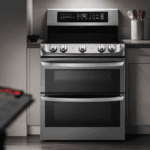
In March, Electrolux Group recalled about 174,800 Frigidaire gas ranges in the United States and about 5,300 in Canada because the oven’s bake burner can experience delayed ignition, posing a burn hazard. CPSC said Electrolux and the agency were aware of 62 reports of delayed ignition, including 30 burn injuries. CPSC
In April, Fisher & Paykel recalled about 433 professional gas ranges in the United States and about 70 in Canada because the ovens can experience delayed ignition, allowing gas to accumulate and causing the oven door to open from combustion. CPSC said Fisher & Paykel had received 18 reports of delayed ignition and one report of a minor burn injury. CPSC
Appliance News has covered the Frigidaire recall and proposed class action, and previously reported on the Fisher & Paykel recall. This follow-up pulls the two together around the technical and service question: Why does delayed ignition keep appearing, and what should the industry be watching before it becomes a recall?
What delayed ignition means
In a gas oven, the bake burner should ignite promptly after the control system opens the gas valve. On many modern ranges, the oven igniter heats until it draws enough current to allow the gas safety valve to open. Gas then flows to the burner and should light in a controlled way.
Delayed ignition occurs when gas is released but does not ignite quickly. If unburned gas accumulates in the oven cavity or burner area before ignition, the eventual combustion can be forceful. Depending on the amount of accumulated gas, the result can be a loud “whoosh,” flash, oven-door movement, flame rollout or burn exposure to a nearby user.
More Read
That is the core hazard described in both recalls. Fisher & Paykel’s CPSC notice specifically says delayed ignition can cause gas to accumulate and the oven door to open from combustion. Frigidaire’s notice identifies delayed ignition of the oven’s bake burner and burn injuries. The mechanical details may differ, but the safety concern is the same: ignition is not happening when and where it should.
For consumers, the warning signs can be easy to dismiss. A delayed light-off may sound like a pop, bang or delayed “boom.” The oven may produce a gas odor before ignition. Flames may appear larger than normal at startup. The door may move unexpectedly. The oven may light normally sometimes and misbehave other times, which can make intermittent reports difficult to diagnose.
Why it is a recurring failure mode
Delayed ignition is not tied to one simple cause across every gas oven. It is a combustion-system failure mode that can arise when the timing, fuel flow, air mix, burner condition or ignition source is out of tolerance.
Common service-level causes can include a weak or slow oven igniter, a restricted or misaligned burner, improper air shutter adjustment, debris or contamination near burner ports, a gas valve that opens at the wrong time, pressure irregularities, wiring or control-board issues, or a burner design that does not reliably light under all expected operating conditions. Those are general service considerations; the CPSC notices do not identify each root cause publicly for the recalled products.
That distinction matters. Servicers should not assume the Frigidaire and Fisher & Paykel recalls share the same failed component. They should assume the same symptom — delayed bake burner ignition — is serious enough to require stop-use guidance, manufacturer instructions and documented repair rather than routine reassurance.
Gas ovens are also sensitive to small changes in field conditions. Installation quality, gas pressure, burner alignment, cabinet ventilation, shipping damage, prior repairs, conversion work and component tolerances can all affect ignition behavior. A design that appears stable in most units may still produce failures when several tolerances stack in the wrong direction.
The recall pattern is not identical
The Frigidaire and Fisher & Paykel recalls should not be treated as identical events. The Frigidaire recall is large, affecting mass-market and premium Frigidaire models sold from June 2025 through January 2026 for $630 to $2,700. The recall includes Frigidaire, Frigidaire Gallery and Frigidaire Professional models with serial numbers from VF52200000 to VF54399999.
The Fisher & Paykel recall is much smaller and involves 30-, 36- and 48-inch freestanding professional gas ranges with gas ovens, sold from April 2024 through February 2026 for $7,000 to $14,000. The affected model families include RGV3-305, RGV3-366, RGV3-488, RGV3-485GD, RGV3-485GD-N and RGV3-485GD-L.
The remedies also differ in detail. Electrolux is providing a free in-home repair involving professional installation of a new bake burner. Fisher & Paykel is providing a free inspection and repair of the oven ignitor. In both cases, consumers were told to stop using the ovens immediately but could continue using the cooktop burners.
- Frigidaire: About 174,800 U.S. units, 62 delayed-ignition reports and 30 burn injuries.
- Fisher & Paykel: About 433 U.S. units, 18 delayed-ignition reports and one minor burn injury.
- Shared hazard: Delayed oven ignition creates a burn risk during operation.
- Shared consumer step: Stop using the oven until the manufacturer repair is completed.
What servicers should watch
For servicers, the lesson is documentation and escalation. A customer complaint about a gas oven “booming,” “popping,” “lighting late,” “smelling gas before lighting” or “pushing the door open” should not be treated as a normal startup noise without inspection and recall screening.
The first step is to check the brand, model and serial number against active recalls and manufacturer service bulletins. If the range is in a recall population, the technician should follow the manufacturer’s recall procedure and stop-use guidance, not improvise a field fix outside the program.
If the range is not in a recall population, the symptom still deserves a careful safety evaluation. Technicians should verify proper ignition timing, inspect the bake burner and ports, confirm igniter operation, check for physical obstruction or contamination, review gas supply and pressure conditions where appropriate, and look for evidence of prior improper repair or conversion. Gas work should follow applicable codes, manufacturer instructions and local licensing requirements.
Intermittent delayed ignition should be documented with customer statements, photos where relevant, model and serial numbers, installation conditions and any observed ignition delay. If a technician cannot reproduce the failure, the report should still be escalated when the customer describes forceful ignition or flame rollout. Intermittent gas ignition symptoms are exactly the kind of field pattern that can precede wider manufacturer action.
Servicers should also be careful with language. Telling a customer that a delayed boom is “normal” can create safety and liability problems if the symptom later becomes part of a recall, injury report or property-damage claim. A better response is to explain that ignition should be prompt and controlled and that forceful delayed ignition requires evaluation.
What manufacturers should watch
For manufacturers, delayed ignition is a signal that field data should be connected quickly across warranty claims, service calls, contact-center language, parts replacements and consumer-incident reports. The symptom may not arrive under one neat code. Customers may describe a bang, pop, flare, gas smell, door movement, burn or “explosion.”
That means claims systems need enough granularity to detect ignition problems before they become a large public recall. If delayed ignition complaints are coded only as “oven noise,” “igniter replaced,” “burner adjustment,” “customer education” or “no problem found,” the trend may be harder to see until incident counts rise.
Engineering teams should also treat delayed ignition as a system issue, not only a component issue. Bake burner geometry, igniter placement, valve timing, air-fuel mix, shielding, oven cavity airflow, gas-pressure assumptions, installation variability and manufacturing tolerances can interact. A replacement part may solve the recalled condition, but root-cause work should ask why the design allowed delayed light-off in the first place.
Retail and product teams have a role as well. If a product line is receiving field complaints about forceful ignition, the issue should not be buried as a service inconvenience. It affects consumer safety, brand trust, retailer exposure and the credibility of premium range claims.
Why retailers and warranty companies should care
Retailers are often the first place consumers turn when a new range behaves dangerously. A buyer who spent $700 on a mass-market gas range and a buyer who spent $12,000 on a professional model may use different words, but both expect the oven to ignite safely.
Dealer staff should know that delayed ignition is not simply a comfort complaint. It can indicate a burn hazard. For recalled products, staff should direct customers to the manufacturer recall process and CPSC notice, not general troubleshooting or continued use of the oven.
Warranty administrators should also track delayed ignition symptoms across brands. If the same symptom appears repeatedly in claims before a recall is announced, the administrator may be one of the earliest sources of pattern recognition. That requires coding and escalation practices that distinguish delayed ignition from ordinary heating complaints.
For property managers, the recalls underscore the need to identify model and serial numbers in rental housing. Stop-use instructions for the oven function may be difficult to enforce if tenants are not informed, if labels are missing or if replacement cooking options are not provided during the repair window.
The consumer safety message
Consumers with recalled Frigidaire or Fisher & Paykel ranges should stop using the oven immediately and contact the manufacturer for the free repair. CPSC says the cooktop burners can continue to be used on both recalled product groups.
Consumers with any gas oven should take delayed ignition symptoms seriously, especially if they hear a boom, smell gas before ignition, see flame rollout, notice the oven door move from combustion or experience burns. Those symptoms should be reported to the manufacturer, a qualified service provider and CPSC through SaferProducts.gov when appropriate.
The larger industry takeaway is straightforward. Delayed ignition is a known gas-appliance hazard, but the Frigidaire and Fisher & Paykel recalls show that it can still emerge in new product populations across very different price points. The warning for manufacturers and servicers is not only to fix the recalled units. It is to recognize the pattern earlier, code the symptom more accurately and treat forceful oven ignition as a safety signal before it becomes a burn-injury count.