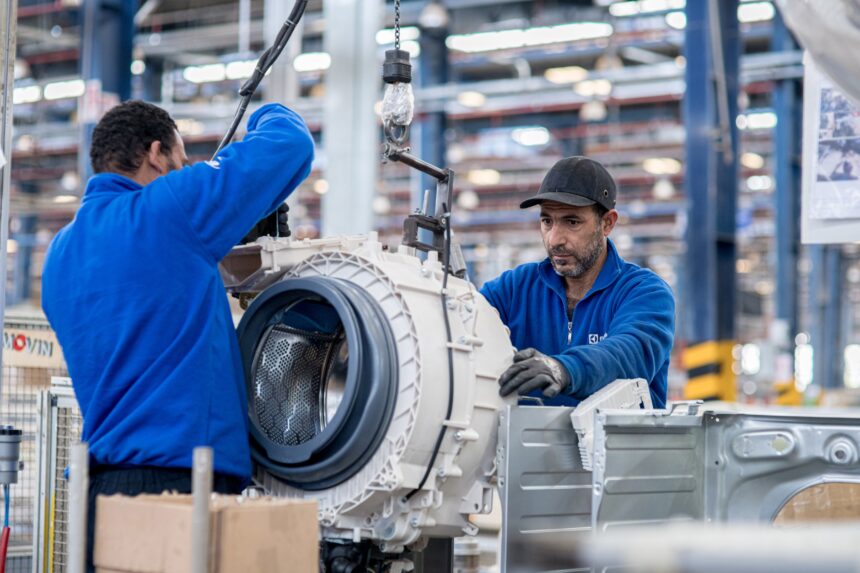
Electrolux’s restructuring in Anderson, South Carolina, is rippling beyond its own factory floor, with appliance supplier Ilpea Industries listed for a local closure as refrigerator production winds down at the nearby Electrolux plant.
WARN-tracking data from LayoffNext lists ILPEA Industries, Inc. in Anderson, South Carolina, as a closure affecting 14 workers, with a July 15, 2026 filing date. The listing adds a smaller but notable supplier-side casualty to a much larger manufacturing transition already underway in the Upstate appliance economy.
Ilpea is not a household appliance brand, but it sits in the supplier layer that makes appliance manufacturing possible. The company describes itself as a producer of plastic, rubber and magnetic components for the home appliance, automotive and building sectors. Its U.S. history page says its customer base grew to include Electrolux Home Products, along with other major appliance names.
The closure comes as Electrolux Group and Midea Group move ahead with a North American restructuring plan that will end food-preservation production at the Anderson plant and repurpose the site for laundry manufacturing.
A Supplier Fallout From Anderson’s Reset
Electrolux announced in April that its Anderson factory would be converted from a food-preservation operation into a fabric-care manufacturing site under a new joint venture with Midea Group. The current refrigerator production is expected to be phased out by July 2026, with laundry production expected to begin in the first half of 2027.
The companies said the Anderson manufacturing joint venture will be owned 55% by Electrolux Group and 45% by Midea. Electrolux has said the broader partnership is designed to strengthen product development, improve cost competitiveness and give the company more flexibility in North America.
More Read

For suppliers tied to the old refrigerator production flow, however, the transition creates a more difficult near-term reality. A plant that was built around food preservation parts, components, processes and purchasing needs is being retooled for a different appliance category.
That shift can change what local suppliers make, how much volume they receive and whether their existing operations still fit the new manufacturing footprint. Ilpea’s closure is small compared with Electrolux’s own layoffs, but it shows how a major appliance reconfiguration can move through the local supply chain.
Electrolux’s Anderson Transition Is Already Displacing Workers
The supplier closure follows a much larger workforce disruption at Electrolux’s Anderson plant. SC Daily Gazette reported that Electrolux will lay off 1,255 workers at the Anderson plant by year’s end, citing a notice filed with the South Carolina Department of Employment and Workforce.
The layoffs are tied to the transition away from refrigerator production. Electrolux and Midea plan to restart production in the first half of 2027 and eventually employ about 1,200 workers again, with hiring expected to take place gradually through 2027 and 2028.
Electrolux said in its April announcement that the partnership is expected to affect about 1,500 employees in 2026. The company also said the Anderson manufacturing joint venture is expected to hire up to about 1,200 employees as the factory is repurposed into a fabric-care facility.
That makes the Anderson transition both a layoff story and a reindustrialization story. Electrolux is not abandoning the site, but the workforce and supplier base built around refrigerator production are facing a gap before the new laundry operation ramps up.
Why a 14-Worker Closure Matters
On paper, Ilpea’s listed 14-worker closure is small beside Electrolux’s more than 1,200 affected employees. In supply-chain terms, it matters because appliance plants do not operate in isolation. Gaskets, seals, plastic extrusions, molded components and other supplier-made parts are part of the production system that surrounds a large refrigerator factory.
When a major plant changes product categories, suppliers may need new tooling, new contracts, different materials, new certification processes or different production volumes. Some suppliers can shift with the customer. Others may lose enough demand that a local facility no longer makes sense.
For Anderson County, the issue is not only how many jobs Electrolux eventually brings back under the new laundry operation. It is also whether the local supplier network can adapt to the new product mix, or whether more smaller closures follow as refrigerator-related work phases out.
The Broader Appliance Supply-Chain Lesson
The Ilpea listing highlights a broader risk in appliance restructuring. Manufacturers often present retooling plans in terms of long-term efficiency, new investment and future jobs. Those benefits may be real, but the transition period can still be painful for workers, suppliers and communities tied to the old production model.
Electrolux has said the North American partnership with Midea will support long-term profitable growth, improve cost efficiency and create a stronger platform for innovation. The company also said the Anderson conversion will be part of a broader investment in fabric care production.
For local suppliers, the practical question is whether the future laundry plant creates enough new demand to replace the refrigerator work that is disappearing. Until that becomes clear, Ilpea’s closure is a reminder that appliance-factory restructuring can claim more than the jobs listed under the main manufacturer’s name.