A federal appeals court has upheld New York’s authority to restrict fossil-fuel appliances in new buildings, giving state and local electrification mandates a major legal win while leaving appliance manufacturers, builders, retailers and utilities to manage the practical consequences.
The U.S. Court of Appeals for the Second Circuit ruled June 30 that the federal Energy Policy and Conservation Act does not preempt New York City’s Local Law 154 or New York state’s All-Electric Buildings Act. Both laws effectively limit the use of fossil-fuel-powered appliances and building systems in new construction, with phase-in schedules and exemptions. Second Circuit opinion
The decision does not end the policy fight. Plaintiffs could seek further review, and New York still has to move from litigation posture back into implementation. But for the appliance industry, the ruling shifts the immediate question from whether the state can regulate fuel use in new buildings to how manufacturers, dealers and builders prepare for a market where gas cooking, gas water heating and fossil-fuel space heating are increasingly restricted in new construction.
What the court decided
The appeal combined challenges to New York City’s Local Law 154 and New York state’s All-Electric Buildings Act. The plaintiffs included plumbing, building, propane, gas and labor groups that argued the laws were preempted by EPCA because they effectively prevent covered gas appliances from being installed in many new buildings.
The Second Circuit rejected that argument. Writing for the panel, Judge Myrna Pérez said EPCA sets energy conservation standards for covered appliances and preempts a limited category of similar regulations, but does not reach laws that regulate the type of energy a building may use. The court said EPCA “does not directly regulate the availability of fossil-fuel-powered appliances” and therefore does not preempt the challenged laws.
The panel affirmed two lower-court decisions, one from the Southern District of New York involving the city law and one from the Northern District of New York involving the statewide law. The decision applies in the Second Circuit, which covers New York, Connecticut and Vermont.
More Read

The ruling also widened the split with the Ninth Circuit’s 2023 decision in California Restaurant Association v. Berkeley, which held that Berkeley, California’s gas-infrastructure restriction was preempted by EPCA. The Second Circuit acknowledged that case but declined to follow its reasoning.
What the law does
New York’s statewide All-Electric Buildings Act applies to new construction, not existing homes. The New York State Assembly describes the law as requiring most new buildings seven stories or shorter to use electric heat and appliances starting in 2026, with taller residential buildings and smaller commercial buildings moving into the program in 2029. Larger commercial buildings with at least 100,000 square feet of conditioned floor area are also included in the earlier phase. New York State Assembly
The law includes exemptions for certain uses, including commercial food establishments, emergency backup power, laboratories, manufacturing and other specified categories. Those exemptions matter for appliance and equipment suppliers because they preserve some fossil-fuel applications even as the broader new-construction market shifts toward electric systems.
New York City’s Local Law 154 has its own schedule. The city’s Department of Buildings says the law has applied since Jan. 1, 2024, to Group R-3 buildings and all occupancies less than seven stories tall, excluding service hot water. The schedule expands to all occupancies on July 2, 2027, with separate timing for some affordable housing. NYC Department of Buildings
For appliance manufacturers, the key point is that the restrictions are about fuel choice in new buildings, not appliance efficiency ratings. That distinction was central to the court’s analysis and will shape how future challenges are framed.
- What was upheld: New York City’s Local Law 154 and New York state’s All-Electric Buildings Act.
- What the court rejected: The argument that EPCA preempts all state or local laws that effectively restrict gas appliances in new buildings.
- Who is affected: Builders, developers, appliance retailers, gas equipment suppliers, HVAC contractors, plumbers, electricians and consumers buying new construction.
- What remains uncertain: Further appeals, state implementation timing and whether other circuits continue to split on EPCA preemption.
The appliance impact is bigger than stoves
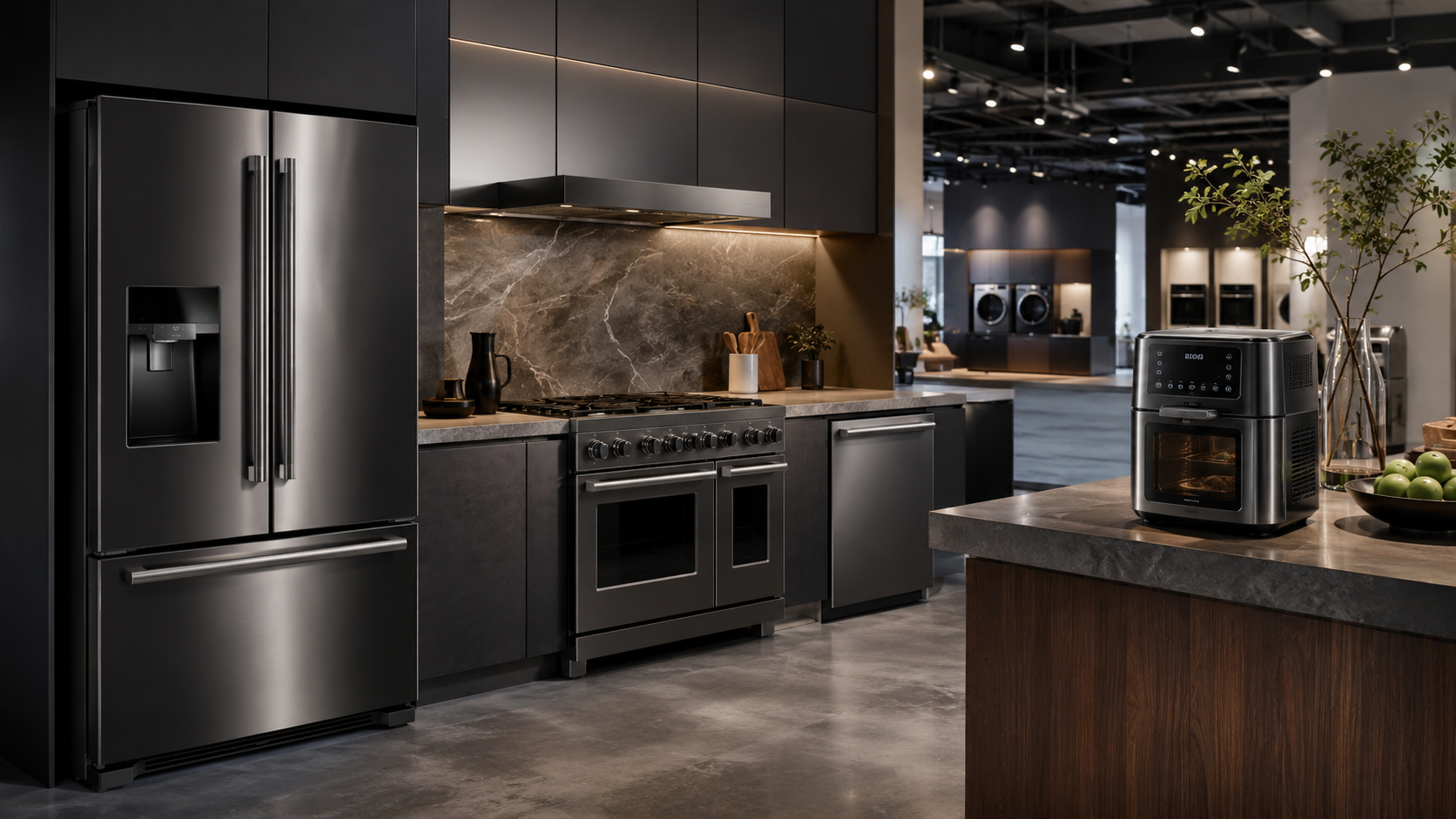
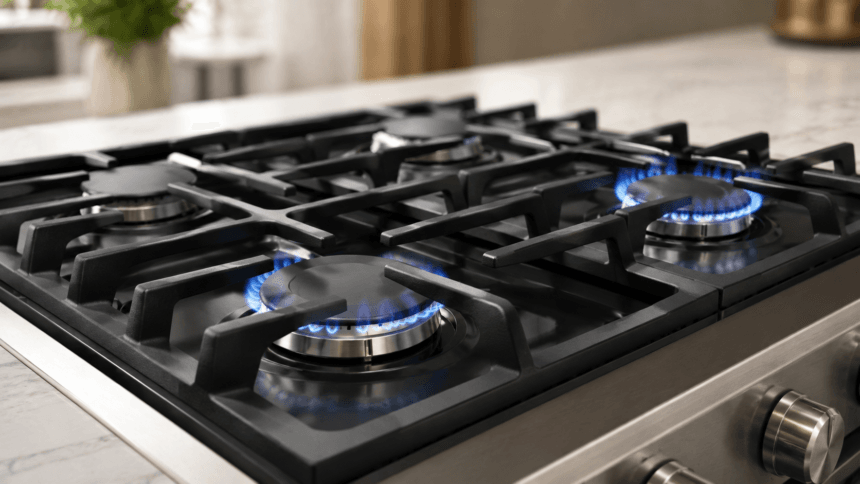
The public debate often centers on gas stoves, but the appliance and building-equipment impact is broader. New-construction electrification affects cooking, space heating, water heating, clothes drying, backup systems and builder package design.
For kitchen appliance makers, the ruling supports a market shift toward induction and electric cooking in affected new buildings. For retailers and builders, that means sales teams need to screen for electrical capacity, cookware compatibility, rebate eligibility and customer expectations before treating induction as a simple gas replacement.
For water heating and HVAC suppliers, the stakes may be larger. New homes that cannot use gas or oil systems will push more demand toward heat pump water heaters, electric resistance backup, cold-climate heat pumps and all-electric mechanical-room design. That affects not only product mix but also contractor training, panel capacity, installation labor and service support.
Gas appliance suppliers still have existing-home, replacement, exempt-building and out-of-state markets. But the ruling makes clear that in at least one major appellate circuit, fuel-use restrictions in new construction can survive EPCA preemption challenges. That raises the risk that new-construction gas demand becomes more geographically fragmented.
Grid planning is the pressure point
The court did not decide whether electrification is economically wise, affordable or easy to implement. It decided a federal preemption question. That distinction matters because the legal win does not remove the grid-planning challenge.
A June 24 draft of the New York Independent System Operator’s 2025-2044 System & Resource Outlook says statewide electricity demand is expected to increase materially over the next two decades, driven by building, transportation and industrial electrification as well as new large loads such as data centers and manufacturing facilities. The draft says that as demand growth outpaces new generation supply, planning margins narrow and the system becomes more sensitive to the timing and location of new resources.
The draft also says futures that include a zero-emissions electric system require “upwards of two to three times” the current level of new installed capacity and a different resource mix than exists at scale today. Across the futures evaluated, NYISO said new resource development can approach about 105 gigawatts, compared with about 30 to 60 gigawatts under less stringent decarbonization policies. The report is marked draft and for discussion purposes, but it shows the scale of planning behind building electrification.
For appliance companies, this is where electrification becomes an operations issue. Selling more electric appliances into new buildings requires more than product availability. It requires builders, utilities, electricians, installers and code officials to coordinate around service capacity, panel sizing, wiring, transformer constraints and peak-load management.
Retailers and builders need a cleaner script
The sales-floor message cannot be “gas is banned everywhere” or “electric is always cheaper.” Neither statement is accurate enough. The rules apply to new construction, vary by building type and location, include exemptions and may still face additional legal or political challenges.
A more useful customer-facing explanation is: “In some New York new-construction projects, the building code requires electric equipment instead of fossil-fuel appliances. Existing homes and exempt uses are different. Before choosing cooking, water heating or laundry equipment, we need to confirm the building type, permit date, electrical capacity and applicable local code.”
Builders should also avoid treating appliance selection as a late-stage finish decision. If a project is all-electric, cooking, water heating, laundry and HVAC choices have to be coordinated with electrical design much earlier. The wrong sequence can create change orders, panel upgrades, service delays or customer confusion near closing.
Retailers that serve builders should prepare separate playbooks for New York City, statewide New York projects, existing-home replacement and exempt commercial uses. The product package, installation checklist and warranty support may be different in each channel.
What manufacturers should watch
Manufacturers should watch three things after the ruling. The first is whether plaintiffs seek further review, including a possible petition to the U.S. Supreme Court. The Second Circuit’s disagreement with the Ninth Circuit increases the legal importance of the issue.
The second is state implementation timing. New York had agreed in 2025 to delay implementation of the statewide law while the appeal moved forward. The June 30 decision changes that posture, but companies should still watch for state agency guidance, code updates and enforcement timelines before making blanket claims to dealers or builders.
The third is product positioning. If all-electric new construction accelerates, induction ranges, electric wall ovens, heat pump dryers, heat pump water heaters and electric-ready builder packages become more strategically important. Gas products remain important in replacement and exempt markets, but the new-construction channel may no longer be a neutral fuel-choice market in affected jurisdictions.
The ruling also strengthens the policy case for appliance makers to invest in repairability and service training for electric and heat pump products. A building code can move demand, but poor installation or early service problems can slow consumer acceptance.
The next fight is implementation
The Second Circuit ruling is a major legal development for building electrification, but it is not the end of the appliance fight. It moves the center of gravity from courtroom preemption arguments to implementation: which products are available, which buildings are covered, whether the grid is ready, whether contractors can install the equipment and whether consumers see the result as affordable and reliable.
For appliance retailers and manufacturers, the practical lesson is direct. New York’s all-electric building policies are no longer just political talking points. They are a live market signal in one of the country’s largest construction and appliance markets.
The brands and dealers that respond fastest will not be the ones that simply declare gas dead or electric inevitable. They will be the ones that understand the code, build the right product mix, train the sales floor and help customers navigate the real tradeoffs of an all-electric new home.