Right-to-repair laws have moved into a more complicated phase for the appliance business. The question is no longer only whether a state supports repair access. It is whether a particular refrigerator, washer, smart oven, thermostat, vacuum, control board or home-electronics product is covered in that state, on that date, under that state’s exemptions.
This is a follow-up to ApplianceNews.org’s earlier coverage of right to repair moving into home appliances and the later implementation fight over what “fair and reasonable” access actually means. This update takes the next step: a state-by-state guide focused on appliance and home-electronics relevance as of July 17, 2026.
The July 2026 change is not a single national appliance rule. It is the arrival of a patchwork. Connecticut’s repair law for electronic and appliance products took effect July 1. Minnesota’s attorney general is actively pointing consumers to the state’s existing repair-rights law. Washington and Colorado already entered 2026 with digital-repair laws in force. Texas is set to start Sept. 1, while Kansas has signed a digital-repair law that does not apply until 2027 and carves out major home appliances.
What Changed in July
Connecticut is the clearest July appliance story. The state’s repair chapter applies to an “electronic or appliance product” first manufactured and first sold or used in Connecticut on or after July 1, 2026, if the manufacturer makes documentation, parts or tools available to an authorized repair provider. The definition reaches major home appliances and home electronics, while excluding several categories such as motor vehicles, alarm systems and video game consoles.
Minnesota is not new in July, but it remains important because state officials are now giving consumers a practical enforcement path. The Minnesota Attorney General’s Office tells residents that the state’s Digital Fair Repair Act took effect July 1, 2024, and requires manufacturers to make documentation, parts and tools available for covered digital electronic equipment sold or used in Minnesota on or after July 1, 2021.
Texas is the next calendar item. Its digital electronic equipment repair law takes effect Sept. 1, 2026. But appliance businesses should read the exclusions carefully: the law excludes a home appliance with embedded digital electronic equipment, including refrigerators, ovens, microwaves, air conditioning units and heating units, while carving that exclusion differently for countertop or stand-alone small appliances.
More Read
Kansas adds another cautionary example. The Kansas digital right-to-repair law was signed in 2026 and applies to covered digital electronic equipment made available for sale on or after July 1, 2027. But it excludes home appliances with embedded digital electronics, including refrigerators, ovens, microwaves, air-conditioning units, heating units and similar residential appliances.
Why Appliance Repair Is in the Middle
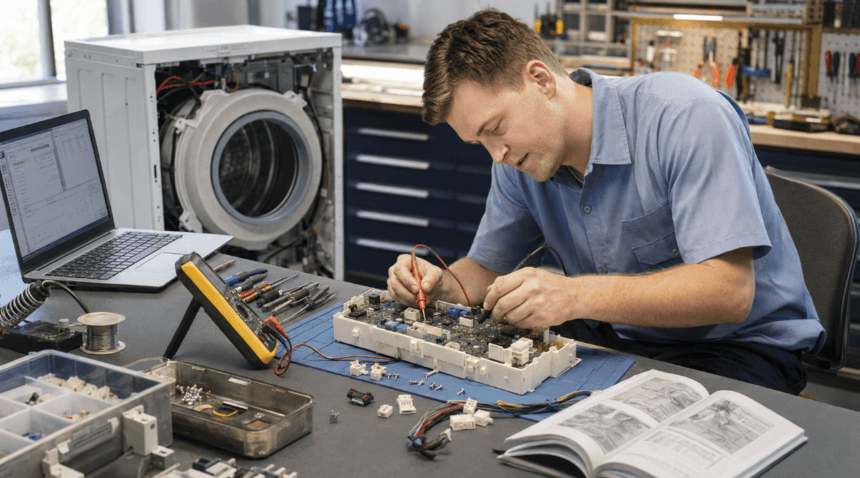
Appliances now sit between two policy worlds. A washer, refrigerator or dishwasher may be sold as a home appliance, but its repair can depend on electronic boards, embedded software, sensors, inverter drives, fault codes, smart-home radios and calibration routines. That makes it hard for lawmakers to draw a clean line between “electronics” and “appliances.”
For manufacturers, the compliance question is product-by-product. A state may cover major home appliances directly, as Connecticut and California do. Another state may cover digital electronic equipment but exclude major appliances, as New York, Texas and Kansas do. Another may use broad language that requires counsel and compliance teams to test each appliance, connected device and accessory against the law’s definitions and exemptions.
- Parts access: A right to repair is weak if control boards, pumps, compressors, sensors or displays are unavailable or priced beyond practical repair.
- Documentation: Servicers need complete service manuals, error-code trees, wiring diagrams, calibration steps and safety notices, not only consumer troubleshooting pages.
- Software tools: Modern repairs may require diagnostics, firmware, pairing, reset functions or configuration tools.
- Lifecycle rules: E-waste, battery and product-stewardship laws add another layer by regulating what happens when repair fails or products are retired.
The State-by-State Appliance Repair Map
The guide below is current as of July 17, 2026, and is limited to appliance or home-electronics relevance. “No enacted law found” means this review did not identify an active statewide appliance or home-electronics repair-access law; it does not mean there are no warranty, consumer-protection, recycling, electronics-disposal or pending bill issues in that state.
| State | July 2026 appliance/home-electronics repair update |
|---|---|
| Alabama | No enacted statewide appliance or home-electronics repair-access law found in this review. Watch future repair-access bills and electronics recycling requirements. |
| Alaska | No enacted statewide appliance or home-electronics repair-access law found. Rural service access remains a practical repair issue, but no active appliance-specific right was verified. |
| Arizona | No enacted statewide appliance or home-electronics repair-access law found. Appliance disputes remain mainly warranty, service-contract and consumer-protection issues. |
| Arkansas | No enacted statewide appliance or home-electronics repair-access law found. Manufacturers and servicers should still monitor e-waste, warranty and pending repair bills. |
| California | Active broad repair-access law for electronic and appliance products first sold or used in California on or after July 1, 2021. Major home appliances are directly relevant, and penalties can apply for noncompliance. |
| Colorado | Digital electronic equipment repair law took effect Jan. 1, 2026, with documentation, parts and tools requirements and restrictions on parts pairing. Appliance relevance depends on whether the product is covered or exempt. |
| Connecticut | July 1, 2026, is the key date. Connecticut now covers electronic and appliance products, including major home appliances, when manufacturers make repair materials available to authorized providers. |
| Delaware | No enacted statewide appliance or home-electronics repair-access law found. Businesses should monitor future repair and electronics lifecycle proposals. |
| Florida | No enacted statewide appliance or home-electronics repair-access law found. Repair access remains governed mainly by warranty, parts availability, service networks and general consumer law. |
| Georgia | No enacted statewide appliance or home-electronics repair-access law found. Appliance-repair issues remain tied to manufacturer service policies and general consumer-protection rules. |
| Hawaii | No enacted statewide appliance or home-electronics repair-access law found. Geographic service constraints may make parts and documentation access especially important even without a state repair law. |
| Idaho | No enacted statewide appliance or home-electronics repair-access law found. Monitor future digital-repair and equipment-repair proposals. |
| Illinois | No enacted statewide appliance or home-electronics repair-access law found in this review. Retailers and servicers should watch future electronics and repair-access bills. |
| Indiana | No enacted statewide appliance or home-electronics repair-access law found. Current appliance repair access depends largely on manufacturer programs and warranty terms. |
| Iowa | No enacted statewide appliance or home-electronics repair-access law found. Agricultural-equipment repair debates may influence future consumer-product proposals, but no appliance law was verified. |
| Kansas | Digital repair law was signed in 2026 and applies to covered equipment sold on or after July 1, 2027, but major residential appliances with embedded digital electronics are excluded. |
| Kentucky | No enacted statewide appliance or home-electronics repair-access law found. Watch future digital-device repair proposals and warranty enforcement. |
| Louisiana | No enacted statewide appliance or home-electronics repair-access law found. Repair issues remain tied to service networks, parts supply and consumer-protection law. |
| Maine | A 2026 electronic-device repair bill died between houses. Maine has other consumer and automotive repair issues, but no enacted appliance/home-electronics repair-access update was verified. |
| Maryland | No enacted statewide appliance or home-electronics repair-access law found in this review. Maryland remains more relevant for electronics and packaging lifecycle policy than appliance repair access. |
| Massachusetts | No broad enacted appliance or home-electronics repair-access law found. Massachusetts remains best known for automotive repair data policy, not household-appliance repair access. |
| Michigan | No enacted statewide appliance or home-electronics repair-access law found. Watch future consumer-electronics and equipment-repair bills. |
| Minnesota | Active Digital Fair Repair Act. State attorney general guidance tells consumers the law is in effect and covers eligible digital electronic equipment sold or used in Minnesota on or after July 1, 2021. |
| Mississippi | No enacted statewide appliance or home-electronics repair-access law found. Warranty, service-contract and general consumer rules remain the main repair levers. |
| Missouri | No enacted statewide appliance or home-electronics repair-access law found. Monitor future digital-repair proposals and electronics lifecycle rules. |
| Montana | No enacted statewide appliance or home-electronics repair-access law found. Repair access remains a practical service-network and parts-availability issue. |
| Nebraska | No enacted statewide appliance or home-electronics repair-access law found. Prior right-to-repair debates have focused more broadly on equipment access than household appliances. |
| Nevada | No enacted statewide appliance or home-electronics repair-access law found. Appliance companies should still watch electronics-recycling and consumer-protection obligations. |
| New Hampshire | No enacted statewide appliance or home-electronics repair-access law found in this review. Future bills could follow nearby state models. |
| New Jersey | No enacted statewide appliance or home-electronics repair-access law found. The state remains one to watch for consumer-electronics, warranty and recycling policy. |
| New Mexico | No enacted statewide appliance or home-electronics repair-access law found. Repair access depends mainly on manufacturer policies, warranty terms and parts distribution. |
| New York | Digital Fair Repair Act is active for covered digital electronic equipment, but major home appliances are carved out. Small digital home electronics or small appliances may still require product-specific review. |
| North Carolina | No enacted statewide appliance or home-electronics repair-access law found. Watch electronics recycling and future repair-access proposals. |
| North Dakota | No enacted statewide appliance or home-electronics repair-access law found. Current appliance repair issues are mainly market, warranty and parts-supply issues. |
| Ohio | No enacted statewide appliance or home-electronics repair-access law found. Manufacturers should monitor any future digital-device repair proposals. |
| Oklahoma | No enacted statewide appliance or home-electronics repair-access law found. Repair access remains governed by manufacturer channels and general consumer law. |
| Oregon | Consumer electronic equipment repair law is active, including parts, tools and documentation requirements and limits on parts pairing. Appliance relevance depends on the covered product and exclusions. |
| Pennsylvania | No enacted statewide appliance or home-electronics repair-access law found. Watch future consumer-electronics and product-lifecycle bills. |
| Rhode Island | No enacted statewide appliance or home-electronics repair-access law found in this review. Digital-device repair proposals remain a watch item. |
| South Carolina | No enacted statewide appliance or home-electronics repair-access law found. The repair market remains shaped by manufacturer networks, warranty terms and parts availability. |
| South Dakota | No enacted statewide appliance or home-electronics repair-access law found. Monitor future equipment and digital-repair bills. |
| Tennessee | No enacted statewide appliance or home-electronics repair-access law found. Warranty language and service-plan practices remain the practical repair issues. |
| Texas | Digital electronic equipment repair law takes effect Sept. 1, 2026, but major home appliances with embedded electronics are excluded. Countertop or stand-alone small appliances may require closer review. |
| Utah | No enacted statewide appliance or home-electronics repair-access law found. Repair access depends on manufacturer documentation, parts supply and service networks. |
| Vermont | No enacted statewide appliance or home-electronics repair-access law found in this review. Future repair proposals should be watched alongside recycling and product-stewardship policy. |
| Virginia | No enacted statewide appliance or home-electronics repair-access law found. Appliance repair remains mainly a warranty, service-network and consumer-protection issue. |
| Washington | Digital electronics repair law took effect Jan. 1, 2026, with legislative findings that explicitly discuss appliances such as coffee makers, washing machines, vacuums, thermostats and doorbells. Parts-pairing and repair privacy provisions are especially relevant. |
| West Virginia | No enacted statewide appliance or home-electronics repair-access law found. Monitor future repair-access and electronics lifecycle proposals. |
| Wisconsin | No enacted statewide appliance or home-electronics repair-access law found. Current appliance repair issues remain tied to warranty terms, parts availability and independent-service access. |
| Wyoming | No enacted statewide appliance or home-electronics repair-access law found. Geographic service access and parts availability remain practical concerns even without a state repair law. |
EPR Adds a Lifecycle Layer
Right to repair is about access before a product becomes waste. Extended producer responsibility and product-stewardship laws deal with what happens when products, batteries or electronics reach end of life. The two policy tracks are different, but they increasingly meet at the same appliance-service counter.
The Environmental Protection Agency says 25 states plus the District of Columbia have electronics recycling laws. Many of those rules are about collection, recycling, disposal bans, reporting or producer responsibility rather than repair access. Still, they matter to retailers, reverse-logistics providers, recyclers and manufacturers because a product that cannot be economically repaired becomes a lifecycle-management problem.
Battery policy is part of the same shift. Rechargeable batteries in cordless vacuums, robotic floor cleaners, smart-home devices and some small appliances can move a product into battery-handling, takeback or fire-risk rules even when the device is not a major appliance. For the trade, the lifecycle question is becoming: can the product be repaired, and if it cannot, who is responsible for safe recovery?
Businesses Affected by the New Phase
Manufacturers face the most direct compliance work. They need product-by-product maps showing where each appliance, accessory, connected device and home-electronics product is covered, excluded or uncertain. They also need current systems for service manuals, parts catalogs, diagnostic tools, embedded software, firmware updates and authorized-provider terms.
Independent servicers need to know which state laws create real leverage and which do not. A technician in Connecticut may be able to point to appliance-specific language. A technician in Texas may face a major-appliance exclusion. A technician in New York may find that the digital product law helps with some electronics but not refrigerators or ovens.
Retailers and warranty administrators are also affected. Sales teams should not overpromise that every product is repairable under a state law. Warranty administrators need to separate lawful warranty limits from language that incorrectly suggests independent repair automatically voids coverage. Reverse-logistics and recycling partners need to understand when a product is being repaired, harvested for parts or moved into a regulated end-of-life stream.
Compliance Questions That Remain
The first unresolved question is coverage. State definitions vary, and the difference between a major appliance, a small appliance, consumer electronic equipment and a connected accessory can matter. A countertop microwave, a connected thermostat, a robotic vacuum and a smart refrigerator may not be treated the same way across state lines.
The second question is access quality. Many statutes use language such as fair and reasonable terms. That can include price, availability, timing, format, tool functionality, training restrictions, account requirements and whether independent shops receive equivalent access to authorized providers.
The third question is software. Appliances increasingly require pairing, calibration, diagnostics, reset functions or firmware-related steps. A manufacturer may argue that some tools are restricted for safety, cybersecurity or data-privacy reasons. Servicers will ask whether those restrictions are necessary safeguards or repair barriers.
The fourth question is lifecycle accountability. If repair access is narrow and replacement happens sooner, more appliances and electronics move toward disposal, recycling or takeback systems. That raises cost questions for manufacturers, retailers and consumers even when the right-to-repair law itself is silent on waste.
What the Appliance Trade Should Do Now
Manufacturers should build a live state matrix rather than relying on a single national right-to-repair position. That matrix should identify covered products, excluded products, effective dates, required documentation, available tools, parts portals, privacy notices, warranty scripts and end-of-life obligations.
Servicers should document access failures with specifics: model number, part number, missing manual, unavailable diagnostic function, pairing restriction, software limitation, price issue or delayed tool access. A general complaint that a brand is hard to repair is less useful than a clear example tied to a covered product and a covered state.
Retailers should prepare for consumer questions by state. A customer in Connecticut, Minnesota, California, Washington or Oregon may have different repair-access expectations than a customer in Texas or New York, where major-appliance carve-outs matter. Clear sales-floor language can prevent warranty misinformation and reduce service friction later.
The new phase of right to repair is not a clean national unlock for every appliance. It is a state-by-state test of whether repair access, documentation, parts pricing and lifecycle responsibility can keep up with the electronics now built into everyday home products.