Oregon’s Right-to-Repair law is moving from legislative language into the daily work of repair. For appliance service companies, the practical test is whether access to parts, tools and repair information becomes easier when a customer wants to keep a working product in service rather than replace it.
The state’s law requires original equipment manufacturers to make certain documentation, tools, parts and other repair materials available to owners and independent repair providers on fair and reasonable terms. It also restricts parts pairing for qualifying consumer equipment manufactured for the first time and first sold or used in Oregon after Jan. 1, 2025.
A recent Portland Monthly feature on local repair culture shows why the law matters beyond phones and laptops. It points to small appliances, stand mixers, vacuums and other household products that consumers often still want to repair, even when the formal service path is unclear or uneconomical.
Parts Access Is the Real Test
For appliance repair companies, Right-to-Repair policy is not just a consumer-rights slogan. It touches the operating details that determine whether a technician can diagnose a product, quote a repair confidently and complete the job without steering the customer toward replacement.
The strongest effect may come when a repair depends on manufacturer-controlled software, documentation or a proprietary component. A service company can often work around a cracked knob, a worn belt or a failed switch. It has fewer options when a product requires a restricted tool, unavailable service documentation or a part that will not fully function without manufacturer authorization.
That is where Oregon’s parts-pairing provision becomes important. The law says an OEM may not use parts pairing to prevent or inhibit an owner or independent repair provider from installing or enabling the function of an otherwise functional replacement part, subject to the law’s coverage and exceptions.
More Read
Appliances Bring a Different Repair Problem
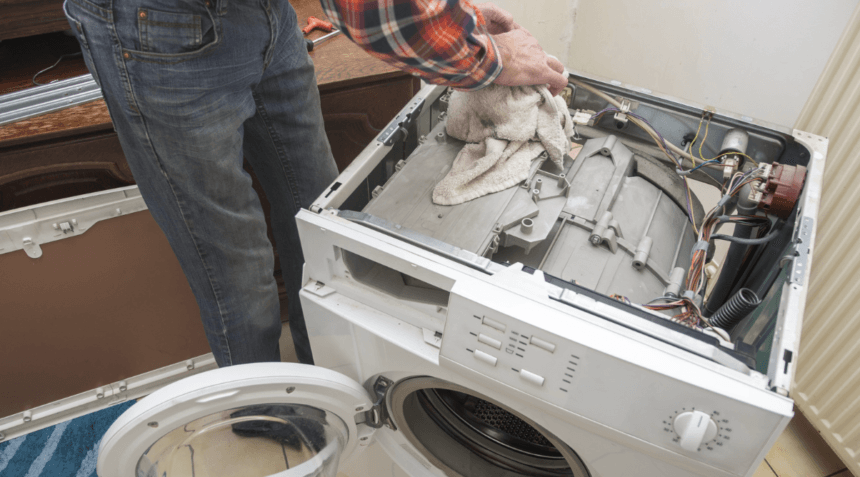
Appliances differ from smartphones in one important way: consumers do not always think of them as technology products until a board, sensor, dispenser, inverter, control panel or connected feature fails. A refrigerator, washer, oven or dishwasher can look mechanical from the outside while depending on digital diagnostics and electronic assemblies inside.
That creates a service gap. A customer may expect a conventional repair visit, while the repair company may need model-specific information, diagnostic access or a part pathway controlled by the manufacturer. Oregon’s law could narrow that gap if manufacturers provide the same practical repair materials to independent providers that they make available to authorized service networks.
- Service companies may gain more leverage when requesting parts, tools and documentation.
- Customers may have more repair options before replacing an appliance.
- Manufacturers may face new scrutiny over pricing, access and software restrictions.
- Technicians will still need to account for safety, certification and product-specific limits.
What Service Companies Should Watch
The law does not guarantee that every repair will be affordable or practical. A replacement control board can still be expensive, a repair can still take too long, and some products may remain uneconomical to service. The test is whether repair companies can get the materials needed to make an informed diagnosis and offer a viable choice.
Service companies should also document access problems carefully. If a technician cannot obtain a manual, diagnostic tool, firmware-enabled part or reasonable parts pricing, the details matter. Product model, serial number, manufacturer response, quoted part price, timing and the reason a repair could not proceed may become important if consumers or regulators test the law’s enforcement mechanisms.
The broader Right-to-Repair campaign, including advocacy from PIRG, has focused on the idea that owners and independent providers should have access to the spare parts, manuals and tools needed to keep products working. Oregon is now one of the places where that principle is being tested against the realities of modern appliances: sealed designs, software checks, high parts costs and the shrinking tolerance for disposable ownership.
For consumers, the law may make the biggest difference before a product is written off. For appliance repair companies, it may create a stronger basis to ask manufacturers for what the service call already depends on: accurate information, available parts and tools that let a technician finish the job.