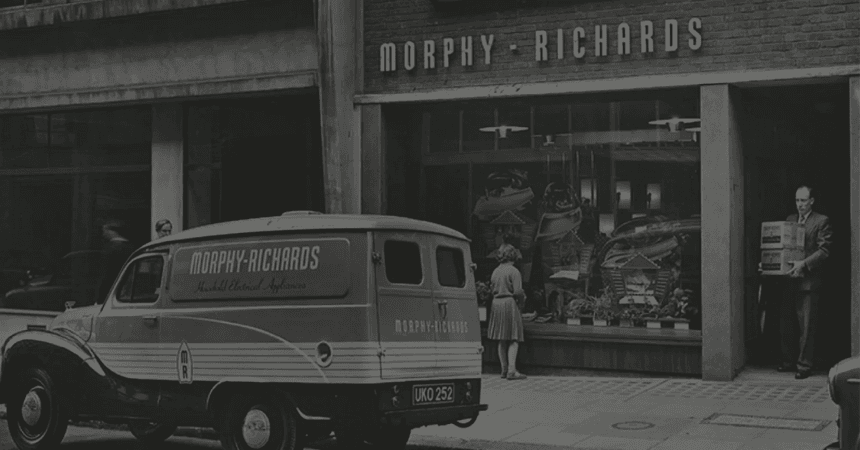
A household appliance can outlive the factory that made it, the company that owned it and sometimes even the country where most customers think it comes from. Morphy Richards, the British name stamped on generations of kettles, irons and toasters, turns 90 this year under a very different corporate structure from the one that made it famous.
- It Began With Two Men and Electric Household Goods
- Then Came Glen Dimplex
- A Chinese Manufacturer Bought the Global Brand Rights
- Why a Manufacturer Wants a 90-Year-Old Name
- IFA Shows What the Name Is Being Asked to Sell Now
- More Functions Mean More Reasons to Keep It — and More Things to Break
- The Heritage Is Real. So Is the Modern Business Model.
The company used IFA 2026 in Berlin to celebrate the anniversary and show newer kitchen and home products. The birthday is pleasant marketing. The more interesting story is how an appliance brand founded in Britain in 1936 became a global trademark tied to one of China’s major small-appliance manufacturers while retaining regional licensees and a distinctly British identity in the minds of many consumers.
It Began With Two Men and Electric Household Goods
Donal Morphy and Charles Richards formed the company in 1936. Morphy Richards’ own history traces its beginnings through early electric household products, while museum collections document the company as part of Britain’s 20th-century domestic-appliance industry.
The products were not glamorous in the modern technology sense. Irons, electric fires, kettles and later food-preparation appliances helped turn electricity into an ordinary domestic utility. The brand eventually became associated with the countertop machines that fill cupboards and kitchen worktops rather than with the full-size refrigerators, ranges and washers that dominate major-appliance sales.
That history is part of why the name has value. Appliance brands are unusual consumer assets: people may buy them only once every several years, yet family experience can carry a reputation across decades. A familiar badge can survive corporate changes that most buyers never notice.
Then Came Glen Dimplex
Morphy Richards became part of Glen Dimplex in the mid-1980s, beginning a long period under the Irish-owned electrical-products group. For many consumers, that era helped cement Morphy Richards as a modern British small-appliance brand even as manufacturing and sourcing in the industry became increasingly international.
More Read

Small appliances were among the earliest household categories to globalize aggressively. Their relatively compact size makes them easier to ship than refrigerators or washing machines, and contract manufacturing allows a brand to offer broad product ranges without owning every factory that produces them.
Morphy Richards followed that industry path. By the time ownership changed again, the company name and the factories behind its products were already separate concepts.
A Chinese Manufacturer Bought the Global Brand Rights
Glen Dimplex later sold the global intellectual-property and trademark rights for Morphy Richards to Guangdong Xinbao Electrical Appliance Holdings, also known through the Donlim name. Houlihan Lokey, which advised Glen Dimplex on the transaction, said Xinbao had already been manufacturing and selling Morphy Richards products under license in China before buying the rights.
That history helps explain why describing Morphy Richards today as simply “British” or simply “Chinese” misses part of the story. The brand was founded in Britain and still trades heavily on that heritage. Its global intellectual property moved to a Chinese appliance manufacturer. Regional licensing and distribution arrangements mean the company consumers encounter can also vary by market.
In Britain, Consumer Brands Limited became the official Morphy Richards licensee in 2023. Corporate records for Morphy Richards Consumer Appliances Limited also show an ownership and control structure tied to the newer organization. The badge is consistent; the business behind it is a network.
Why a Manufacturer Wants a 90-Year-Old Name
For a manufacturer, buying an established brand solves a problem that factories alone cannot. A company can become excellent at making kettles, mixers and air fryers without persuading consumers to trust an unfamiliar name. Morphy Richards arrives with decades of recognition, especially in Britain and other markets shaped by British retail brands.
For the old brand, the manufacturer brings something equally useful: engineering resources, production scale and access to a faster product-development cycle. The arrangement is one version of a pattern seen throughout consumer goods, where heritage names and modern manufacturing networks become separate but complementary assets.
IFA Shows What the Name Is Being Asked to Sell Now
In its IFA 2026 announcement, Morphy Richards said it would show products across kitchen solutions, home living and air treatment. The announcement is broad and does not provide enough model-level data to independently judge the performance of every new product.
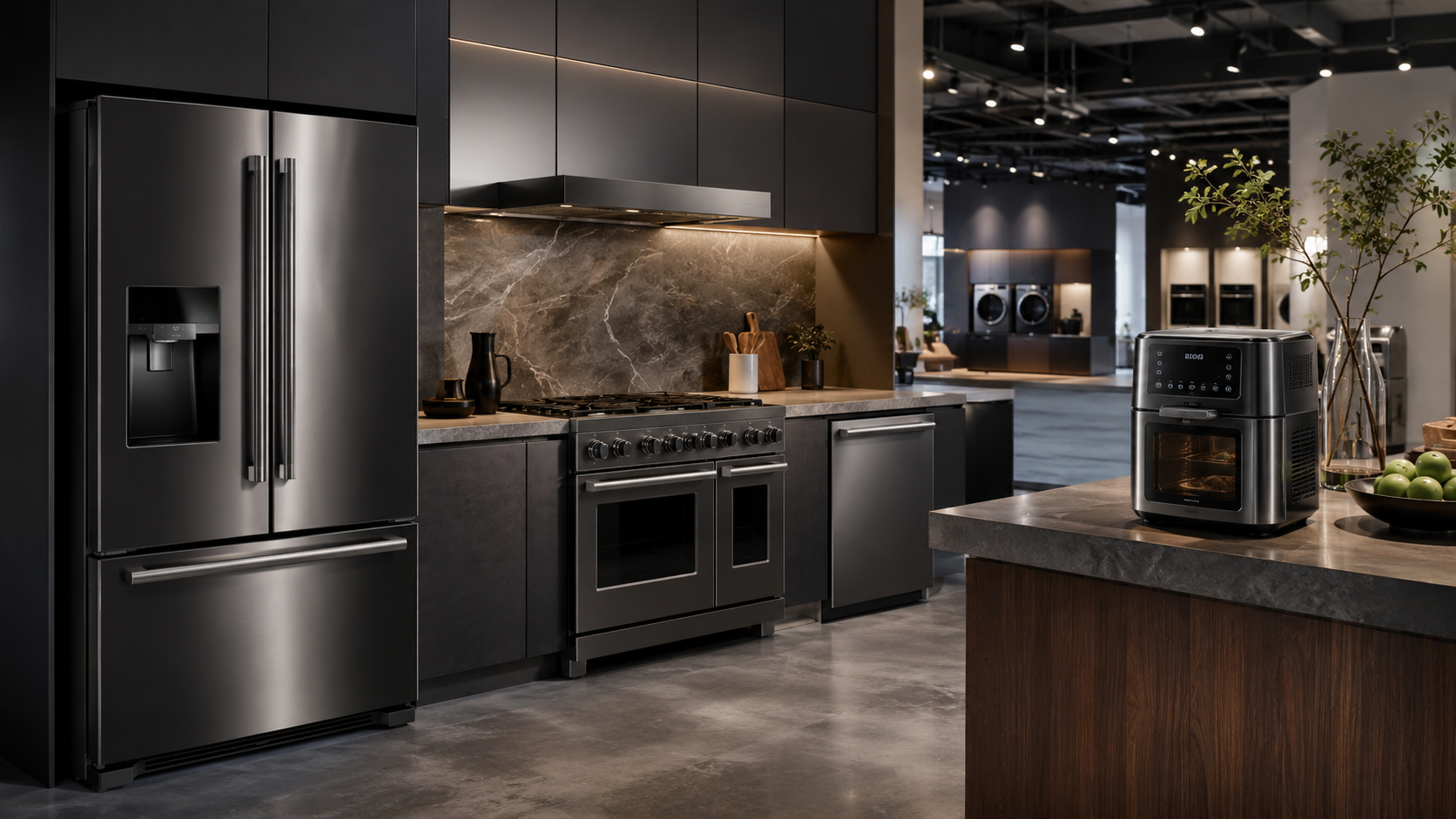
The current catalog nevertheless shows a clear move toward multifunction countertop machines. One example is the Kitchen Master 3-in-1, which combines mixing, food preparation and air frying. Other products bundle functions or coordinate appliances as kitchen systems rather than selling a single basic heating element in a metal shell.
That shift mirrors a larger change in small appliances. The air fryer did not merely create another countertop category; it helped normalize the idea that a relatively compact appliance can compete with functions once assigned to an oven. Manufacturers are now extending that logic by combining air frying with pressure cooking, mixing, food processing and other jobs.
More Functions Mean More Reasons to Keep It — and More Things to Break
For a household, the promise is less clutter: one machine may replace several. For a retailer, a multifunction appliance can justify a higher ticket and a more prominent display. For a servicer or owner after the warranty expires, the tradeoff is complexity.
A traditional kettle has a narrow job. A machine that heats, moves air, drives attachments, senses temperature and runs electronic programs has many more ways to be useful and many more components whose failure can retire the entire appliance.
That tension is becoming more important as small appliances grow in price. Consumers historically replaced many countertop products rather than repairing them. A more expensive multifunction machine creates a stronger argument for parts availability and repairability, particularly when a failed inexpensive component can disable several functions at once.
The Heritage Is Real. So Is the Modern Business Model.
Morphy Richards says its business now reaches households in more than 100 countries through licensees and distribution partners. Company materials also point to the research, manufacturing and patent resources associated with its current ownership network, although those company-reported figures are not the same as independently audited measures of product quality.
At 90, the brand is a useful reminder that the nationality of an appliance can be harder to answer than the logo suggests. A name can be born in one country, owned in another, licensed in a third and manufactured through a supply chain spanning several more.
Consumers generally care less about that corporate map than whether the toaster works on Monday morning. But for retailers, servicers and anyone trying to understand where the appliance industry is headed, Morphy Richards’ survival is instructive. The product changes, the factories change and the owners change. The familiar name on the counter can be the most durable part of the business.