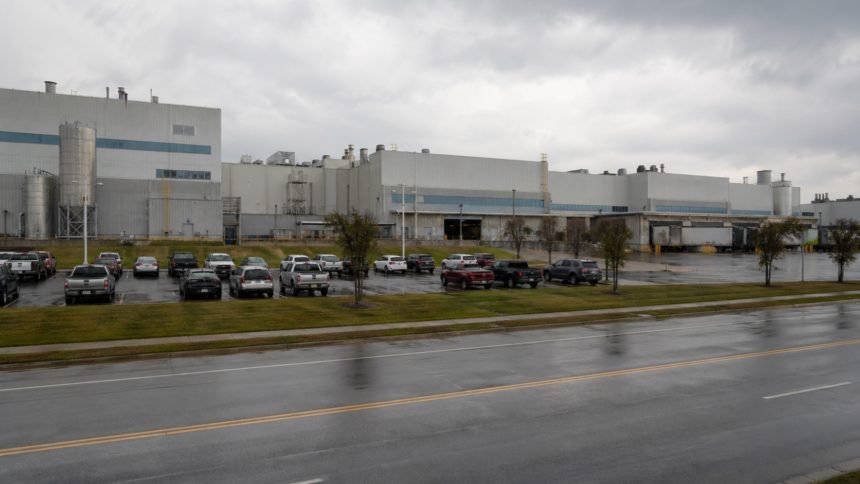
Eastern Iowa is becoming a case study in the uneven future of U.S. appliance manufacturing. At Whirlpool’s long-running Amana refrigerator plant, production has fallen from five assembly lines to one and another 288 workers are set to lose their jobs in July. About 30 miles away, Sub-Zero Group has opened a new Cedar Rapids facility and is already preparing a second expansion phase that will add hundreds more jobs.
The contrast is striking because both companies are operating in the same labor region, the same state and the same broad refrigeration category. One is shrinking a legacy mass-market refrigerator operation. The other is expanding a premium appliance manufacturing footprint with state support, a new facility and a workforce pitch built around stability and growth.
For the appliance industry, the Iowa split shows that “made in America” is not one story. Domestic production can be a strength, but it does not protect every plant equally. Product mix, automation, labor model, capital investment, brand position and demand cycle all determine whether a factory becomes a liability or a platform for growth.
Whirlpool’s Amana plant keeps shrinking
Reuters reported June 29 that Whirlpool’s Amana refrigerator plant, known locally as “Big Blue,” has lost more than half of its nearly 2,000-person workforce in the past year. The plant is now down to one assembly line from five, and another 288 workers are set to lose their jobs in July. Reuters
The production decline is just as severe. The International Association of Machinists and Aerospace Workers told Reuters that the plant made more than 900,000 refrigerators a year a few years ago. It now makes fewer than 250,000.
Local reporting has added detail on the latest round. KCCI reported June 10 that Whirlpool Amana will lay off 288 employees as it ends second-shift production July 5. Whirlpool said the move is part of a multiyear modernization plan to redesign and update the plant for future two-door and French-door refrigerator lines. KCCI
More Read
Whirlpool has not framed the Amana cuts as a retreat from U.S. manufacturing. Company officials have described the changes as necessary to make the plant competitive and prepare for new technology, new assembly layouts and future product refreshes. Reuters quoted Jason Ebert, Whirlpool’s vice president of North American manufacturing, saying the company remains one of the last manufacturers that believes it can be competitive making refrigerators in the U.S.
That may be true. But in the near term, the outcome for workers and the local appliance ecosystem is clear: fewer lines, fewer units and fewer Whirlpool jobs in Amana.
Sub-Zero opens a new Iowa platform
Sub-Zero is moving in the opposite direction. The Wisconsin-based, family-owned manufacturer of premium refrigeration, cooking and dishwashing appliances celebrated the ribbon cutting for its Cedar Rapids facility May 22, according to the Cedar Rapids Metro Economic Alliance. The facility is Sub-Zero Group’s first manufacturing location in Iowa. Cedar Rapids Metro Economic Alliance
KCRG reported that the company is set to employ 500 people and chose the Cedar Rapids area after considering about 900 other locations. Sub-Zero executives pointed to infrastructure, community relationships, peer collaboration and the regional talent pool as reasons the location stood out. KCRG
The first phase gives Sub-Zero a new 600,000-square-foot manufacturing facility in southwest Cedar Rapids, according to IndustrialSage, which reported that the $140.6 million site opened May 22 and is expected to create nearly 200 full-time jobs as hiring ramps through summer 2026. IndustrialSage
The next phase is already in motion. On May 15, the Iowa Economic Development Authority Board approved tax credits for Sub-Zero’s planned Cedar Rapids expansion. IEDA said the company plans an approximately 225,000-square-foot building addition that will enable on-site refrigerator assembly and integrate warehousing and injection molding operations. The $196 million capital investment is expected to create 312 jobs, including 115 positions incented at a qualifying wage of $30.41 per hour. Iowa Economic Development Authority
IndustrialSage reported that Phase 2 construction is scheduled to begin in August 2026 and finish in August 2028, adding 225,000 square feet and turning the site into a more integrated manufacturing operation for premium refrigeration products.
Same state, different business models
The two plants are close enough to draw from overlapping manufacturing labor markets, but they are not direct equivalents.
Whirlpool’s Amana operation serves a mass-market refrigerator business exposed to weak housing demand, price sensitivity, tariff-related input pressure and global competition. The plant also sits inside a public company that is cutting costs, suspending its dividend, refinancing debt and trying to rebuild margins after a sharp guidance cut.
Sub-Zero operates in a premium segment with a different customer base, different pricing power and a privately held ownership structure. Its Cedar Rapids facility is not simply a lower-cost replacement for Amana. It is a new platform for premium refrigeration production, with expansion incentives and a long runway to build staffing, process discipline and supplier relationships around a narrower high-end product strategy.
- Whirlpool Amana: Legacy mass-market refrigerator plant moving through layoffs, fewer assembly lines and a modernization plan.
- Sub-Zero Cedar Rapids: New premium-appliance facility expanding in phases with state incentives and a long-term hiring plan.
- Regional impact: Eastern Iowa is losing legacy Whirlpool refrigerator jobs while gaining premium manufacturing capacity nearby.
- Industry lesson: Domestic production still matters, but the business model behind the factory matters just as much.
Workers may move, but the jobs are not identical
The regional labor story is especially important. Reuters reported that some former Whirlpool employees have been hired by Sub-Zero. That does not mean the Sub-Zero expansion fully offsets the Amana cuts for workers, families or the local economy.
First, the timing is different. Whirlpool’s layoffs are happening now, while Sub-Zero’s second-phase jobs are tied to an expansion scheduled to begin construction in August 2026 and run toward completion in 2028. Second, the operating models may differ. Union representation, shift structure, wage progression, job classifications, training requirements and benefits can all determine whether a laid-off worker can or will move from one employer to the other.
IndustrialSage reported that Sub-Zero’s Cedar Rapids facility is running two assembly shifts and three fabrication shifts Monday through Friday, with no weekend operations, describing that structure as part of a workforce-retention strategy. That kind of schedule can be a competitive advantage in recruitment, especially for experienced appliance workers who value predictable hours.
Still, a new premium-appliance plant is not a one-for-one replacement for a shrinking mass-market refrigerator factory. Skills may transfer, but workers must still navigate hiring cycles, job requirements, commute patterns and possible differences between union and nonunion environments.
Tariffs do not explain the whole split
Whirlpool has argued that U.S. trade policy supports its domestic manufacturing strategy because the company produces much of what it sells in the United States domestically. But the Amana experience shows why tariffs alone cannot secure a plant’s future.
Tariffs can narrow the cost gap between imported and domestic appliances. They can also raise the cost of steel and imported components. If demand is weak, higher prices may push consumers to delay a purchase or repair an older refrigerator instead. If production volumes fall, a large factory can become harder to run efficiently even if the trade policy environment improves.
That is the Whirlpool problem in Amana. The company may still intend to modernize the plant and keep refrigerator manufacturing in the U.S., but the path there is running through job cuts and lower output. A modernization plan can be strategically defensible and still painful for a community built around a legacy employer.
Sub-Zero’s expansion shows the other side of the policy argument. Domestic manufacturing can work when the product segment supports investment, the company has a clear growth plan and the site is built around the expected process from the start. In Cedar Rapids, Sub-Zero is not trying to retrofit a shrinking old plant under pressure. It is building a new manufacturing platform for a premium brand.
What the appliance industry should watch
The next question is whether Whirlpool’s Amana plan stabilizes or keeps shrinking. If new layouts, automation and product refreshes eventually restore output, the plant could become a smaller but more competitive U.S. refrigerator operation. If not, the one-line configuration may become a sign of deeper structural weakness in mass-market domestic refrigeration.
For Sub-Zero, the test is execution. A 600,000-square-foot facility and a 225,000-square-foot expansion can strengthen domestic capacity, but premium manufacturing depends on quality control, skilled labor retention, supplier consistency and the ability to maintain brand standards as hiring expands.
Retailers and distributors should watch how the two stories affect product availability and brand positioning. Whirlpool’s mass-market refrigerator business is tied to broad consumer demand and promotional cycles. Sub-Zero’s growth is tied to premium kitchen demand, luxury remodeling and high-end dealer networks. Those markets can move differently even within the same appliance category.
For servicers, the split raises a different issue. A shrinking Whirlpool plant may affect parts commonality, model transitions and long-term support expectations for certain refrigerator platforms. A growing Sub-Zero operation could increase the need for trained premium-appliance service capacity across the Midwest and beyond.
Iowa’s refrigerator story is not simply about one plant losing jobs and another gaining them. It is about two versions of American appliance manufacturing moving in opposite directions within the same region. Whirlpool’s Amana plant shows the strain of defending legacy mass-market production through a downturn. Sub-Zero’s Cedar Rapids site shows how a premium manufacturer can use domestic expansion as a growth strategy. The difference is not the state. It is the business behind the factory.