

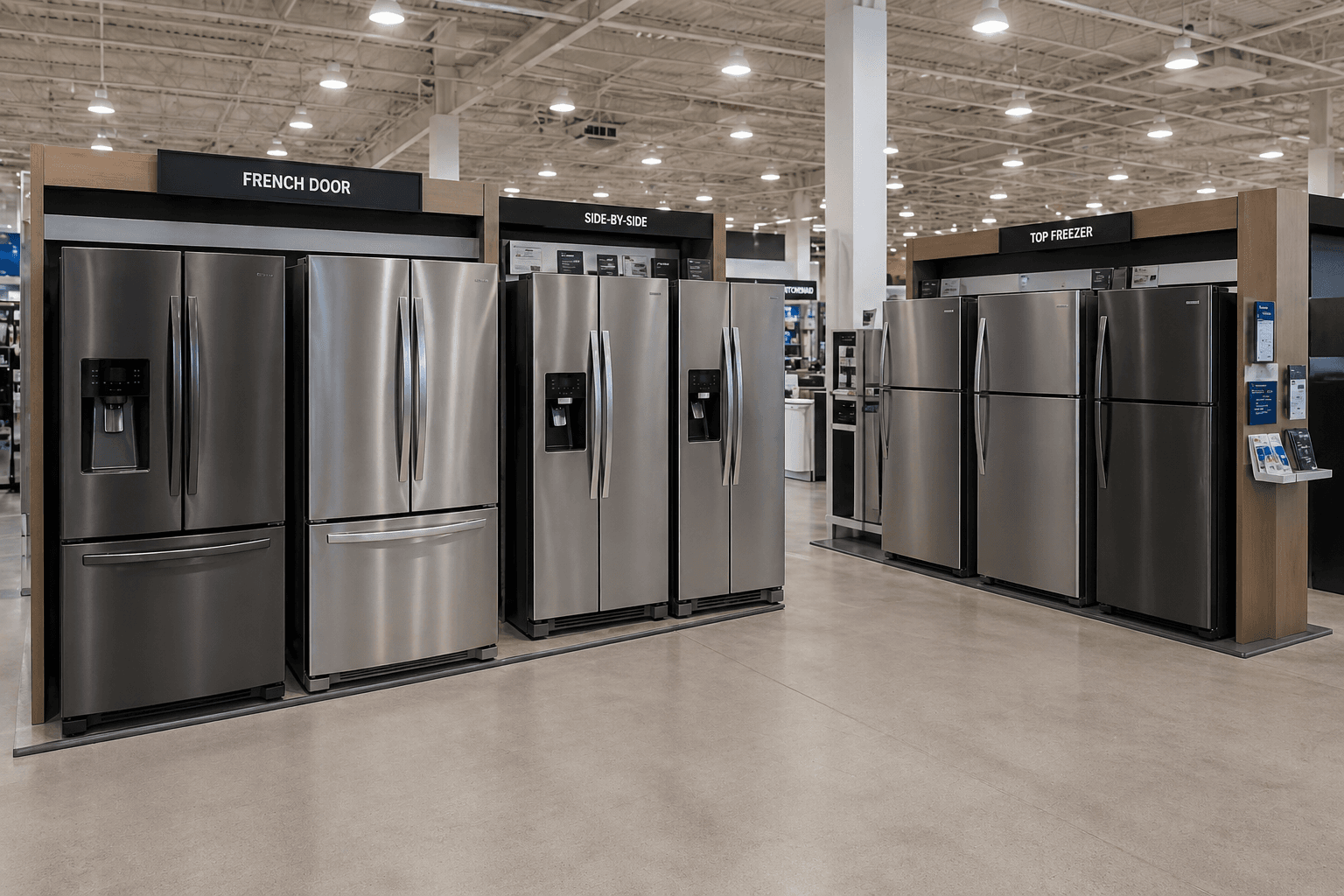
Appliance lifespan is best treated as a planning range, not an expiration date. A widely cited National Association of Home Builders/Bank of America Home Equity study puts a standard refrigerator at about 13 years, a dishwasher at 9, a washer at 10, a clothes dryer at 13, an electric range at 13 and a gas range at 15. More recent guidance cited by Consumer Reports from the Association of Home Appliance Manufacturers gives broader ranges for several categories, including 9–13 years for refrigerators and 5–15 years for washing machines.
Last reviewed: August 27, 2026. These figures are general planning benchmarks. Usage, installation, maintenance, water quality, ambient temperature, design complexity and parts availability can move an individual appliance well above or below them.
Average Appliance Lifespan
| Appliance | Planning benchmark | Source context |
|---|---|---|
| Standard refrigerator | 13 years | NAHB study; AHAM range cited by Consumer Reports is 9–13 years |
| Dishwasher | 9 years | NAHB study |
| Washing machine | 10 years | NAHB study; AHAM range cited by Consumer Reports is 5–15 years |
| Clothes dryer | 13 years | NAHB study; AHAM also cited at 13 years |
| Electric range | 13 years | NAHB study; AHAM range cited by Consumer Reports is 13–15 years |
| Gas range | 15 years | NAHB study; AHAM range cited by Consumer Reports is 15–17 years |
| Freezer | 11 years | NAHB study |
| Microwave oven | 9 years | NAHB study |
| Range/oven hood | 14 years | NAHB study |
| Garbage disposal | 12 years | NAHB study |
The NAHB figures date to a 2007 study and should not be mistaken for a 2026 failure forecast. They remain useful as a common baseline because they cover appliance categories consistently. Current reliability evidence adds an important caution: connected features and product complexity can change the service picture. J.D. Power’s 2025 U.S. Appliance Reliability & Service Study found connected appliances averaged 87 reported problems per 100 appliances during the first three years of ownership, versus 63 for appliances without Wi-Fi or Bluetooth.
What Shortens Appliance Life?
- Heat and restricted airflow: clogged dryer vents and dirty refrigeration airflow paths make components work harder.
- Overloading: chronic heavy loads increase stress on washer suspension, bearings, drive systems and dryer supports.
- Water quality: mineral scale can affect valves, heaters, spray systems and ice makers.
- Poor installation: an unlevel washer, kinked drain hose or refrigerator installed outside its rated ambient conditions can create avoidable problems.
- Skipped cleaning: filters, condenser areas, gaskets and spray arms need periodic attention.
- Complexity: more sensors, displays, connectivity and dispensing systems create more possible failure points even when the core appliance remains functional.
How Long Does a Refrigerator Last?
A useful planning range is roughly 9–13 years, although simpler refrigerators can run much longer. ENERGY STAR says refrigerators more than 15 years old can cost about $95 more per year to operate than a new ENERGY STAR-certified model. Age alone does not mean a refrigerator should be discarded, but rising energy use can change the economics of an expensive repair.
Washer and Dryer Lifespan
The long-running benchmark is about 10 years for washers and 13 for dryers. Consumer Reports has also cited AHAM ranges of 5–15 years for washers and 13 years for dryers. In a CR survey covering more than 100,000 washers and 87,000 dryers bought from 2011 through 2021, about 20% of washers and 16% of dryers broke or stopped working as intended during that period, underscoring why an average lifespan cannot predict a particular machine.
Maintenance That Can Help
- Refrigerator: keep door seals clean and intact; maintain required ventilation; address abnormal fan noise or frost buildup early.
- Washer: keep the machine level, avoid chronic overloading, use the correct detergent amount and run manufacturer-recommended cleaning cycles.
- Dryer: clean the lint screen every load and have the full exhaust path inspected and cleaned as needed.
- Dishwasher: clean accessible filters, inspect spray arms and follow the manual for water-hardness and rinse-aid settings.
- Range/oven: keep burner ports and caps clean and avoid foil or liners that the manufacturer prohibits.
Age Is Only One Part of Repair-or-Replace
A 10-year-old appliance with a failed door latch is a different decision from a 10-year-old refrigerator with a major sealed-system failure. Compare the repair estimate with the price of a comparable replacement, the appliance’s age, the specific failure and any remaining warranty coverage. See our Repair or Replace guide and 2026 appliance repair cost guide.
Sources and Methodology
Benchmarks were checked against the NAHB/Bank of America Home Equity Study of Life Expectancy of Home Components, Consumer Reports’ AHAM-based used-appliance guidance, J.D. Power’s 2025 reliability study and ENERGY STAR refrigerator guidance.