The Pentagon is investigating a string of refrigerator and freezer failures at U.S. military commissaries as a possible cyberattack after equipment unexpectedly entered defrost mode and food spoiled, according to officials cited by Reuters and subsequent reporting. U.S. Cyber Command is involved, but investigators have not publicly established that an intruder accessed the systems or identified the cause.
The investigation matters beyond the military grocery system because modern commercial refrigeration increasingly depends on networked controllers that can change temperatures, schedules and alarms across multiple cases or sites. A separate attack disclosed in France in October disrupted supermarket refrigeration, giving investigators an overseas incident to compare with the U.S. failures.
What Happened at the Commissaries
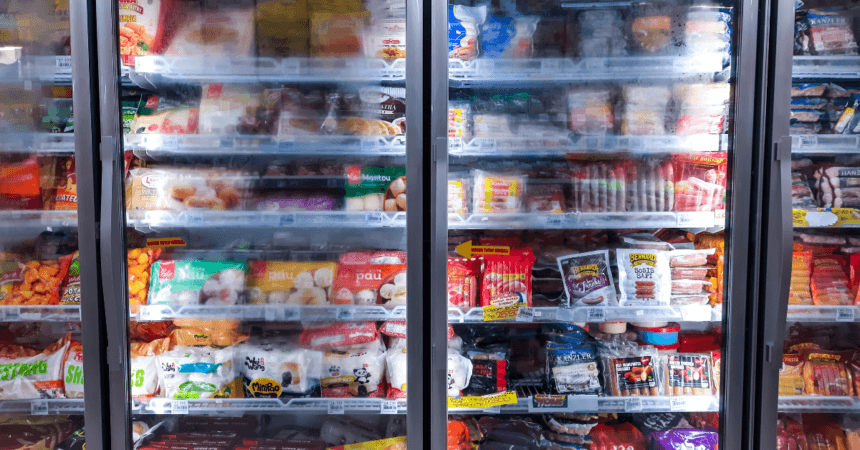
Reuters reported that refrigerators and freezers at several military bases malfunctioned in late August, with units switching into defrost mode and warming enough to spoil food. Four officials told the news organization that the Pentagon was treating the incidents as a suspected cyberattack while working with French investigators.
Nextgov reported that U.S. Cyber Command joined the investigation. Public reporting has not established who, if anyone, accessed the systems, whether all affected locations used the same controller, or whether the U.S. incidents and the French attack share an operator or technical method.
That distinction is important. A refrigeration failure can have many causes, including configuration errors, component faults and network problems. The fact that investigators are examining a cyber explanation does not by itself establish one.
Networked Controllers Are Part of the Investigation
Records cited in reporting for Naval Air Facility El Centro in California identified a Danfoss control system. Danfoss makes supervisory refrigeration controllers used to monitor and manage equipment such as cases, compressors, temperatures, alarms and defrost cycles.
More Read
The French incident has sharpened scrutiny of internet-connected refrigeration controls. France’s national computer emergency response organization warned in October about attacks involving refrigeration-management equipment, initially identifying Danfoss systems and later broadening the alert to other controller families.
The operational risk is unusually concrete: changing a refrigeration controller’s settings can affect physical equipment and perishable inventory without requiring an attacker to damage a compressor or refrigeration circuit directly. For commissaries, supermarkets and cold-storage operators, a control-system incident can therefore become a food-loss and business-continuity problem quickly.
What Remains Unknown
The Pentagon has not publicly attributed the failures to a person, criminal group or foreign government. Nor has it publicly said that credentials were stolen, a vulnerability was exploited or a particular controller model was compromised.
Those gaps make attribution premature. They also mean owners of similar refrigeration equipment should not assume that a specific brand or model is inherently compromised simply because it appears in records for an affected facility.
What Refrigeration Operators and Servicers Should Watch
The investigation is a reminder that refrigeration service now overlaps with network security. Contractors and facility teams increasingly need to know not only refrigerant pressures, sensors and defrost logic, but also whether a controller is reachable from the public internet, who holds administrator credentials, how remote access is protected and whether firmware is current.
That does not mean technicians should make unapproved network changes. For military, retail and institutional sites, refrigeration contractors should coordinate with the customer’s information-technology or operational-technology security team before changing remote-access settings. The practical questions are whether the controller needs direct internet exposure at all and whether remote service can instead use a protected network or VPN.
The Pentagon investigation remains open. Until investigators release technical findings, the strongest verified conclusion is narrower than the most alarming scenario: military refrigeration failures caused real food losses, the Defense Department considers a cyberattack plausible enough to investigate, and the same class of networked controls is receiving heightened security attention after a major French supermarket incident.