

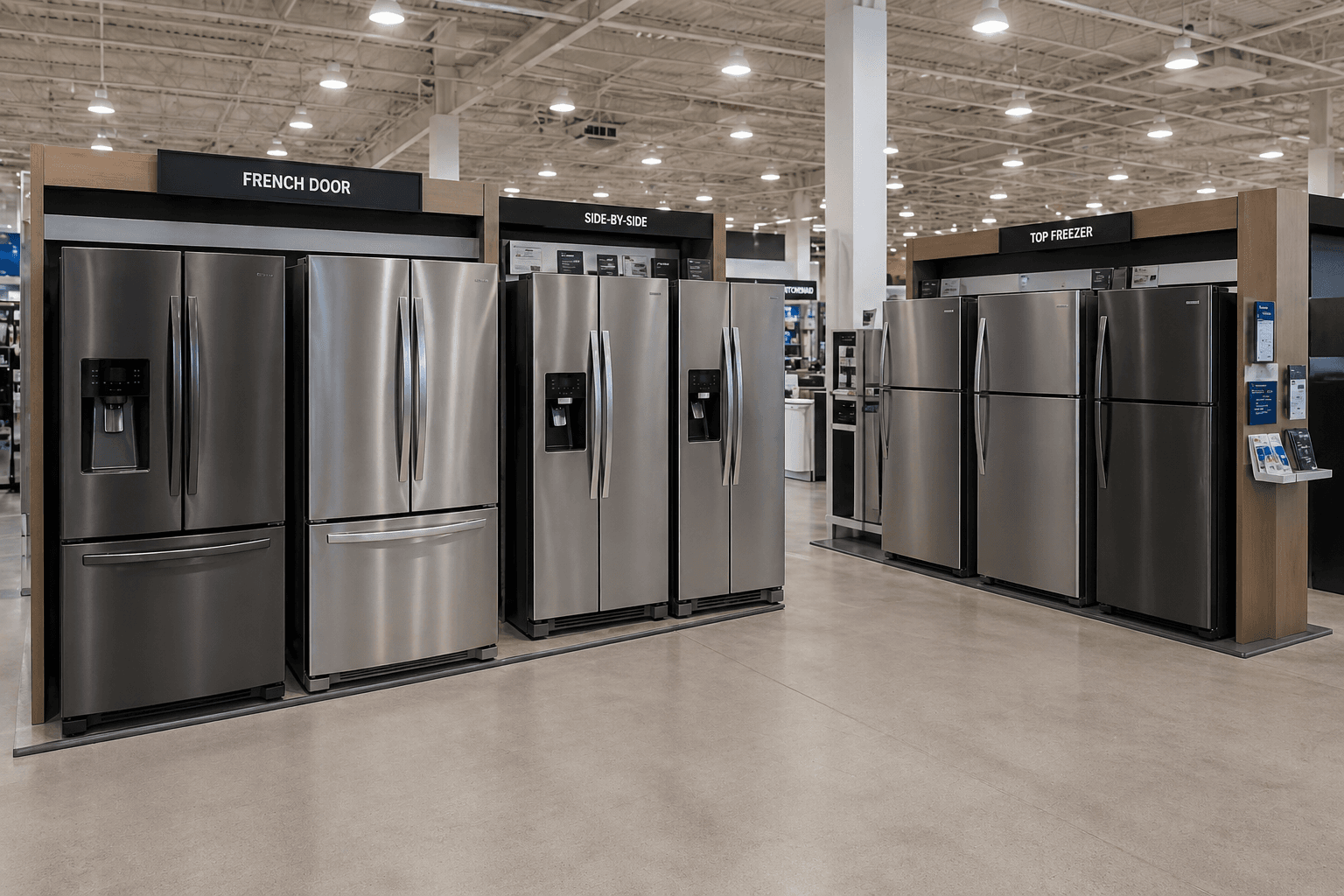
Choosing the right refrigerator is a critical decision for any kitchen, balancing performance, space, and long-term value. This refrigerator buying guide outlines the key types, sizing considerations, and features shoppers should evaluate before making a purchase.
A refrigerator is one of the most used appliances in a home, making reliability and usability just as important as price. From compact units to premium built-in designs, today’s market offers a wide range of options tailored to different lifestyles and kitchen layouts. :contentReference[oaicite:0]{index=0}
Types of Refrigerators
Understanding refrigerator configurations is the first step in narrowing down the right model. Each type offers distinct advantages depending on kitchen space and usage habits.
- Top Freezer: Freezer on top, refrigerator below. Affordable, energy-efficient, and simple to use.
- Bottom Freezer: Fridge at eye level with a lower freezer drawer. Improves accessibility for fresh food.
- Side-by-Side: Vertical split with fridge and freezer next to each other. Ideal for narrow kitchens.
- French Door: Double-door fridge on top with a bottom freezer. Popular for wide storage and modern design.
- Built-In: Integrated into cabinetry for a seamless, high-end look. Requires professional installation.
“The best refrigerator isn’t just about size or price—it’s about how well it fits your daily routine and kitchen layout.”
Sizing and Installation Requirements
Proper sizing ensures the refrigerator fits both your kitchen and your household needs. Standard models typically range from 28 to 36 inches wide, 61 to 72 inches tall, and 28 to 36 inches deep.
Capacity should align with household size:
- 1 person: 4–10 cubic feet
- 2 people: 10–14 cubic feet
- 3–4 people: 14–20 cubic feet
- 4–5+ people: 20–25+ cubic feet
- Large households (6+): 30+ cubic feet
Experts recommend adding extra capacity for households that cook frequently or buy in bulk. Measuring doorways, hallways, and clearance space is essential to avoid installation issues.
Installation types also vary:
- Freestanding: Most common, easy to install and move.
- Counter-Depth: Aligns with countertops for a streamlined look.
- Built-In: Flush with cabinetry for premium kitchens.
- Integrated: Fully concealed behind cabinet panels.
Key Features to Consider
Modern refrigerators include a range of features designed to improve convenience, food preservation, and energy efficiency.
- Smart Technology: Wi-Fi connectivity, cameras, and app controls for monitoring and management.
- Adjustable Storage: Flexible shelves and compartments for better organization.
- Temperature Zones: Dual or multi-zone cooling for optimized freshness.
- Door-in-Door Access: Quick access to frequently used items.
- Dual Evaporators: Separate systems for improved humidity control.
- Auto Defrost: Eliminates manual defrosting.
- Ice Maker and Water Dispenser: Built-in convenience features.
- LED Lighting: Brighter and more energy-efficient interior lighting.
- ENERGY STAR® Certification: Indicates lower energy consumption.
Electrical and water connections should also be planned in advance, including access to a grounded outlet and water line if the model includes ice or water dispensing features.
With careful planning and a clear understanding of available options, shoppers can select a refrigerator that meets both their immediate needs and long-term expectations.