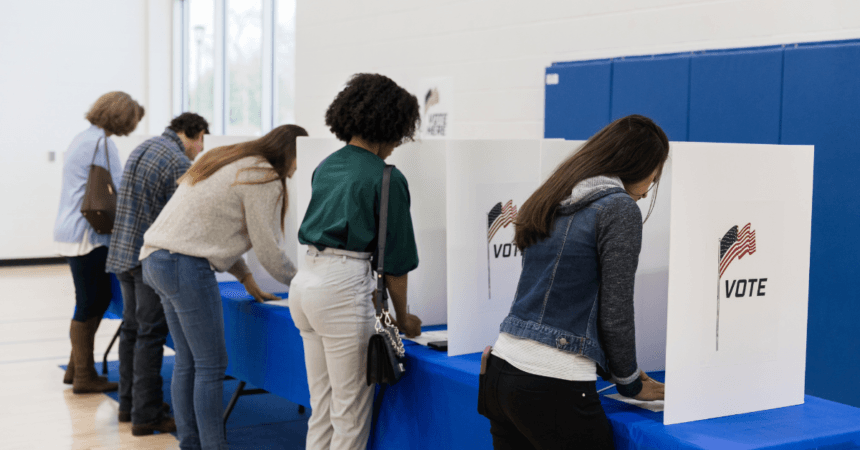
The 2026 midterms did not put a national appliance right-to-repair law on the books, but the results strengthened a movement that increasingly reaches beyond phones, tractors and cars into the parts, software, tools and documentation needed to service household appliances.
Democrats won control of both chambers of Congress, while several candidates who campaigned explicitly on repair access performed strongly. At the local level, St. Paul voters overwhelmingly approved a renter right-to-repair measure. None of those results automatically changes how a refrigerator, washer or range is serviced tomorrow. Together, however, they give repair advocates more political openings in Congress and in state legislatures.
Repair Rights Found Support in a Cost-Focused Election
Wired reported that Iowa senator-elect Josh Turek emphasized right-to-repair issues during his campaign, particularly for farmers, while Minnesota candidate Jake Johnson also made repair access part of his pitch. The movement’s appeal is not confined neatly to one party: repair advocates have long framed access to parts and tools as an ownership, competition and cost issue as well as an environmental one.
That framing matters for appliance service. A broken control board, locked diagnostic function or unavailable service document can determine whether an independent technician can complete a repair economically. The policy question is who gets access to the same information and tools manufacturers provide to their authorized networks, and on what terms.
Household Appliances Are Already Covered in Some States
Right-to-repair is sometimes described as an electronics issue, but existing state laws can reach connected household equipment. Minnesota’s Digital Fair Repair Act requires manufacturers of covered digital electronic equipment to make certain documentation, parts and tools available to owners and independent repair providers on fair and reasonable terms. The law contains exclusions, so coverage depends on the product and circumstances rather than applying to every machine without exception.
California’s repair law similarly created broad requirements for covered electronic and appliance products. The result is already a compliance issue for manufacturers selling nationally: state-by-state rules can affect parts availability, documentation, diagnostic access and how long support must be provided.
More Read
The Conference Board reported this summer that at least eight states had enacted some form of broad repair-access law covering certain electronics, appliances or other digital products. The details differ substantially, but the direction is clear: repair access is no longer a hypothetical federal debate.
The FTC Has Kept Repair Restrictions on Its Enforcement Agenda
Federal enforcement is another reason appliance manufacturers and service companies should watch the issue. The Federal Trade Commission has used competition and consumer-protection law against repair restrictions and warranty practices, and in July the FTC and five states announced a settlement with Deere & Company requiring broader access to repair software and diagnostic tools for farm equipment if the agreement receives court approval.
That case is not about household appliances, and it should not be read as an appliance rule. It does show the kinds of restrictions regulators are examining: software access, diagnostic capability, parts and the practical ability of an independent provider to return a product to working condition.
A Democratic Congress Creates an Opening, Not a Guarantee
The new Congress can hold hearings, write legislation and press agencies on repair policy, but President Donald Trump remains in office and right-to-repair proposals still have to navigate product-safety, cybersecurity, intellectual-property and warranty concerns raised by manufacturers.
There is also a separate copyright issue. Repair advocates have targeted Section 1201 of the Digital Millennium Copyright Act, which restricts circumvention of technological protection measures. As more appliances rely on embedded software and connected diagnostics, the boundary between repairing hardware and accessing protected software becomes more important to independent service businesses.
Congress has not enacted a broad federal right-to-repair law. The most developed federal proposal in 2026 has centered on motor vehicles, where the REPAIR Act has advanced but remains unfinished. That makes a sweeping appliance mandate in the next Congress possible to debate, but far from assured.
What Appliance Servicers and Manufacturers Should Watch
- Parts access: whether states require manufacturers to sell replacement components to independent servicers on comparable terms.
- Diagnostic tools and software: increasingly important as appliances rely on electronic controls, apps and connected service functions.
- Service documentation: manuals, schematics and troubleshooting information can be as important as the physical part.
- Warranty language: federal law limits manufacturers’ ability to condition warranty coverage on branded parts or authorized service in many circumstances.
The midterms did not settle those questions. They did make it more likely that repair access will receive sustained attention at several levels of government at once. For the appliance industry, the practical debate is moving closer to the service bench: who can diagnose a machine, obtain the part, access the software and finish the repair.