European Union competition regulators have cleared the Electrolux Group and Midea Group joint ventures that will reshape refrigerator and laundry manufacturing in North America, removing a regulatory hurdle for a partnership spanning factories in Mexico and South Carolina and a new refrigeration sales operation.
The clearance was reported Aug. 6 by MT Newswires. The European Commission had received formal notification of the transaction on July 13 under EU merger rules and identified it as a candidate for the simplified procedure. The Commission filing describes Electrolux and Midea as acquiring joint control of Electrolux Home Products de Mexico and three newly created joint ventures.
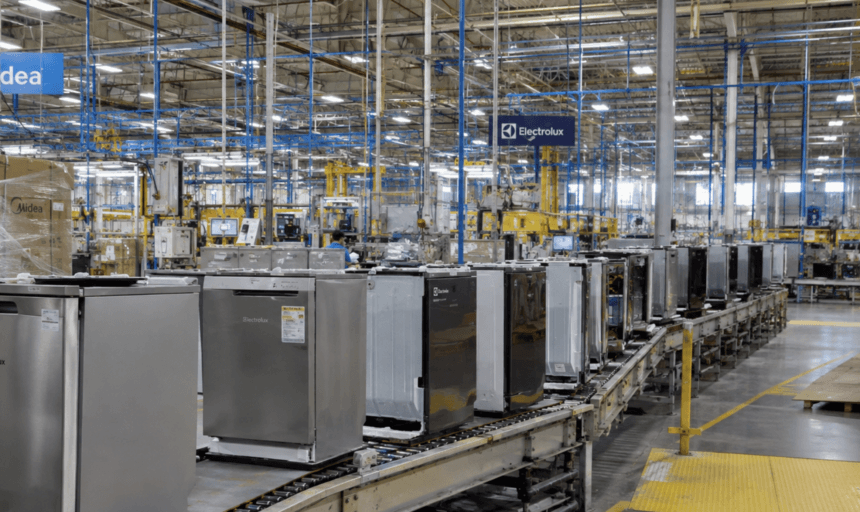
The decision advances a North American restructuring Electrolux and Midea announced in April. The companies plan joint operations covering refrigeration product development and sales, refrigerator manufacturing in Juarez, Mexico, and laundry manufacturing in Anderson, South Carolina.
Three Ventures Cover Sales, Refrigeration and Laundry
Electrolux said in April that the partnership is structured around three joint ventures. A 50-50 sales venture will co-develop and sell food-preservation products for North America and manage product and commercial strategies across the companies’ brands.
A second venture will operate refrigerator production in Juarez. Midea is to acquire 65% of the legal entities holding the operational assets associated with food-preservation manufacturing there, while Electrolux will retain 35%. Electrolux’s separate fabric-care operations in Juarez are to remain exclusively with Electrolux.
The third venture will repurpose Electrolux’s Anderson factory from refrigeration to laundry production. Electrolux will own 55% of that manufacturing venture and Midea 45%. Electrolux said refrigerator production at Anderson was expected to be phased out by July 2026, with fabric-care production scheduled to begin in the first half of 2027.
More Read

EU Filing Covers North American Appliance Markets
The Commission’s July notice, case M.12454, said the target businesses will develop, manufacture, market and supply refrigeration and laundry appliances in the United States, Canada, Mexico and other North American markets. Although the factories and principal commercial activity are in North America, the ownership structure brought the transaction within EU merger review.
The Commission’s notification notice said its preliminary examination indicated that the transaction could fall within the EU Merger Regulation and that the case was eligible for simplified treatment. The Aug. 6 clearance means the EU competition review no longer stands in the way of the companies proceeding with the joint-venture structure.
Clearance Moves the Manufacturing Reset Forward
For the appliance industry, the regulatory decision matters because the ventures shift where two high-volume categories will be produced and how Electrolux and Midea will compete in North America. Refrigerator manufacturing is being centered in the Juarez venture while Anderson is being converted into a U.S. laundry-production site.
Electrolux has said the partnership is expected to improve cost competitiveness and operational flexibility in its North American business. The company expects gradually increasing cost-efficiency improvements over three years, reaching about SEK 0.6 billion in year three. It also expects about SEK 1.1 billion in capital spending over three years for the Anderson fabric-care startup and new refrigeration platforms in Juarez.
The Anderson transition has already carried substantial workforce consequences. Electrolux said the broader partnership was expected to affect about 1,500 employees in 2026, while the converted Anderson venture is expected to hire up to about 1,200 employees gradually during 2027 and 2028.
What Retailers, Suppliers and Servicers Should Watch
The clearance does not by itself determine how smoothly the manufacturing transition will run. Retailers and distributors still have to watch model changes, availability and inventory timing as refrigeration production shifts and the new sales venture takes shape.
Suppliers face a similar transition. Anderson’s move from refrigerators to washers and dryers changes the plant’s component needs, while Juarez takes on a larger role in refrigeration. That can alter tooling, logistics routes, qualification requirements and production volumes across the supplier base.
For servicers, the longer-term issue is whether jointly developed platforms change parts commonality, technical documentation, warranty administration or training needs. Those effects will become clearer as the companies identify the products that will move through the new ventures.
The joint-venture agreements have an initial 15-year term and automatically extend in consecutive 10-year periods unless either party gives three years’ notice. With the EU competition review cleared, attention now shifts from deal approval to execution: starting the refrigeration venture, completing the Anderson conversion and bringing the companies’ shared North American product strategy into the market.