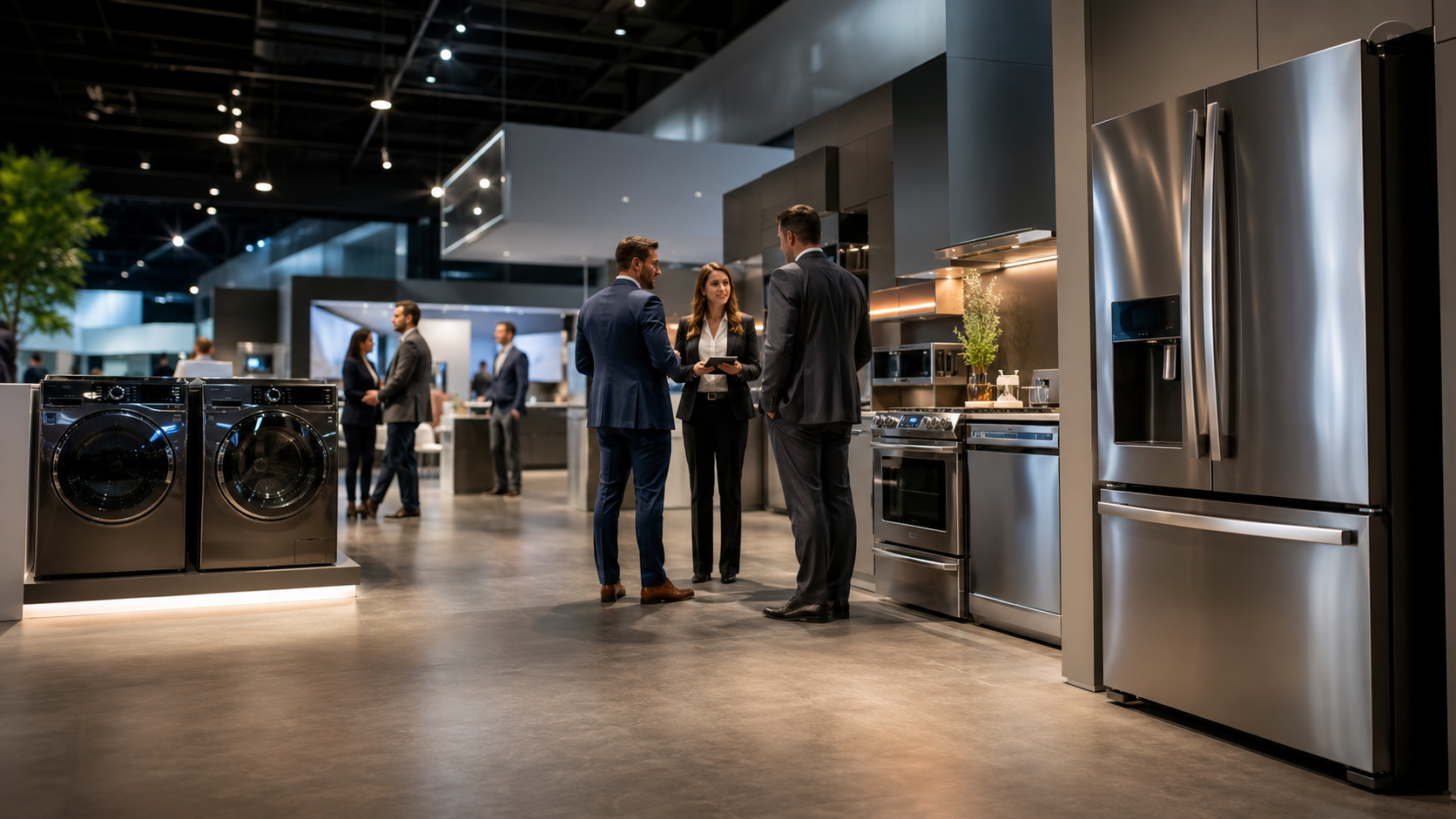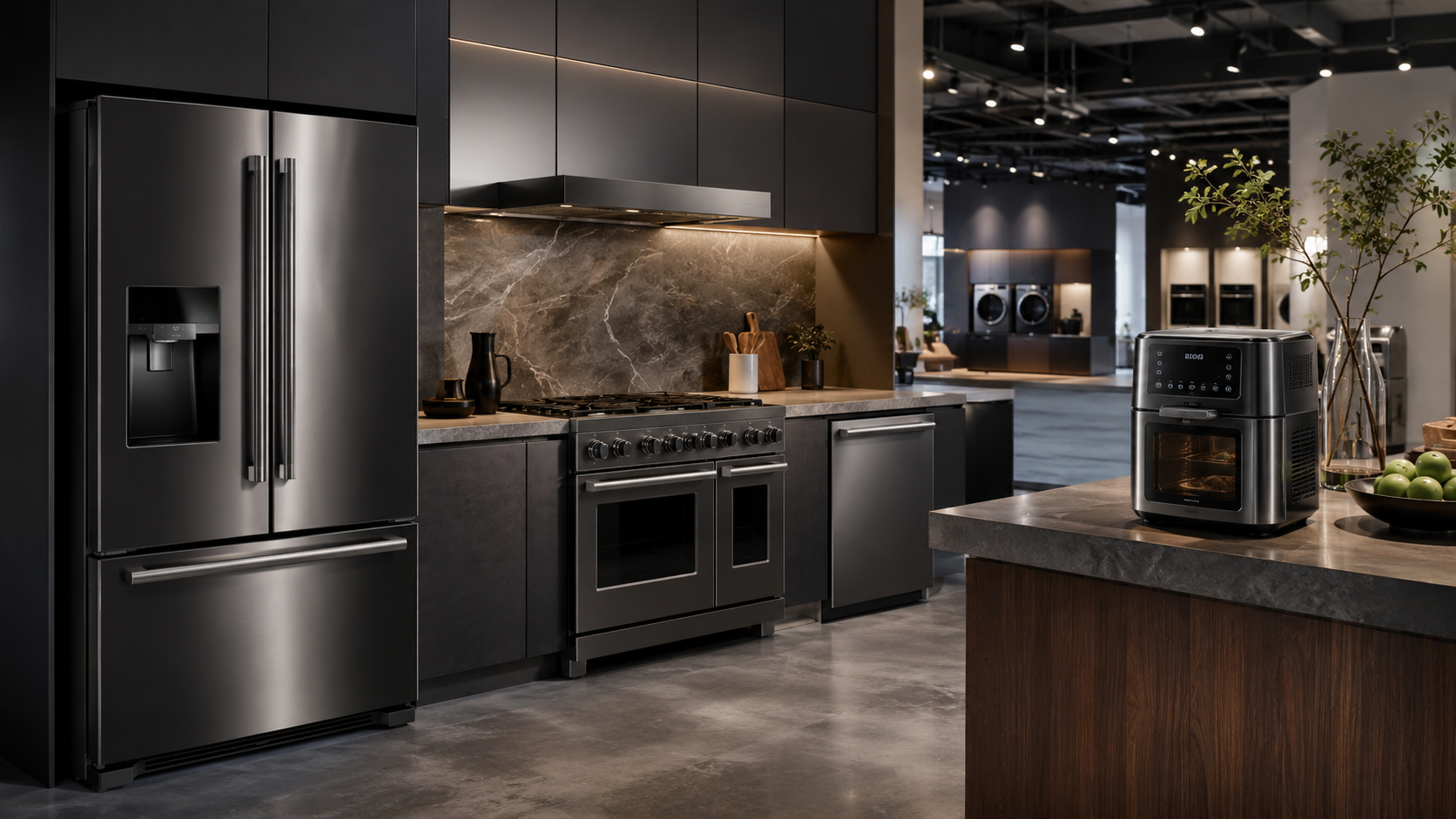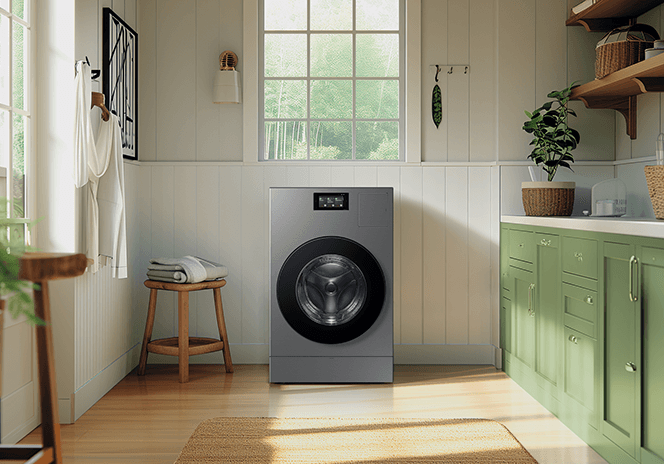
Samsung’s newest Bespoke AI washer and dryer lineup pushes the company’s laundry strategy deeper into fabric-sensing automation, adding expanded AI Wash+ recognition, AI Dry+ optimization, touchscreen controls and SmartThings energy reporting to make the machines do more of the cycle-selection work.
The July 14 launch is a global announcement, with Samsung saying the new Bespoke AI Washer and Dryer lineup will be introduced in select markets beginning in July 2026. Availability varies by region and model, so the announcement should not be read as a uniform U.S. rollout.
For the appliance trade, the more important signal is where premium laundry is headed. Samsung is trying to make the washer and dryer less dependent on manual cycle choices by using sensors, connected controls and energy software to tailor the wash and dry process around the load.
AI Wash+ Adds Denim and Outdoor Recognition
On the washer side, Samsung says AI Wash+ expands fabric recognition to include Denim and Outdoor fabrics, in addition to previously supported fabric types. The system uses multiple sensors to detect load weight and fabric type, automatically dispense water and detergent, monitor soil levels and adjust detergent use and wash time when needed.
The technical caveats matter. Samsung’s footnotes say fabric sensing uses an AI algorithm to detect five fabric types — Cotton, Delicates, Towels, Denim and Outdoor — for loads up to 2kg. Mixed fabrics may reduce detection accuracy, and Samsung advises washing like fabrics together to help prevent wear.
That fine print is important for retailers. The selling point is not that the washer can identify and perfectly handle every mixed hamper. It is that Samsung is expanding the number of load conditions where the machine can make more informed decisions about dosing, timing and cycle behavior.
More Read
AI Dry+ Focuses on Moisture, Heat and Fabric Type
The dryer adds a similar layer of automation. Samsung says AI Dry+ analyzes moisture levels and drying temperature while detecting four fabric types. Based on those inputs, it adjusts the inverter compressor and heat exchanger to optimize drying conditions.
Samsung says AI Dry+ can reduce energy consumption and drying time by up to 20% under specified test conditions. The company’s footnotes say dryer fabric sensing applies to Normal, Denim, Towels and Delicates for loads up to 2kg, with results varying by use and mixed fabrics potentially reducing detection accuracy.
For consumers, the pitch is gentler fabric care and less guesswork. For service teams, it points to a more electronics-heavy diagnostic environment, where drying complaints may involve sensors, control algorithms, load composition, airflow, software behavior or customer expectations about how “AI” cycles should perform.
Smart Screen and SmartThings Move the Control Layer
The new lineup also builds the laundry experience around a 7-inch Smart Screen, SmartThings connectivity and upgraded Bixby voice control. Samsung says the screen can provide access to functions and settings, remember usage habits, suggest cycles and display timely information.
Through the SmartThings app, users can access laundry reports with energy and water consumption information. AI Energy Mode in SmartThings Energy can show daily, weekly and monthly energy use and estimated electricity costs, while applying energy-saving behavior on compatible cycles.
Samsung says washer energy use can be reduced by up to 70% through AI Energy Mode by washing at lower temperatures with AI Ecobubble and extending cycle time when needed. For the dryer, Samsung says AI Energy Mode can reduce energy use by up to 20% through intelligent optimization. Those claims are tied to Samsung’s internal test conditions and selected cycles.
Retailers Will Need to Sell the Fine Print
Samsung’s new laundry line gives retailers a clear premium story: larger automation claims, more fabric-aware cycle behavior, touchscreen controls, voice assistance and app-based energy tracking. But it also requires better explanation at the point of sale.
Feature availability varies by model and market. SmartThings requires the app, Wi-Fi and a Samsung account. AI Energy Mode applies only to selected cycles. Fabric sensing is limited by load size and fabric mix. Bixby availability can vary by country, language, carrier, device model and operating system.
Those limitations do not erase the value of the product strategy. They define how it should be sold and supported. The new Bespoke AI laundry lineup shows Samsung turning fabric care into a sensor-and-software story, but the ownership experience will depend on whether consumers understand when the automation is doing useful work — and when ordinary laundry rules still apply.