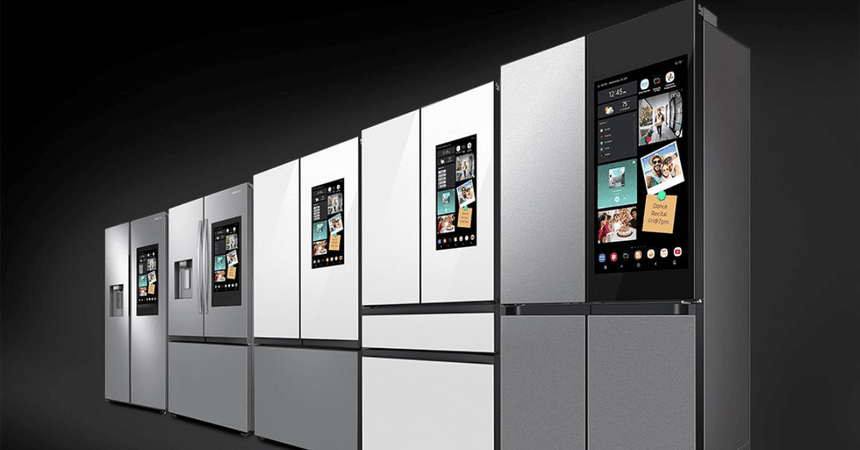
Samsung is pushing new AI refrigerator features to some existing Family Hub models, a rare connected-appliance update that shows how software support can change the value of an appliance years after purchase.
My Everyday Tech reported that Samsung’s Tizen OS 10.0 update is rolling out to select refrigerators and laundry appliances, bringing Gemini-powered AI Vision to compatible Family Hub refrigerators with built-in cameras. The report said eligible refrigerator models include 21.5-inch and 32-inch Family Hub models released from 2021 to 2025, along with select 9-inch models from 2025.
Samsung’s own Global Newsroom continues to identify home appliances, Bespoke AI and SmartThings as major product areas, but Appliance News did not locate a separate Samsung global release with the full model list before publication. Buyers should confirm update eligibility from Samsung support for their exact model number.
Why Old Appliances Getting New Features Matters
Major appliances are expected to last far longer than phones, tablets or smart speakers. That creates a mismatch for connected products: the refrigerator may remain useful for a decade, while the app and software ecosystem can age much faster.
If Samsung can extend meaningful features to refrigerators sold several years earlier, that helps answer one of the biggest questions around smart appliances: whether the “smart” part keeps improving after the original sale or becomes a frozen feature set.
What AI Vision Does
The reported update improves AI Vision food recognition for compatible camera-equipped refrigerators and adds screen-based features such as daily briefings and meal-planning prompts. Those tools are meant to make the refrigerator more of a food-management hub than a passive cold box.
More Read
The practical value will depend on accuracy, household habits and whether users actually maintain the app data. A refrigerator that recognizes food incorrectly, misses items or requires too much manual correction can quickly lose consumer trust.
What Owners Should Check
Owners should check the refrigerator model, screen size, camera capability and market availability before expecting the update. They should also review privacy and account settings because camera-based food recognition depends on appliance data that some households may not want connected to a cloud service.
For retailers, the lesson is straightforward: software-support promises are becoming part of the appliance sale. The question is no longer just whether a refrigerator has a screen, but how long that screen and its features will be supported.