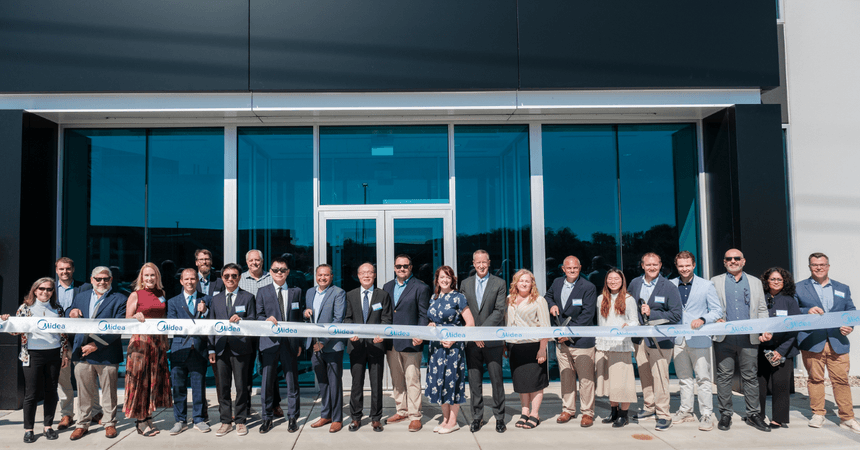
Midea America has expanded its Louisville, Ky., research center to 157,000 square feet, a fourfold increase that gives the company more U.S. testing capacity for major home appliances.
The company said in a Sept. 30 announcement that the expanded facility includes 22 laboratories covering refrigeration, dishwashers, cooking and laundry. Midea said the center will support product development, testing and compliance work for the North American market.
Why Louisville Matters
Louisville is already one of the most important appliance-manufacturing and engineering centers in the United States, anchored by GE Appliances’ Appliance Park. Midea’s expansion does not turn the city into a new appliance hub on its own, but it deepens the engineering cluster around refrigeration, cooking, laundry and dishwashing products.
For a global appliance maker, a larger U.S. research center can shorten the distance between product design and the realities of North American homes: electrical standards, kitchen layouts, water conditions, cleaning habits, utility costs and retailer expectations.
Testing Is the Real Story
R&D announcements often sound abstract, but appliance labs matter because they determine how products are validated before reaching consumers. Refrigerators need temperature, defrost, noise and energy testing. Dishwashers need wash-performance and drying validation. Laundry products need cycle, water-use, vibration and fabric-care testing.
Midea’s added lab capacity also has implications for retailers and servicers. Products designed and tested closer to the market should be better positioned to match U.S. installation conditions, service expectations and compliance requirements, although the company will still need to prove that in field performance.
More Read

A Bigger U.S. Footprint
The expansion comes as appliance manufacturers are rethinking sourcing, tariffs and regional resilience. Midea’s Louisville investment is not the same as a factory expansion, but it is a signal that the company wants more product-development capability in the market where the appliances will be sold.
The next question is whether the added engineering base leads to more products tailored specifically for U.S. consumers, retailers and servicers. A bigger lab footprint is useful only if it shows up in fewer installation surprises, better reliability and clearer support once the products leave the test chamber.