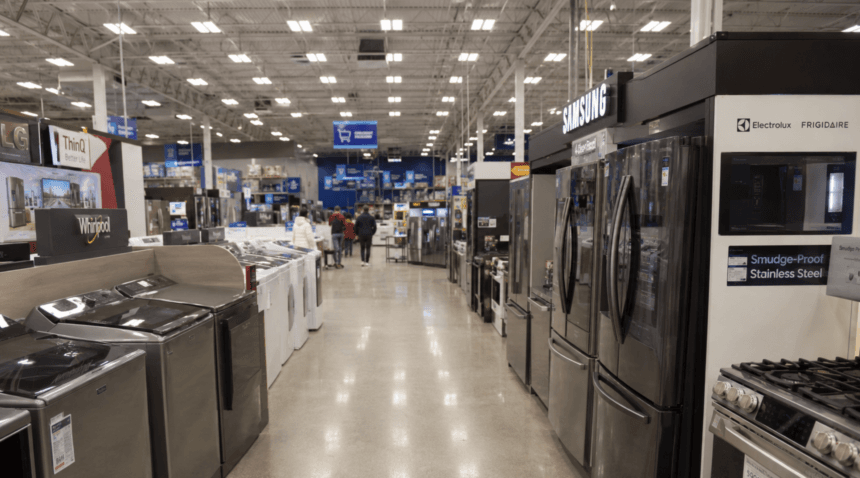
The second quarter exposed a widening divide among the world’s largest appliance manufacturers. LG Electronics produced record second-quarter results while expanding its appliance, subscription and business-to-business operations. Samsung Electronics posted extraordinary companywide earnings powered largely by semiconductors, even as its consumer-device businesses faced rising costs. Electrolux improved underlying profitability despite another decline in North America. Whirlpool’s North American operation recovered sharply from the first quarter but remained well below its year-earlier profitability.
- LG Turns Appliances Into a Broader Revenue Platform
- Electrolux Improves — but North America Still Lags
- Whirlpool’s Recovery Starts From a Deep Hole
- Samsung’s Record Quarter Tells a Different Appliance Story
- Tariffs Are Changing Pricing Faster Than Demand Is Recovering
- The Bigger Divide Is No Longer Just Premium vs. Value
- What Retailers and Servicers Should Watch Next
Behind those different results is a common problem: selling big-ticket appliances remains difficult in the United States. High borrowing costs, expensive housing and cautious consumers continue to suppress purchases tied to moves and remodeling. At the same time, tariffs and higher material and logistics expenses are pushing manufacturers toward price increases and cost reductions.
The result is an appliance market in which revenue growth alone says increasingly little about the health of the underlying business.
LG Turns Appliances Into a Broader Revenue Platform
LG entered the second half from one of the strongest appliance positions among the four companies. The company reported consolidated second-quarter revenue of KRW 23.83 trillion and operating profit of KRW 1.58 trillion, both second-quarter records.
Home appliances were an important part of that performance. LG’s Home Appliance Solution business generated about KRW 7.75 trillion in quarterly sales, crossing KRW 7 trillion for the first time. The company has been pursuing a two-track strategy spanning premium and mass-market appliances while expanding subscription programs, online sales and other recurring-revenue businesses.
That approach matters because it gives LG ways to make money from the customer relationship beyond the initial appliance purchase. Subscriptions can strengthen LG’s control over the customer relationship by tying equipment, service and recurring payments together. For independent dealers, that creates a potential channel challenge if manufacturer-managed programs expand. For service companies, a growing installed base of increasingly sophisticated appliances can create additional technical work.
More Read

LG’s performance therefore represents more than a strong product quarter. It points toward an appliance business model in which manufacturers increasingly want revenue throughout the life of the product rather than only when a refrigerator or washer leaves the showroom.
Electrolux Improves — but North America Still Lags
Electrolux delivered one of the quarter’s clearest examples of improving profitability without a corresponding U.S. demand recovery. Group net sales reached SEK 31.57 billion, with organic sales increasing 2%. Operating income excluding non-recurring items climbed to SEK 1.20 billion from SEK 797 million a year earlier, lifting the underlying margin to 3.8% from 2.5%.
North America went the other direction on sales. Organic sales there declined 2.9% as Electrolux estimated the regional appliance market contracted by roughly 3%. The company nevertheless improved underlying North American operating results, helped by pricing and aggressive cost reductions.
There is an important qualification. North American earnings benefited from recognition of about SEK 310 million in claims for refunds of first-quarter IEEPA tariffs, along with SEK 174 million related to changes in a U.S. retiree health plan. Those items make the operating improvement more complicated than the headline numbers suggest.
Electrolux is simultaneously undertaking a much larger restructuring of its North American manufacturing operation through joint ventures with Midea. The arrangement covers refrigeration manufacturing in Mexico, laundry production in South Carolina and a shared refrigeration sales operation. ApplianceNews has separately reported on the EU competition clearance for that structure.
For retailers, suppliers and servicers, that manufacturing transition may eventually matter as much as the quarterly earnings figures. Changes in production platforms and sourcing can affect everything from product availability to components, technical documentation and parts support.
Whirlpool’s Recovery Starts From a Deep Hole
Whirlpool’s second quarter showed why sequential improvement and year-over-year weakness can coexist. North American sales and profitability improved substantially from the first quarter as price increases began flowing through the business. But margins remained far below their year-earlier level.
Major Domestic Appliances North America generated $2.41 billion in second-quarter sales and $64 million in segment EBIT, producing a 2.7% margin. That margin improved sharply from 0.3% in the first quarter but remained below the 5.9% recorded a year earlier.
That is especially important because Whirlpool has become increasingly dependent on the Americas. The company has reduced its exposure to Europe and India while emphasizing North American manufacturing and its core U.S. brands. That concentrates more of Whirlpool’s fortunes in a market where consumers remain reluctant to make discretionary appliance purchases.
As ApplianceNews has reported in its recent Whirlpool coverage, the company is combining price increases with cost reductions, manufacturing changes, refinancing and debt reduction. Its domestic production footprint may offer advantages against finished imports subject to tariffs, but it does not eliminate exposure to imported components, raw-material inflation or underused factories.
The second half will show whether those measures can rebuild North American margins before a meaningful housing recovery arrives.
Samsung’s Record Quarter Tells a Different Appliance Story
Samsung’s consolidated numbers require a different interpretation. The company reported record second-quarter revenue of KRW 171.5 trillion and operating profit of KRW 89.5 trillion. The semiconductor operation was the primary engine, with Samsung’s memory business benefiting from AI-related demand.
Its consumer businesses did not share equally in that boom. Samsung’s Device eXperience division, which includes mobile devices, TVs and home appliances, faced higher component and other input costs.
That produces an unusual dynamic inside Samsung: the semiconductor environment creating exceptional profits in one part of the company can also raise component costs for businesses elsewhere in the organization.
For the appliance operation, Samsung continues to emphasize premium products, connected appliances, SmartThings and AI-enabled features. Its corporate diversification gives it an advantage the more appliance-dependent manufacturers do not have. Samsung can continue investing in appliance technology during a weak appliance cycle because the company is not relying on refrigerators, washers and ranges to carry overall earnings.
That financial flexibility does not mean its appliance operation is outperforming rivals. It means Samsung can afford to play a longer game.
Tariffs Are Changing Pricing Faster Than Demand Is Recovering
Whirlpool and Electrolux illustrate the central pricing problem confronting the North American appliance industry. Both companies are trying to recover higher costs through price increases while consumers are already cautious.
Higher prices can restore manufacturer margins if competitors move together and consumers continue replacing failed appliances. But higher prices can also encourage shoppers to delay discretionary upgrades, trade down or wait for promotions.
Replacement demand provides some protection because a failed refrigerator or washer eventually has to be replaced. Remodeling and elective upgrades are much easier to postpone. Housing weakness adds another constraint because fewer home purchases can mean fewer appliance packages sold into kitchens and laundry rooms immediately after a move.
For dealers, the implication is that manufacturers may remain disciplined on price even while retailers face consumers looking for value. That tension could define the second half of 2026.
The Bigger Divide Is No Longer Just Premium vs. Value
The quarter also highlights a more structural difference among appliance manufacturers. LG is building subscriptions, services and B2B businesses around its hardware. Samsung has semiconductor profits and a much larger technology ecosystem. Whirlpool is increasingly concentrated around its Americas appliance franchise and domestic manufacturing. Electrolux is restructuring manufacturing while using partnerships to change the economics of its North American operations.
Those are four different responses to essentially the same industry problem.
The traditional appliance model depends heavily on selling another physical unit. Manufacturers with additional revenue streams have more ways to absorb periods when consumers postpone that purchase. That does not make the appliance itself less important. It changes what manufacturers need the appliance to accomplish financially.
What Retailers and Servicers Should Watch Next
For independent appliance dealers, the most important signal from the quarter may be the collision between higher manufacturer pricing and weak consumer demand. Premium products still provide opportunities, particularly when innovation gives shoppers a reason to replace rather than repair or postpone. But value-sensitive consumers are likely to remain difficult to convert while housing turnover stays low.
For servicers, the same environment can work differently. Consumers who postpone replacement keep older machines operating longer, supporting repair demand. At the same time, new products entering homes are becoming more connected and technically complex, increasing the value of technicians capable of diagnosing electronics, software and networked features.
Manufacturing changes at Electrolux and Whirlpool are also worth monitoring for their eventual effects on parts sourcing and product platforms.
The second quarter therefore does not point toward a broad appliance recovery. It points toward an industry adapting to the absence of one.
Manufacturers are raising prices, reducing costs, reorganizing factories and searching for revenue beyond conventional appliance sales while waiting for the U.S. housing and replacement cycles to strengthen. The companies best positioned for the rest of 2026 may not simply be those selling the most appliances. They may be the ones least dependent on a consumer buying another appliance today.