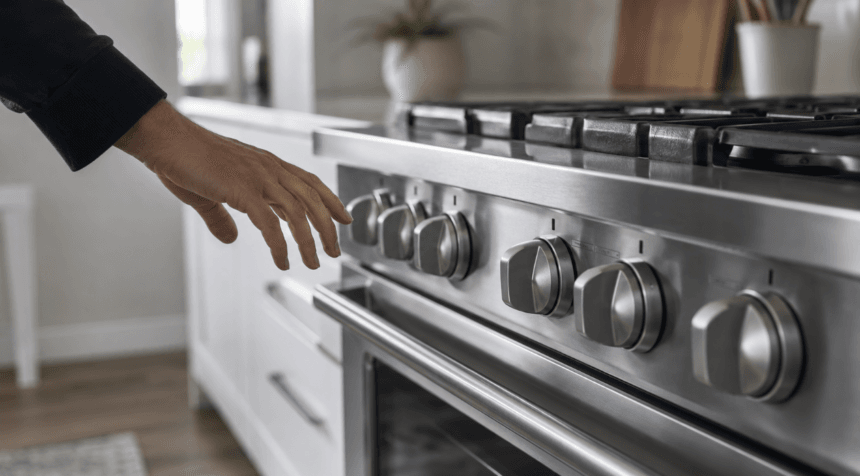
Range knobs are moving back into the safety spotlight as a CPSC-linked working group prepares to discuss potential new requirements aimed at reducing accidental activation of gas and electric ranges.
The Independent Accidental Range Activation Working Group is scheduled to meet virtually Thursday, July 30, from 11 a.m. to noon Eastern time, according to the U.S. Consumer Product Safety Commission’s public calendar. CPSC staff, including Scott Ayers of the agency’s Directorate for Engineering Sciences, are expected to participate.
The agency says the working group will discuss potential new requirements to address accidental range activation. The meeting is listed as a voluntary standards meeting and is open to the public.
Why Range Knobs Are Under Review
The issue centers on whether some range controls can be turned on too easily when people, pets or household objects come into contact with the knobs. Previous CPSC meeting logs say the agency is aware of incidents involving property damage and fatalities from fires that started after range knobs were accidentally activated.
Earlier working-group materials identify several common activation scenarios, including bumping the range while reaching for a microwave or cabinet, brushing against the appliance while walking past, pets placing paws on controls, children or elderly people interacting with the range, and items being placed or moved on the cooktop.
For appliance manufacturers, the question is not simply whether knobs can be made harder to turn. Any new standard would need to balance safety, accessibility, usability, product design and the differences between gas and electric range controls.
More Read
Possible Changes Could Affect Gas and Electric Ranges
Prior CPSC meeting logs show the working group has discussed potential changes to electric range standard UL 858 and gas range standard ANSI Z21.1/CSA 1.1. Those discussions have included the development of a possible performance test to measure how easily range controls can be activated accidentally.
In a March meeting log, CPSC staff described a proposal from the Association of Home Appliance Manufacturers that would apply a 4-pound force against control knobs at two different angles. Participants also discussed design approaches such as turn-then-push, pull-then-turn or other multi-step control actions that could make unintended activation less likely.
The same log said there is no force requirement for gas range controls, while the group was still evaluating what type of performance test would best reflect accidental forces applied by people in real homes.
Recent Recalls Show the Practical Stakes
The standards discussion comes as accidental activation has already appeared in recent range recalls. Earlier this month, Best Buy recalled about 3,820 Insignia front-control gas ranges in the United States because the front-mounted knobs could be activated accidentally by humans or pets, posing a fire hazard.
That recall instructed consumers to stop using the affected ovens immediately and said Best Buy would provide free compatible knob covers. CPSC also advised consumers to keep children and pets away from knobs, check that range knobs are off before leaving home or going to bed, and avoid leaving objects on the range when it is not in use.
The broader working-group process could have implications beyond one recall or one manufacturer. If voluntary standards are updated, future range designs could face new tests or design expectations before reaching the market.
What the Appliance Industry Should Watch
Retailers, installers and servicers should watch whether the discussion leads to clearer design requirements, updated labeling, new knob-cover guidance or a broader performance test for front-mounted controls. Any change could affect product development, compliance documentation, replacement parts and consumer education.
For consumers, the immediate takeaway remains basic range safety. Keep knobs clear, avoid storing items on the cooking surface, use lockout features when available and confirm burners are off before leaving home or going to sleep.
The July 30 meeting is not itself a recall or a final rule. But it is an important step in a standards process that could shape how future ranges are designed to reduce accidental activation risks in kitchens.