Best Buy’s Goldman Sachs downgrade is not an appliance story on its face. The analyst concern is memory-chip inflation moving through laptops and computers. But for appliance dealers, the signal is broader: when component costs squeeze a major electronics retailer, the pressure can spill into promotions, inventory choices, financing conversations and consumer appetite for big-ticket home purchases.
The downgrade details are verified. Barron’s reported that Goldman Sachs downgraded Best Buy from Buy to Sell, with analysts warning that rising memory costs could push up laptop and computer prices and pressure demand. The Fly, via TipRanks, separately reported that Goldman analyst Kate McShane double-downgraded Best Buy to Sell from Buy and cut the price target to $59 from $76, citing risk as higher memory costs work into laptop and computer pricing.
That is a PC-category thesis, not a direct call on refrigerators or washers. Still, Best Buy is one of the few national retailers where consumer electronics, computing, mobile phones, services and major appliances sit under the same margin, traffic and promotion umbrella. If memory-chip inflation forces tougher choices in computing, appliance retail may feel the secondary effects.
Why Memory Costs Matter at Retail
Memory prices have become a consumer-retail issue because the artificial-intelligence buildout is pulling DRAM, NAND and high-bandwidth memory capacity toward data centers and AI hardware. TrendForce warned in March that rising memory and CPU costs could push mainstream notebook retail prices sharply higher if brands and distribution partners maintain margins. It also said notebook DRAM and NAND supply had tightened significantly since the start of 2026.
Goldman’s Best Buy call fits that backdrop. If a laptop that previously anchored a promotion at one price point now costs more to build, the retailer and vendor have only a few choices: raise the ticket, reduce margin, downgrade specifications, push shoppers to financing, or lean harder on services, memberships and accessories to protect profitability.
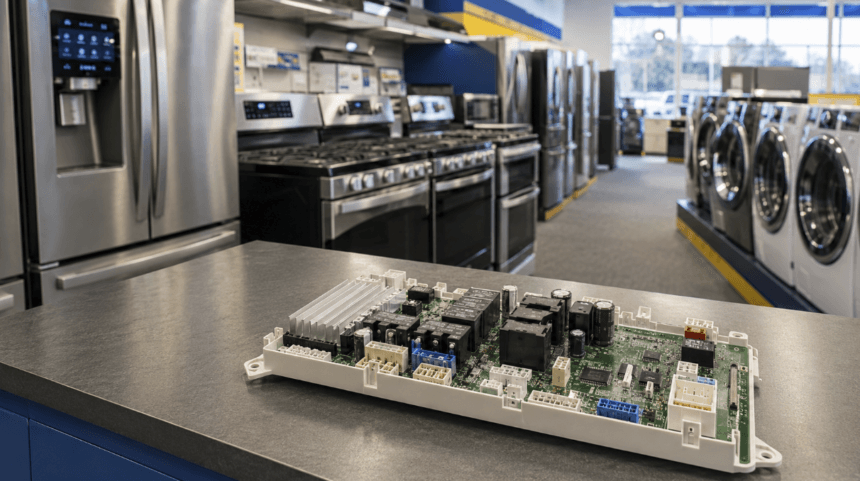
Appliances are not memory-heavy in the same way PCs are. But modern appliances do depend on control boards, displays, sensors, connectivity modules, inverter electronics and other components that live in the same broader electronics supply chain. The bigger appliance-retail risk is not that a refrigerator suddenly tracks DRAM spot pricing. It is that component inflation changes how retailers allocate promotion dollars, floor space, inventory risk and customer financing across the whole store.
More Read

Best Buy’s Own Numbers Show the Margin Squeeze
Best Buy’s latest results already show a retailer balancing category growth against product-margin pressure. In its first-quarter FY27 results, the company said domestic revenue rose 1.5% and domestic comparable sales increased 1.8%. The biggest weighted drivers of comparable-sales growth were gaming, computing, mobile phones and services, while appliances declined.
The same release said domestic gross profit rate improved to 23.7% from 23.5%, helped by Marketplace, Best Buy Ads and traditional services, but those benefits were largely offset by lower product margin rates. That is the trade issue: retail profitability can improve at the company level while product categories remain under pressure.
Best Buy’s fourth-quarter FY26 results show why appliance dealers should not ignore the signal. The company said home theater and appliances were the largest weighted drivers of its domestic comparable-sales decline in that quarter, while computing and mobile phones grew. In its recast domestic revenue mix, appliances were 9% of domestic revenue for the quarter and comparable appliance sales were down 10.5%.
Promotions Could Get More Selective
When a retailer faces higher component costs in one large category, promotion planning gets tighter across the store. The company may keep doorbusters in PCs to defend traffic, then rely on higher-margin services, accessories, memberships or advertising revenue to make the transaction work. Or it may accept fewer aggressive hardware deals and shift promotion dollars to categories with better vendor support.
For appliances, that can show up in subtler ways. A retailer may narrow the deepest discounts to specific models, reduce free-delivery or haul-away offers, push bundles more carefully, limit price matching, emphasize open-box and outlet inventory, or lean on financing instead of straight price cuts. Dealers competing against national chains should watch not only advertised washer or refrigerator prices, but also the total offer around installation, removal, protection plans and delivery timing.
Inventory planning may also change. If computing absorbs more working capital because unit costs rise, retailers may become more disciplined about appliance stock turns. Slow-moving premium appliances, specialty finishes and large connected models may face closer scrutiny unless vendors support them with rebates, spiffs, protected margins or clear launch demand.
- Promotions: Expect sharper targeting around models, bundles, services and financing instead of broad, margin-eroding discounts.
- Inventory: Retailers may favor faster-turning SKUs and avoid tying up capital in slow specialty configurations.
- Consumer pricing: Higher tech prices can reduce the household budget available for appliance upgrades.
- Dealer strategy: Independent appliance dealers can compete on installation quality, service access and local accountability when national offers get tighter.
The Appliance Angle Is Household Wallet Pressure
Chip inflation matters to appliance retail because consumers do not budget by supply-chain category. The same household that needs a new laptop for school may also be delaying a dishwasher, replacing a failed refrigerator or weighing a laundry pair during a promotion weekend. If PC prices rise, that can pull dollars away from appliances or make financing more important at checkout.
This is especially relevant for replacement-driven appliance categories. A failed refrigerator cannot be postponed for long, but a premium finish, connected feature package or matching laundry upgrade can be. If consumers feel squeezed by technology prices, appliance dealers may see more trade-down behavior, more repair-versus-replace hesitation and more pressure to justify premium features.
The connected-appliance story also gets more complicated. Retailers and manufacturers have spent years selling smart diagnostics, Wi-Fi controls, advanced displays, inverter systems and app features as part of the premium proposition. If the broader electronics supply chain becomes more expensive, brands will have to show that those electronics improve the ownership experience rather than simply add cost and future repair complexity.
What This Signals for Appliance Dealers
Independent appliance dealers do not need to treat a Goldman downgrade as an operating plan. They should treat it as an early warning about retail cost pressure. When a national chain is being judged on product-margin risk, vendor pricing and category traffic, appliance dealers should assume the promotional environment may become more tactical and less predictable.
The practical response is to know the margin stack. Dealers should separate appliance cost, delivery, installation, haul-away, accessories, protection plans, financing and service margin rather than matching a headline price blindly. A national ad may look aggressive until installation, removal, timing and warranty support are included.
Dealers should also press vendors for clarity. If electronics, controls or inverter components are affecting appliance costs, retailers need to know whether increases are temporary, category-specific or tied to future product transitions. That information affects quote windows, floor models, special orders and how long a dealer can honor a promotional price.
The Best Buy downgrade does not prove that appliance prices are about to jump because of memory chips. It does show that AI-driven component inflation has moved from the data center into consumer retail strategy. For the appliance trade, that means chip costs are no longer a back-office technology story. They are part of the pricing climate on the sales floor.