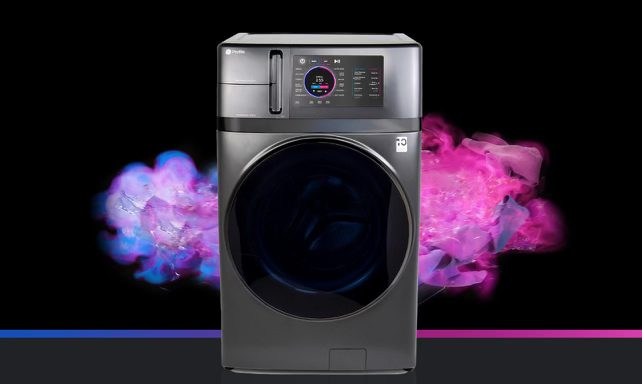
A new class action lawsuit is putting GE Appliances under scrutiny over its all-in-one washer-dryer units, with claims that the machines fail at one of their most basic functions: drying clothes.
Filed in the U.S. District Court for the Eastern District of New York, the complaint alleges that design flaws inside the machines lead to excessive lint buildup, ultimately preventing proper drying performance.
Alleged Design Defect Targets Lint System
At the center of the case is the appliance’s internal airflow system.
According to the lawsuit, defective lint traps and poorly designed internal ductwork allow lint to bypass filtration and accumulate deep inside the unit. Instead of being captured and removed, lint is said to collect on critical components such as:
- Evaporator coils
- Condenser coils
- Internal air pathways
Over time, this buildup allegedly restricts airflow — a key requirement for proper drying — causing the machines to underperform or fail entirely.
Consumer Complaints and Repair Issues
The plaintiff, Avroham Sherman, claims that consumers who experienced these issues were unable to obtain meaningful, lasting repairs.

Instead, the lawsuit alleges that:
- Repairs were temporary or ineffective
- Root causes were not properly addressed
- Customers were left with recurring performance problems
The complaint frames this as more than a simple product defect — it argues a systemic failure in both design and post-sale support.
Legal Claims Filed Against GE Appliances
The lawsuit brings several legal allegations against GE Appliances, including:
- Breach of warranty
- Fraudulent concealment
- Unjust enrichment
- Violations of the Magnuson-Moss Warranty Act
The case seeks damages as well as injunctive relief for affected consumers in New York.
Broader Industry Implications
While the case focuses on a specific product line, its implications extend across the appliance industry.
All-in-one washer-dryer units — often marketed as space-saving, high-efficiency solutions — rely heavily on precise airflow engineering. Any failure in lint management or duct design can quickly impact performance.
As combo units continue gaining popularity, this lawsuit raises larger questions about:
- Long-term reliability of compact laundry systems
- Airflow and moisture management in ventless designs
- Serviceability of increasingly complex appliances
The Bigger Picture
This case highlights a growing tension in modern appliance design: balancing convenience and compact form factors with durability and real-world performance.
If the allegations prove true, it could push manufacturers to rethink how airflow systems and lint filtration are engineered — especially in sealed, all-in-one units where maintenance access is limited.
For now, the lawsuit moves forward, and the outcome could set an important precedent for both manufacturers and consumers navigating the next generation of laundry technology.